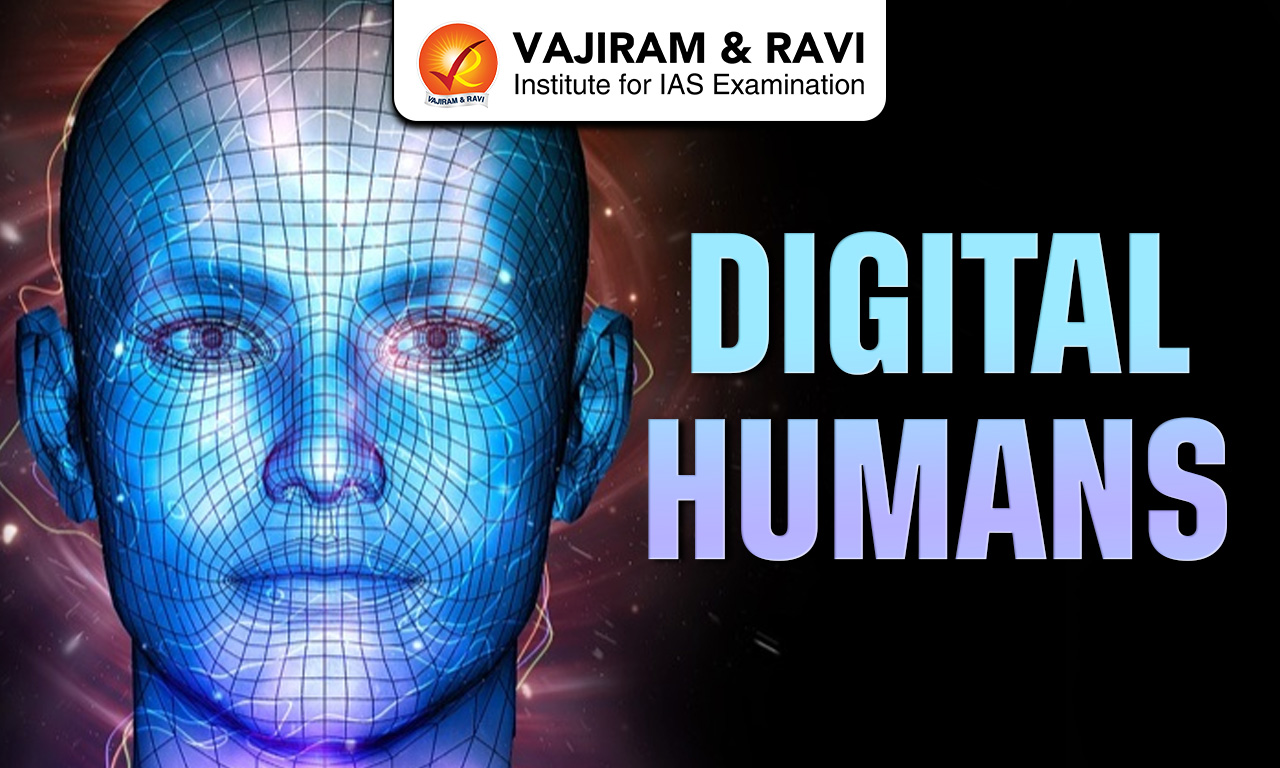
China’s cyberspace regulator issued draft regulations to oversee the development online of digital humans, requiring clear labelling and banning services that could mislead children or fuel addiction.
What are Digital Humans?
Digital humans are AI-powered virtual representations of human beings that can interact, communicate, and perform tasks in a human-like manner. They are created using technologies such as artificial intelligence, machine learning, and computer graphics, and are increasingly used in areas like customer service, entertainment, education, and social interaction.
These virtual entities can simulate speech, emotions, and behaviour, making them appear realistic and interactive, which raises both opportunities and risks.
Key Provisions of China’s Draft Regulations
The proposed rules lay down several safeguards to control misuse and ensure responsible development.
- Mandatory Labelling: The rules require that all digital human content must be clearly labelled. This ensures that users are aware that they are interacting with an artificial entity and are not misled into believing it is a real human.
- Protection of Minors: Digital humans are prohibited from offering “virtual intimate relationships” to individuals below the age of 18. This provision aims to prevent emotional dependency, addiction, and psychological harm among children.
- Data Privacy and Consent: The regulations prohibit the creation of digital humans using another person’s personal information without their consent. This addresses concerns related to identity misuse and privacy violations.
- Prevention of Misuse and Fraud: The use of digital humans to bypass identity verification systems is banned. This is intended to prevent fraud and misuse of technology in illegal activities.
- Content Regulation and National Security: Digital humans are restricted from generating content that threatens national security, promotes secession, or undermines national unity. They must also avoid content that is sexually suggestive, violent, or discriminatory.
- Focus on User Safety and Well-being: Platforms are encouraged to to intervene and provide assistance when users show signs of self-harm or suicidal behaviour, indicating a focus on user safety and mental health.


Rationale Behind Regulation
The regulation of digital humans is driven by multiple concerns. The increasing realism of AI-generated human-like entities can lead to misinformation, manipulation, and emotional exploitation, particularly among vulnerable users such as children.
There are also concerns related to data privacy, identity theft, and ethical use of AI, especially when digital humans are created using real individuals’ data.
From a broader perspective, governments view digital humans as part of the digital economy and cyberspace governance, making their regulation important for national security, public order, and economic development.

 Last updated on Oct, 2026
→ UPSC 2027 Notification will be released on 13 January 2027 at upsconline.nic.in.
→ Asian Games 2026 are being held in Aichi-Nagoya, Japan, from 19 September to 4 October.
→ Check Nobel Prize 2026 Winners List here.
→ Download PIB PRiSM Monthly Magazine 2026 here.
→ Check UPSC Monthly Current Affairs Magazine The Recitals here.
→ Check out the latest UPSC Syllabus here.
→ Download UPSC Model Answers for Mains 2026
→ UPSC Mains Question Paper 2026 is out now for Essay & GS Paper 1, 2, 3 & 4.
→ UPSC Calendar 2027 has been released.
→ Enroll in Vajiram & Ravi’s UPSC Mains Test Series 2027 for structured answer writing practice, expert evaluation, and exam-oriented feedback.
→ Join Vajiram & Ravi’s UPSC Mentorship Program 2027 for personalized guidance, strategy planning, and one-to-one support from experienced mentors.
→ Go through the UPSC Mains Previous Year Papers to enhance your preparation.
→ UPSC has released UPSC Toppers List 2025 with the Civil Services final result on its official website.
→ Also check Best UPSC Coaching in India
Digital Humans FAQs
Q1. What are Digital Humans?+
Q2. Why are Digital Humans in the news?+
Q3. What is the purpose of regulating Digital Humans?+
Q4. What are the key restrictions on Digital Humans?+
Q5. What are the risks associated with Digital Humans?+
Tags: digital humans