About Electrified Flex fuel vehicle:
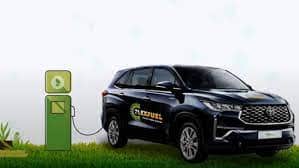
- It is the World’s first BS-6 Stage-II, Electrified Flex fuel vehicle.
- An Electrified Flex Fuel Vehicle has both a Flexi Fuel engine and an electric powertrain.
How Do Flexible Fuel Cars Work Using Ethanol?
- Flexible fuel vehicles (FFVs) have an internal combustion engine and are capable of operating on gasoline and any blend of gasoline and ethanol up to 83%.
- In flex fuels, the ratio of ethanol to petrol can be adjusted but the most commonly used flex-fuel use 85 per cent ethanol and 15 per cent petrol.
- Bio-ethanol contains less energy per litre than petrol but the calorific value (energy contained in the fuel) of bio-ethanol will become on par with petrol with use of advanced technology.
- Since an FFV is capable of running on either petrol or ethanol, it will be the first of its kind 100 per cent dual fuel vehicle to be running on Indian roads.
- Flex fuel engines are already popular in Brazil, the United States, European Union and China among many others.
What is Ethanol?
- It is a by-product of the sugar production process and can be an excellent substitute for petrol as a fuel mix.
- Ethanol is more affordable than petrol, as it can be produced domestically from crops, unlike crude oil, which needs to be imported.
- It is a complex derivative of biomass left by agricultural feedstocks such as corn, sugarcane, hemp (bhang), potato, and rice among many other things.
- Using ethanol-blended fuel can help reduce our carbon footprint and create a cleaner, healthier environment for future generations.
- Ethanol-blended petrol has significantly reduced emissions of harmful pollutants such as carbon monoxide, hydrocarbons, and nitrogen oxides.
- India is the fifth largest manufacturer of ethanol following the US, Brazil, the European Union and China.
Q1) What is the carbon footprint?
A carbon footprint is the total amount of greenhouse gases (including carbon dioxide and methane) that are generated by our actions.
Source: World’s first prototype of the BS 6 Stage II ‘Electrified Flex fuel vehicle’ launched today


 Last updated on Oct, 2026
→ UPSC 2027 Notification will be released on 13 January 2027 at upsconline.nic.in.
→ Asian Games 2026 are being held in Aichi-Nagoya, Japan, from 19 September to 4 October.
→ Check Nobel Prize 2026 Winners List here.
→ Download PIB PRiSM Monthly Magazine 2026 here.
→ Check UPSC Monthly Current Affairs Magazine The Recitals here.
→ Check out the latest UPSC Syllabus here.
→ Download UPSC Model Answers for Mains 2026
→ UPSC Mains Question Paper 2026 is out now for Essay & GS Paper 1, 2, 3 & 4.
→ UPSC Calendar 2027 has been released.
→ Enroll in Vajiram & Ravi’s UPSC Mains Test Series 2027 for structured answer writing practice, expert evaluation, and exam-oriented feedback.
→ Join Vajiram & Ravi’s UPSC Mentorship Program 2027 for personalized guidance, strategy planning, and one-to-one support from experienced mentors.
→ Go through the UPSC Mains Previous Year Papers to enhance your preparation.
→ UPSC has released UPSC Toppers List 2025 with the Civil Services final result on its official website.
→ Also check Best UPSC Coaching in India