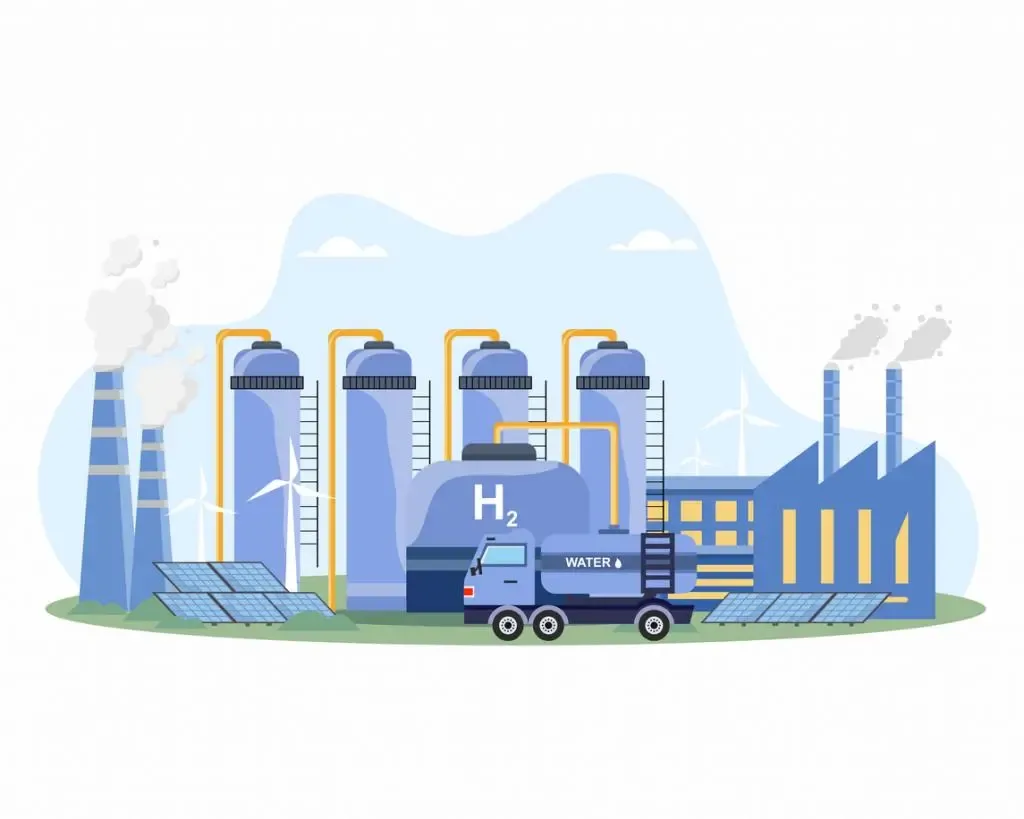
About Electrolysers
- It is an apparatus that produces hydrogen through a chemical process (electrolysis) capable of splitting water molecules into hydrogen and oxygen molecules by using electricity.
Working
- An electrolyser consists of a conductive electrode stack separated by a membrane to which a high voltage and current is applied.
- This causes an electric current in the water which causes it to break down into its components: hydrogen and oxygen.
- The oxygen generated in parallel is released into the atmosphere or can be stored for later use as a medical or industrial gas in some cases.
- The hydrogen is stored as a compressed gas or liquefied for use in industry or in hydrogen fuel cells, which can power transport vehicles such as trains, ships and even aircraft.
Types of Electrolysers
- Alkaline electrolysers: Alkaline electrolysis is a mature and commercially available technology used primarily by the fertiliser and chlorine industries.
- It presently accounts for almost two-thirds of the global electrolyser capacity.
- It uses thick membranes and nickel-based electrodes.
- Proton exchange membrane (PEM) electrolysers: It operates at high pressure, due to the use of thin perfluorosulfonic acid (PFSA) membranes.
- However, the PFSA acidic environment makes it necessary to use gold and titanium plated electrodes and metals such as platinum, iridium, and ruthenium as catalysts.
- They are the most popular because they produce high-purity hydrogen and are easy to cool.
- Solid oxide electrolysis cell (SOEC) electrolysers : They utilise heat to make hydrogen from steam and are best placed where there is a heat source available (nuclear or industrial facilities).
- They operate at high temperatures (500 – 850degrees).
- Anion exchange membrane (AEM) electrolysers: They operate at significantly lower temperatures of 50 – 60 degrees.
- They combine the less harsh conditions of alkaline electrolysers with the simplicity and high efficiency of PEM electrolysers.
Q1: What is hydrogen?
It is a clean alternative to methane, also known as natural gas. It’s the most abundant chemical element, estimated to contribute 75% of the mass of the universe.
Source:Domestic manufacturing of electrolysers can be game changer for industrial emissions


 Last updated on Oct, 2026
→ UPSC 2027 Notification will be released on 13 January 2027 at upsconline.nic.in.
→ Check Nobel Prize 2026 Winners List here.
→ Download PIB PRiSM Monthly Magazine 2026 here.
→ Check UPSC Monthly Current Affairs Magazine The Recitals here.
→ Check out the latest UPSC Syllabus here.
→ Download UPSC Model Answers for Mains 2026
→ UPSC Mains Question Paper 2026 is out now for Essay & GS Paper 1, 2, 3 & 4.
→ UPSC Calendar 2027 has been released.
→ Enroll in Vajiram & Ravi’s UPSC Mains Test Series 2027 for structured answer writing practice, expert evaluation, and exam-oriented feedback.
→ Join Vajiram & Ravi’s UPSC Mentorship Program 2027 for personalized guidance, strategy planning, and one-to-one support from experienced mentors.
→ Go through the UPSC Mains Previous Year Papers to enhance your preparation.
→ UPSC has released UPSC Toppers List 2025 with the Civil Services final result on its official website.
→ Also check Best UPSC Coaching in India