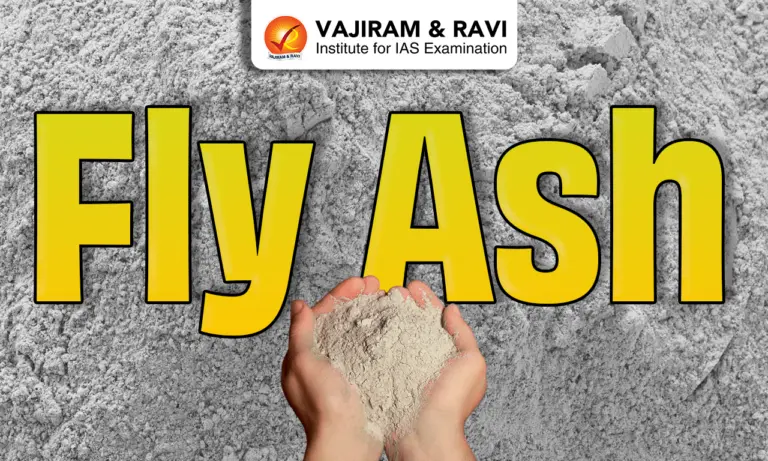
Fly Ash is a fine powdery material produced as an unwanted residue during the combustion of coal in thermal power plants. It is carried away with flue gases and collected through electrostatic precipitators before being transported to ash ponds in the form of wet slurry. Fly ash has become an important environmental and industrial issue because of its large-scale generation and impact on air, water, and soil quality.
Fly Ash Composition
Fly Ash Composition depends on the type and quality of coal used in thermal power plants. It mainly contains silica, aluminium oxide, ferric oxide, and calcium oxide along with unburnt carbon particles. Fly ash may also contain toxic elements such as arsenic, beryllium, and dioxins, which can cause environmental pollution. The chemical composition of fly ash determines its properties and industrial uses in cement, concrete, and construction activities.
Uses of Fly Ash
Fly Ash is widely used in construction, infrastructure, and industrial sectors because of its cementitious properties, durability, and cost-effectiveness.
- Used in the manufacturing of cement and concrete to improve strength and durability.
- Helps reduce the overall cost of construction materials.
- Used for making eco-friendly fly ash bricks as an alternative to clay bricks.
- Applied in road construction and embankment projects for better soil stability.
- Utilised as a filling material in low-lying areas and abandoned mines.
- Used as a mineral filler in paints, plastics, and rubber industries.
- Helps in reducing heat generation in large concrete structures.
- Used in the production of lightweight construction materials.
- Supports sustainable construction practices by recycling industrial waste.
- Valuable metals can also be recovered from fly ash through industrial processing.


Harmful Effects of Fly Ash
Fly Ash is a major environmental pollutant that can negatively affect human health, air quality, soil fertility, and water resources when not managed properly.
- Fly ash particles are toxic air pollutants that can cause respiratory diseases and lung infections.
- Continuous exposure may increase the risk of heart disease, cancer, and stroke.
- Fine ash particles can irritate the eyes, skin, and throat.
- When mixed with water, fly ash may release heavy metals into groundwater through leaching.
- It contaminates soil and reduces agricultural productivity.
- Fly ash affects the root development system of trees and plants.
- Airborne fly ash contributes to severe dust pollution in nearby areas.
- Large ash ponds occupy vast land areas and create environmental degradation.
- Toxic elements such as arsenic and beryllium present in fly ash can harm ecosystems.
Government Initiatives Related to Fly Ash
The Government of India has launched several initiatives to promote the safe disposal, monitoring, and productive utilisation of fly ash in construction, infrastructure, and industrial sectors. These measures aim to reduce environmental pollution and encourage sustainable development.
- NTPC Initiatives: In 2021, NTPC invited Expression of Interest (EOI) for the sale and utilisation of fly ash to achieve higher ash utilisation levels.
- NTPC collaborated with cement manufacturers across India for the large-scale supply and transportation of fly ash for industrial use.
- Pradhan Mantri Awas Yojana (Urban): The scheme promotes eco-friendly construction technologies such as the use of fly ash bricks in affordable housing projects.
- Fly Ash Utilisation Policies: Several state governments have introduced policies for scientific fly ash management and utilisation. Maharashtra became the first state to adopt a dedicated fly ash utilisation policy.
- ASHTRACK Portal and Mobile App: The Government launched the ASHTRACK web portal and mobile application for monitoring fly ash generation, transportation, and utilisation across thermal power plants.

 Last updated on Oct, 2026
→ UPSC 2027 Notification will be released on 13 January 2027 at upsconline.nic.in.
→ Check Nobel Prize 2026 Winners List here.
→ Download PIB PRiSM Monthly Magazine 2026 here.
→ Check UPSC Monthly Current Affairs Magazine The Recitals here.
→ Check out the latest UPSC Syllabus here.
→ Download UPSC Model Answers for Mains 2026
→ UPSC Mains Question Paper 2026 is out now for Essay & GS Paper 1, 2, 3 & 4.
→ UPSC Calendar 2027 has been released.
→ Enroll in Vajiram & Ravi’s UPSC Mains Test Series 2027 for structured answer writing practice, expert evaluation, and exam-oriented feedback.
→ Join Vajiram & Ravi’s UPSC Mentorship Program 2027 for personalized guidance, strategy planning, and one-to-one support from experienced mentors.
→ Go through the UPSC Mains Previous Year Papers to enhance your preparation.
→ UPSC has released UPSC Toppers List 2025 with the Civil Services final result on its official website.
→ Also check Best UPSC Coaching in India
Fly Ash FAQs
Q1. What is fly ash?+
Q2. Why is fly ash considered harmful?+
Q3. What are the major uses of fly ash?+
Q4. How is fly ash collected in thermal power plants?+
Q5. What are the main components of fly ash?+
Tags: environmental science fly ash science