Why in news?
- The release of these invasive alien fish species has raised concerns about the potential harm that will be sustained by native species that abound in the state’s freshwater bodies.
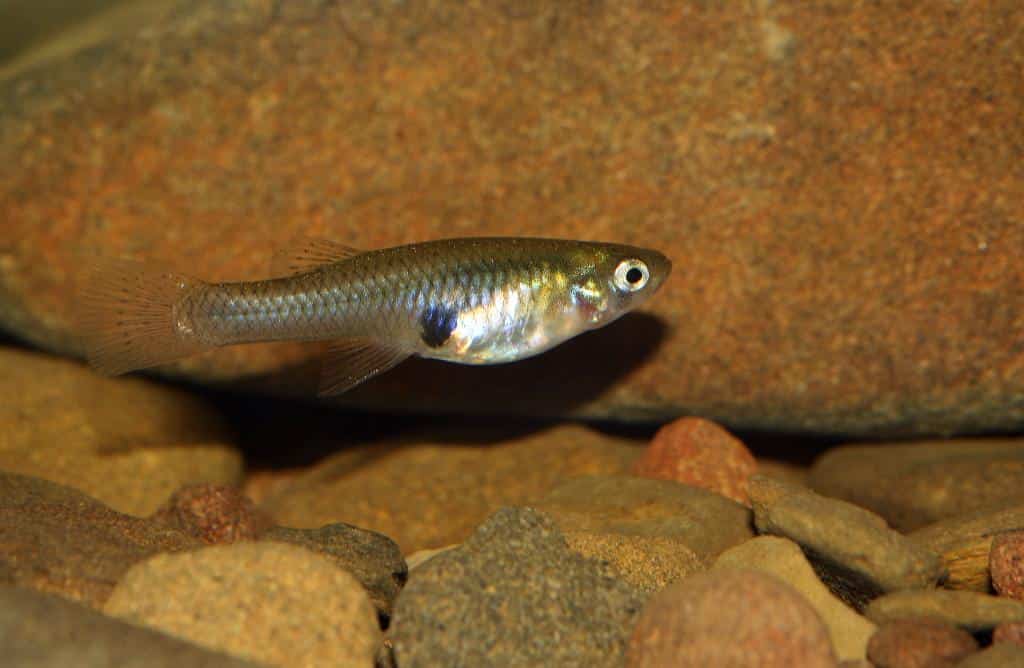
About Gambusia Fish
- It is also known as mosquito fish, and is widely used as a biological agent for controlling mosquito larvae.
- It is native to the waters of the south-eastern United States.
- It has been a part of mosquito-control strategies for over a century in various parts of the world, including India.
- A single full grown fish eats about 100 to 300 mosquito larvae per day.
- Also it has been part of various malaria control strategies in India since 1928, including the Urban Malaria Scheme.
- The International Union for Conservation of Nature declared Gambusia one of the 100 worst invasive alien species in the world.
Key facts about Malaria
- Malaria is a disease caused by the Plasmodium parasite.
- The parasite can be spread to humans through the bites of infected mosquitoes.
- Transmission:
- The plasmodium parasite is spread by female Anopheles mosquitoes, which are known as “night-biting” mosquitoes because they most commonly bite between dusk and dawn.
- There are many different types of plasmodium parasite, but only 5 types cause malaria in humans.
- Plasmodium falciparum: It is mainly found in Africa, it’s the most common type of malaria parasite and is responsible for most malaria deaths worldwide.
- Plasmodium vivax : It is mainly found in Asia and South America, this parasite causes milder symptoms than Plasmodium falciparum, but it can stay in the liver for up to 3 years, which can result in relapses.
- Plasmodium ovale: Fairly uncommon and usually found in West Africa, it can remain in your liver for several years without producing symptoms.
- Plasmodium malariae: This is quite rare and usually only found in Africa.
- Plasmodium knowlesi: This is very rare and found in parts of Southeast Asia.
Q1) What is Plasmodium?
Plasmodium is a genus of parasitic protozoa that causes malaria in humans and other animals. It belongs to the phylum Apicomplexa and is transmitted through the bites of infected female Anopheles mosquitoes.
Source: Gambusia: This solution could actually be an invasive problem


 Last updated on Oct, 2026
→ UPSC 2027 Notification will be released on 13 January 2027 at upsconline.nic.in.
→ Check Nobel Prize 2026 Winners List here.
→ Download PIB PRiSM Monthly Magazine 2026 here.
→ Check UPSC Monthly Current Affairs Magazine The Recitals here.
→ Check out the latest UPSC Syllabus here.
→ Download UPSC Model Answers for Mains 2026
→ UPSC Mains Question Paper 2026 is out now for Essay & GS Paper 1, 2, 3 & 4.
→ UPSC Calendar 2027 has been released.
→ Enroll in Vajiram & Ravi’s UPSC Mains Test Series 2027 for structured answer writing practice, expert evaluation, and exam-oriented feedback.
→ Join Vajiram & Ravi’s UPSC Mentorship Program 2027 for personalized guidance, strategy planning, and one-to-one support from experienced mentors.
→ Go through the UPSC Mains Previous Year Papers to enhance your preparation.
→ UPSC has released UPSC Toppers List 2025 with the Civil Services final result on its official website.
→ Also check Best UPSC Coaching in India