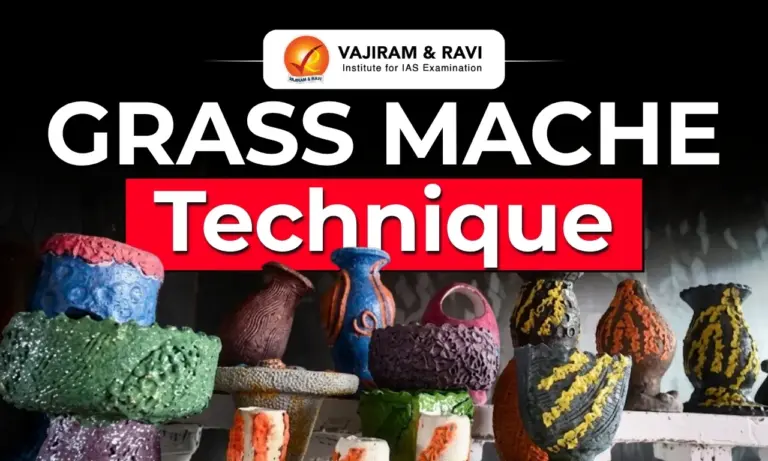
Grass Mache Technique is an innovative and eco-friendly craft approach that gives a useful purpose to discarded plant-based materials. It combines traditional craftsmanship with sustainable practices, turning natural waste into creative and functional products while supporting resource conservation and local livelihoods.
What is Grass Mache Technique?
- Innovative Craft Technique: Grass Mache is an eco-friendly craft technique developed by Srinagar-based artisans such as Simran Irshad, using discarded aquatic weeds and grasses removed from Dal Lake as raw material.
- Link with Papier-Mâché: It adapts Kashmir’s centuries-old papier-mâché tradition (Sakhtsazi) by using lake weeds and grasses along with recycled paper pulp to create decorative and utility products.
- Waste-to-Wealth Approach: The technique gives a productive use to unwanted aquatic vegetation while creating opportunities for sustainable craftsmanship and local livelihoods.
Grass Mache Technique Meaning and Process
- Collection of Weeds: Artisans collect discarded weeds and grasses removed during the cleaning of Dal Lake and other water bodies.
- Drying and Pulping: The collected plant material is dried and processed into a fine fibrous pulp suitable for further use.
- Blending: The grass pulp is mixed with a binding material and a smaller portion of recycled paper pulp to provide strength and structure.
- Moulding and Drying: The mixture is shaped using different moulds and then left to dry, after which it develops a distinctive natural, stone-like texture.
- Finishing: The dried products are smoothed and can be hand-painted using traditional Naqashi techniques, connecting the new method with Kashmiri papier-mâché craftsmanship.
- Experimentation: Developing the technique involved nearly two years of experimentation with different grasses, fibres, recycled paper pulp and binding materials to find suitable combinations.


Advantages of Grass Mache Technique
- Environmental Sustainability: It gives discarded lake vegetation a productive second life, supporting waste reduction and creating greater awareness about keeping Dal Lake and other water bodies clean.
- Supports Traditional Crafts: The technique gives a contemporary and eco-friendly application to Kashmir’s traditional papier-mâché skills, helping keep traditional knowledge relevant.
- Reduces Use of Fresh Materials: Using aquatic weeds and recycled paper can reduce dependence on fresh plant and wood-based materials in craft production.
- Economic Benefits: Locally available lake weeds provide an abundant raw material for artisans and can help reduce dependence on more expensive paper-based materials.
- Women-Led Livelihoods: Grass Mache creates opportunities for women and girls to learn the craft, participate in sustainable handicrafts and develop livelihood opportunities.
- Circular Use of Resources: The technique follows a waste-to-wealth and circular economy approach by converting unwanted lake biomass into useful and marketable products.
Applications of Grass Mache Technique in Agriculture
- Eco-Friendly Craft Products: The technique is used to make flower vases, hanging decorations, Christmas ornaments and other home décor products from discarded aquatic vegetation.
- Utility Products: Artisans are also experimenting with fireproof switchboards and panelling for homes using waste collected from Dal Lake.
- Agricultural Waste Utilisation: The technique demonstrates how plant-based biological waste and unwanted vegetation can be converted into useful products instead of being treated only as waste.
- Sustainable Livelihoods: It connects the productive use of plant biomass with local entrepreneurship and women-led employment opportunities, while also supporting environmental conservation.
- Resource Recycling: By combining lake weeds with recycled paper pulp, Grass Mache shows how locally available biological resources can be reused for sustainable production.

 Last updated on Oct, 2026
→ UPSC 2027 Notification will be released on 13 January 2027 at upsconline.nic.in.
→ Asian Games 2026 are being held in Aichi-Nagoya, Japan, from 19 September to 4 October.
→ Check Nobel Prize 2026 Winners List here.
→ Download PIB PRiSM Monthly Magazine 2026 here.
→ Check UPSC Monthly Current Affairs Magazine The Recitals here.
→ Check out the latest UPSC Syllabus here.
→ Download UPSC Model Answers for Mains 2026
→ UPSC Mains Question Paper 2026 is out now for Essay & GS Paper 1, 2, 3 & 4.
→ UPSC Calendar 2027 has been released.
→ Enroll in Vajiram & Ravi’s UPSC Mains Test Series 2027 for structured answer writing practice, expert evaluation, and exam-oriented feedback.
→ Join Vajiram & Ravi’s UPSC Mentorship Program 2027 for personalized guidance, strategy planning, and one-to-one support from experienced mentors.
→ Go through the UPSC Mains Previous Year Papers to enhance your preparation.
→ UPSC has released UPSC Toppers List 2025 with the Civil Services final result on its official website.
→ Also check Best UPSC Coaching in India
Grass Mache Technique FAQs
Q1. What is the Grass Mache Technique?+
Q2. Who developed the Grass Mache Technique?+
Q3. How is the Grass Mache Technique made?+
Q4. What is the connection between Grass Mache and papier-mâché?+
Q5. What are the advantages of the Grass Mache Technique?+
Q6. What products can be made using Grass Mache?+
Q7. How does Grass Mache support sustainable agriculture and livelihoods?+
Tags: current affairs grass mache technique