


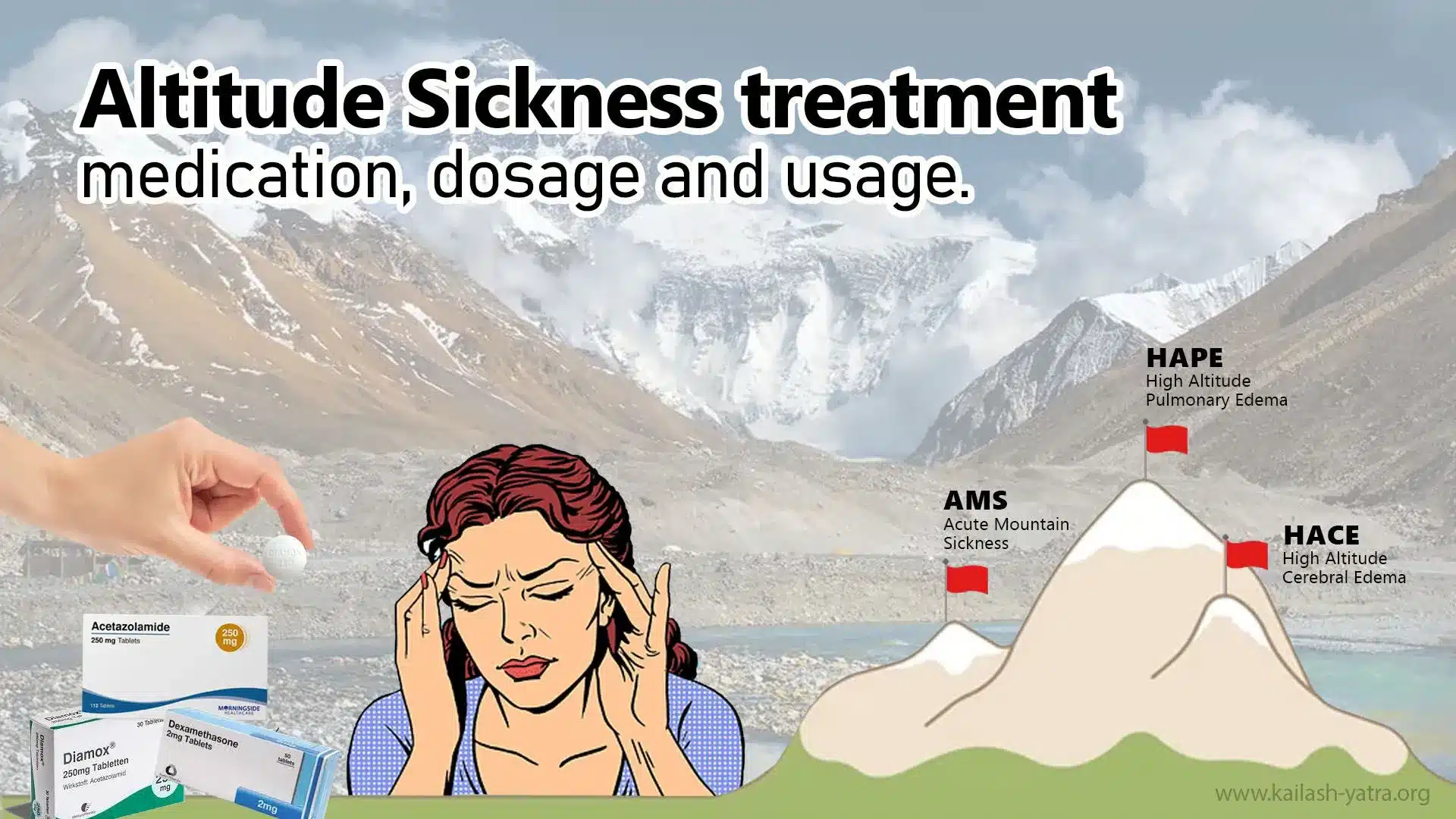
About High-Altitude Sickness:
- High-altitude sickness, or Acute Mountain Sickness (AMS), occurs when the body cannot acclimatise to high elevations, typically over 8,000 feet (2,400 metres).
- As altitude increases, the air pressure and oxygen levels decrease, leading to hypoxia — a shortage of oxygen in the body’s tissues.
- Symptoms:
- Early symptoms of AMS include headache, nausea, fatigue, and shortness of breath.
- If left untreated, it can escalate into high-altitude pulmonary edema (HAPE), a life-threatening condition where fluid accumulates in the lungs, or high-altitude cerebral edema (HACE), where fluid collects in the brain.
- Both conditions require immediate medical intervention, and descent to lower altitudes is often the only way to prevent fatal outcomes.
- At higher altitudes, the body tries to adjust by increasing the breathing rate, which can cause hyperventilation, and produce more red blood cells to carry oxygen, which thickens the blood and strains the heart.
- In cases of HAPE, fluid accumulation in the lungs exacerbates breathing difficulties, while HACE causes symptoms like confusion, hallucinations, and even coma.
- The primary cause of high-altitude sickness is rapid ascent without allowing the body time to acclimatise. Gradual ascent, which allows the body to adapt to lower oxygen levels, is the best way to prevent high-altitude illnesses.
- Treatment: The most effective treatment is immediate descent to lower altitudes. Symptoms usually improve significantly with a descent of 300-1,000 metres. Supplemental oxygen or a portable hyperbaric chamber can also help alleviate symptoms of AMS and HACE in emergencies.
Q1: What is hypoxia?
It is a condition in which the human body tissues are not oxygenated sufficiently to maintain adequate homeostasis, resulting from inadequate oxygen delivery to the tissues due to either low blood supply or low oxygen content in the blood.


 Last updated on Oct, 2026
→ UPSC 2027 Notification will be released on 13 January 2027 at upsconline.nic.in.
→ Check Nobel Prize 2026 Winners List here.
→ Download PIB PRiSM Monthly Magazine 2026 here.
→ Check UPSC Monthly Current Affairs Magazine The Recitals here.
→ Check out the latest UPSC Syllabus here.
→ Download UPSC Model Answers for Mains 2026
→ UPSC Mains Question Paper 2026 is out now for Essay & GS Paper 1, 2, 3 & 4.
→ UPSC Calendar 2027 has been released.
→ Enroll in Vajiram & Ravi’s UPSC Mains Test Series 2027 for structured answer writing practice, expert evaluation, and exam-oriented feedback.
→ Join Vajiram & Ravi’s UPSC Mentorship Program 2027 for personalized guidance, strategy planning, and one-to-one support from experienced mentors.
→ Go through the UPSC Mains Previous Year Papers to enhance your preparation.
→ UPSC has released UPSC Toppers List 2025 with the Civil Services final result on its official website.
→ Also check Best UPSC Coaching in India








