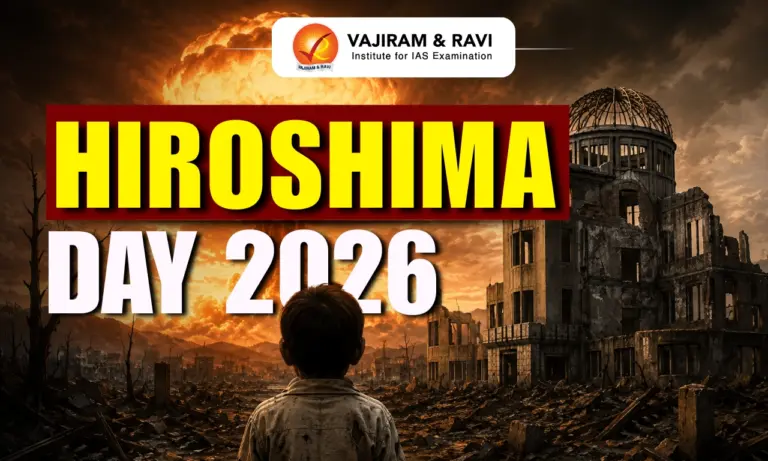
Hiroshima Day 2026 is observed on August 6, 2026, marking the 81st anniversary of the atomic bombing of Hiroshima during World War II. The day honours the lives lost, remembers the suffering of survivors, and spreads awareness about the devastating consequences of nuclear warfare. It also strengthens the global commitment to peace, nuclear disarmament, and preventing such tragedies in the future.
Why is Hiroshima Day Observed?
Hiroshima Day is observed every year to commemorate the atomic bombing of Hiroshima on August 6, 1945, one of the most devastating events in human history.
The day serves as a reminder of the immense destruction caused by nuclear weapons and promotes global efforts towards peace, non-violence, and nuclear disarmament. Governments, international organisations, peace activists, and citizens across the world participate in memorial events to honour the victims.
Hiroshima Day 2026 Theme
Hiroshima Day 2026 marks the 81st anniversary of the 1945 atomic bombing of Hiroshima and is centred on the principles of Remembrance, Responsibility, and Resilience, honouring the victims while reinforcing the global commitment to peace and a world free of nuclear weapons.


Hiroshima Day 2026 History
Hiroshima Day commemorates the atomic bombing of Hiroshima on 6 August 1945, remembering the victims of the tragedy and reinforcing the global commitment to peace and nuclear disarmament.
- 7 December 1941: Japan attacked the U.S. Naval Base at Pearl Harbor, bringing the United States into World War II.
- 6 August 1945: The U.S. B-29 bomber Enola Gay dropped the “Little Boy” atomic bomb on Hiroshima at 8:15 a.m.
- The bombing caused the immediate deaths of around 130,000 people, with the toll rising to nearly 140,000 by the end of 1945 due to injuries and radiation.
- 9 August 1945: A second atomic bomb, “Fat Man,” was dropped on Nagasaki.
- 15 August 1945: Japan announced its surrender, effectively bringing World War II to an end.
- Since then, 6 August has been observed annually as Hiroshima Day to honour the victims and promote global peace.
- Since 1964, the Flame of Peace at Hiroshima Peace Memorial Park has burned continuously as a symbol of the world’s determination to eliminate nuclear weapons.
Atomic Bombing of Hiroshima
The Atomic Bombing of Hiroshima was carried out on 6 August 1945 during the final phase of World War II. It marked the first use of a nuclear weapon in armed conflict and caused widespread destruction, immense human suffering, and long-lasting environmental and health consequences.
- The bombing occurred during the final stages of World War II.
- The United States targeted the Japanese city of Hiroshima with an atomic bomb.
- The bomb, known as “Little Boy,” was dropped from the B-29 bomber Enola Gay.
- The explosion destroyed large parts of the city within moments.
- Thousands of civilians lost their lives, while many others suffered severe injuries.
- Survivors, known as Hibakusha, experienced lifelong physical and psychological effects due to radiation exposure.
- Homes, hospitals, schools, and public infrastructure were extensively damaged.
- The bombing highlighted the catastrophic humanitarian consequences of nuclear weapons.
- It was followed by the atomic bombing of Nagasaki three days later.
- The tragedy continues to strengthen global efforts toward peace, nuclear disarmament, and the prevention of future nuclear conflicts.
Human Consequences of Hiroshima
The atomic bombing of Hiroshima caused devastating humanitarian consequences, affecting not only those who died immediately but also generations of survivors.
- Immediate Loss of Life: Approximately 70,000–80,000 people died instantly from the blast and intense heat.
- Rising Death Toll: By the end of 1945, the total number of deaths had reached around 140,000 due to burns, injuries, and radiation sickness.
- Radiation Sickness: Thousands suffered from acute radiation syndrome, causing nausea, vomiting, hair loss, internal bleeding, fever, and weakened immunity.
- Long-Term Health Effects: Survivors experienced a significantly higher risk of leukaemia, thyroid cancer, breast cancer, lung cancer, cataracts, and other chronic illnesses.
- Severe Burn Injuries: Many victims sustained extensive burns from the intense thermal radiation, resulting in permanent disfigurement and lifelong disabilities.
- Psychological Trauma: Survivors endured post-traumatic stress, anxiety, depression, grief, and survivor’s guilt for many years.
- Hibakusha (Survivors): The survivors, known as Hibakusha, often faced social stigma and discrimination in employment, education, and marriage due to fears about radiation exposure.
- Homelessness and Humanitarian Crisis: Around 90% of Hiroshima’s buildings were damaged or destroyed, leaving tens of thousands homeless and without access to food, clean water, or medical care.
- Impact on Children: Many children were orphaned, while others developed long-term health complications linked to radiation exposure.
- Generational Effects: Scientific studies have monitored the long-term health of survivors and their children, although significant hereditary genetic effects have been found to be more limited than initially feared.
- Environmental Damage: Fires and radioactive fallout devastated the city’s infrastructure and disrupted normal life for years.
Hiroshima Day 2026 Significance
Hiroshima Day 2026 serves as a powerful reminder of the devastating consequences of nuclear warfare and reinforces the global commitment to peace, humanity, and nuclear disarmament.
- Honours the Victims: Pays tribute to the thousands of people who lost their lives in the Hiroshima atomic bombing and remembers their suffering.
- Raises Awareness: Educates people about the humanitarian impact of nuclear weapons on civilians and future generations.
- Promotes Nuclear Disarmament: Strengthens global support for the elimination of nuclear weapons and the prevention of nuclear war.
- Encourages World Peace: Inspires nations to resolve conflicts through dialogue, diplomacy, and peaceful cooperation.
- Recognises the Hibakusha: Acknowledges the resilience of the Hibakusha (atomic bomb survivors) and preserves their testimonies for future generations.
- Preserves Historical Memory: Ensures that the lessons of Hiroshima remain an important part of world history and peace education.
- Supports Humanitarian Values: Reinforces the importance of protecting human rights, civilians, and human dignity during conflicts.
- Promotes Global Unity: Brings together governments, international organisations, and communities in a shared commitment to a world free of nuclear weapons.

 Last updated on Oct, 2026
→ UPSC 2027 Notification will be released on 13 January 2027 at upsconline.nic.in.
→ Check Nobel Prize 2026 Winners List here.
→ Download PIB PRiSM Monthly Magazine 2026 here.
→ Check UPSC Monthly Current Affairs Magazine The Recitals here.
→ Check out the latest UPSC Syllabus here.
→ Download UPSC Model Answers for Mains 2026
→ UPSC Mains Question Paper 2026 is out now for Essay & GS Paper 1, 2, 3 & 4.
→ UPSC Calendar 2027 has been released.
→ Enroll in Vajiram & Ravi’s UPSC Mains Test Series 2027 for structured answer writing practice, expert evaluation, and exam-oriented feedback.
→ Join Vajiram & Ravi’s UPSC Mentorship Program 2027 for personalized guidance, strategy planning, and one-to-one support from experienced mentors.
→ Go through the UPSC Mains Previous Year Papers to enhance your preparation.
→ UPSC has released UPSC Toppers List 2025 with the Civil Services final result on its official website.
→ Also check Best UPSC Coaching in India
Hiroshima Day 2026 FAQs
Q1. When is Hiroshima Day 2026 observed?+
Q2. Why is Hiroshima Day observed?+
Q3. What is the theme of Hiroshima Day 2026?+
Q4. What happened on 6 August 1945?+
Q5. Who were the Hibakusha?+
Q6. What is the significance of the Hiroshima Peace Memorial Park?+
Tags: hiroshima day 2026 important days important days 2026