


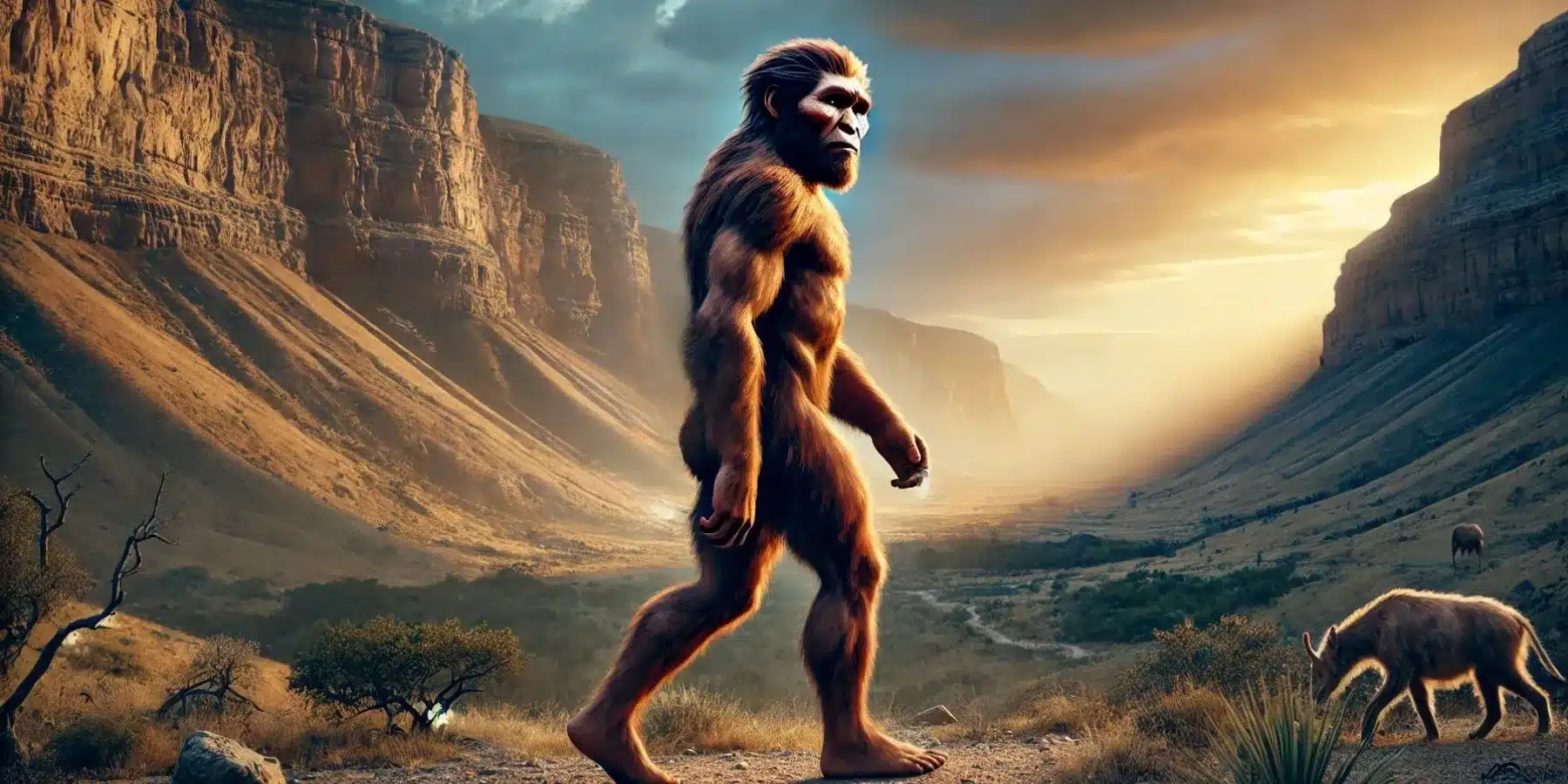
About Homo juluensis:
- It is a new species of ancient humans with distinctively large skulls.
- The species, known as “big head people,” lived 300,000 years ago and survived in small groups across eastern Asia before disappearing around 50,000 years ago.
- Homo juluensis includes mysterious groups like the Denisovans—ancient human relatives whose histories are still being uncovered.
- Fossils attributed to H. juluensis, primarily consisting of facial and jaw remains, exhibit dental characteristics reminiscent of Neanderthals.
- Initial measurements indicate that their braincases were up to 30% larger than those of Homo sapiens.
- They hunted wild horses in small groups, and made stone tools and possibly processed animal hides for survival.
Key Facts about Neanderthals:
- They were an extinct relative of modern humans once found across Europe,extending into Central and Southwest Asia.
- Species: Homo neanderthalensis
- They are our closest extinct human relative.
- Current evidence from both fossils and DNA suggests that Neanderthal and modern human lineages separated at least 500,000 years ago.
- The last populations of Neanderthals are thought to have died out roughly 40,000 years ago, several thousand years or so after a wave of modern humans migrated deeper into Europe.
- Although they are long extinct, their genes are still present in modern human DNA.
Q1: Who are Denisovans?
Denisovans are an extinct species of hominid and a close relative to modern humans. They’re a recent addition to the human family tree—scientists first identified Denisovan remains from a cave in Siberia in 2010. Denisovans lived across a wide range of areas and conditions, from the cold mountains of Siberia and Tibet to the jungles of Southeast Asia during the last Ice Age. DNA evidence suggests Denisovans are related to both Neanderthals and modern humans, and may have interbred with both.
News: New, big-headed archaic humans discovered: Who is Homo juluensis?


 Last updated on Oct, 2026
→ UPSC 2027 Notification will be released on 13 January 2027 at upsconline.nic.in.
→ Check Nobel Prize 2026 Winners List here.
→ Download PIB PRiSM Monthly Magazine 2026 here.
→ Check UPSC Monthly Current Affairs Magazine The Recitals here.
→ Check out the latest UPSC Syllabus here.
→ Download UPSC Model Answers for Mains 2026
→ UPSC Mains Question Paper 2026 is out now for Essay & GS Paper 1, 2, 3 & 4.
→ UPSC Calendar 2027 has been released.
→ Enroll in Vajiram & Ravi’s UPSC Mains Test Series 2027 for structured answer writing practice, expert evaluation, and exam-oriented feedback.
→ Join Vajiram & Ravi’s UPSC Mentorship Program 2027 for personalized guidance, strategy planning, and one-to-one support from experienced mentors.
→ Go through the UPSC Mains Previous Year Papers to enhance your preparation.
→ UPSC has released UPSC Toppers List 2025 with the Civil Services final result on its official website.
→ Also check Best UPSC Coaching in India








