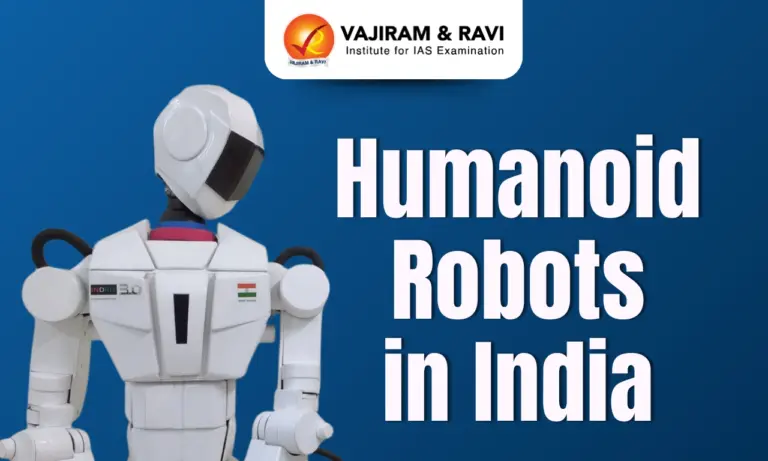
Humanoid Robots in India are rapidly transforming the country’s technological landscape. From healthcare and education to defense, space exploration, and customer service, humanoid robots are becoming an integral part of India’s innovation ecosystem. These intelligent machines are designed to resemble and interact like humans, combining artificial intelligence (AI), machine learning, robotics, and automation technologies.
What are Humanoid Robots?
Humanoid Robots are advanced machines designed to look and behave like humans. They usually have a head, arms, and legs, and can perform tasks such as walking, talking, and interacting with people. These robots use technologies like artificial intelligence (AI), sensors, and machine learning to understand their surroundings and respond intelligently. Humanoid robots are used in fields such as healthcare, education, defense, customer service, and space research.
Technology Behind Humanoid Robots
Humanoid robots are powered by advanced technologies that help them move, think, interact, and perform tasks like humans.
- Artificial Intelligence (AI): Enables robots to make decisions, learn from data, and interact intelligently with humans.
- Machine Learning: Helps robots improve their performance through continuous learning and experience.
- Bipedal Locomotion: Uses sensors like gyroscopes and accelerometers to maintain balance while walking on two legs.
- Actuators: Work like robotic muscles to control movement using electric, hydraulic, or pneumatic systems.
- Computer Vision: Allows robots to recognize objects, faces, and surroundings through cameras and image processing.
- Speech Recognition & NLP: Helps robots understand human language and respond naturally during conversations.
- Haptic Feedback: Gives robots a sense of touch for handling objects with accuracy and precision.
- Control Systems: Coordinate all robotic functions such as movement, communication, and task execution.
- Sensors: Detect environmental changes like temperature, motion, pressure, and obstacles.
- Teleoperation Technology: Allows humans to remotely control robots for dangerous or complex operations.


Popular Humanoid Robots Around the World
- ASIMO (Honda, Japan): One of the world’s most advanced humanoid robots, capable of walking, running, climbing stairs, and interacting with humans.
- Sophia (Hanson Robotics, Hong Kong): A famous AI-powered humanoid robot known for realistic facial expressions and human-like conversations.
- Atlas (Boston Dynamics, USA): A highly agile humanoid robot that can run, jump, perform backflips, and navigate difficult terrain.
- Pepper (SoftBank Robotics, Japan): Designed to recognize human emotions and communicate naturally with people in public spaces.
- Nao (SoftBank Robotics, Japan): A small humanoid robot widely used in education, research, and robotics training.
- Robonaut (NASA, USA): Developed for assisting astronauts in space missions and performing risky tasks outside spacecraft.
- HRP-4C (Japan): A humanoid robot designed to resemble a human female and capable of singing, dancing, and facial expressions.
- T-HR3 (Toyota, Japan): A remotely controlled humanoid robot developed for healthcare and home assistance.
- Surena (Iran): An advanced humanoid robot series developed by the University of Tehran with improved walking and interaction abilities.
- Fedora (Russia): A humanoid robot created for research, rescue operations, and future space missions.
Humanoid Robots in India
India has made remarkable progress in humanoid robotics through innovations by research institutions, startups, educational organizations, and government agencies. These robots are being used in sectors such as space research, healthcare, education, defense, customer service, and public assistance.
- Vyommitra (ISRO): A female humanoid robot developed by ISRO for the Gaganyaan mission, capable of interacting with astronauts and monitoring spacecraft conditions.
- AcYut (BITS Pilani): A humanoid robot series developed by students of BITS Pilani that can walk, dance, and perform complex movements.
- Manav: India’s first 3D-printed humanoid robot, developed by A-SET Training and Research Institutes, known for dancing and playing football.
- Shalu Robot: An AI-powered humanoid robot made from waste materials, capable of speaking 47 languages and assisting in education.
- Kempa: A service robot deployed at Kempegowda International Airport in Bengaluru to guide passengers and provide travel information.
- Sandy: Developed by i-Brain Robotics, Sandy is designed for companionship and emotional interaction.
- KP-Bot (RoboCop): India’s first humanoid police robot deployed by the Kerala Police to assist visitors and improve public services.
- Daksha: An anti-terror robot developed by DRDO for bomb disposal and hazardous operations.
- MiTRA: Created by Invento Robotics, MiTRA is widely used in banks, hospitals, airports, and events for customer interaction.
Applications of Humanoid Robots
Humanoid robots are used across many industries to perform human-like tasks efficiently, safely, and accurately. Their ability to interact, learn, and adapt makes them useful in both routine and complex environments.
- Manufacturing: Used for assembly, welding, painting, and material handling in factories to improve speed and precision.
- Healthcare: Assist doctors in surgeries, patient care, rehabilitation, and medicine delivery in hospitals.
- Agriculture: Help in crop monitoring, harvesting, spraying pesticides, and automating irrigation systems.
- Defense & Security: Used for bomb disposal, surveillance, reconnaissance, and handling dangerous missions.
- Space Exploration: Assist astronauts in maintaining spacecraft, conducting experiments, and exploring harsh environments.
- Education: Support interactive learning, language training, and robotics-based STEM education in schools.
- Customer Service: Provide assistance in airports, malls, hotels, and banks for guiding and informing people.
- Search and Rescue: Help locate and rescue people in disaster-hit or hard-to-reach areas.
- Logistics & Warehousing: Manage inventory, sort packages, and support automated delivery systems.
- Home Assistance: Perform household tasks like cleaning, security monitoring, and basic caregiving support.
- Elderly Care: Assist senior citizens with mobility, reminders, companionship, and daily activities.
- Environmental Monitoring: Collect data on air, water quality, and track wildlife for ecological studies.
Government Initiatives Supporting Humanoid Robots in India
The Government of India is actively promoting robotics, artificial intelligence, and automation through multiple national missions, policies, and innovation programs aimed at strengthening research, startups, and skill development in humanoid robotics.
- Atal Innovation Mission (AIM): Launched by NITI Aayog, AIM promotes innovation through Atal Tinkering Labs in schools to encourage robotics and STEM learning.
- Digital India Initiative: Focuses on transforming India into a digitally empowered society, supporting AI, automation, and robotics development.
- Make in India: Encourages domestic manufacturing of robotics hardware, sensors, and automation systems to reduce import dependency.
- Startup India: Provides funding, mentorship, and incubation support to robotics and AI-based startups across the country.
- Skill India Mission: Aims to train youth in advanced technologies including robotics, AI, and industrial automation.
- National Programme on AI: Supports research and development in artificial intelligence and robotics for national economic growth.
- SMART India Hackathon: Encourages students to develop innovative robotic and AI-based solutions for real-world problems.
- DST & CSIR Research Programs: Fund robotics, automation, and AI research projects in universities and laboratories across India.
- DRDO & ISRO Support: Strengthen robotics applications in defense, space missions, and disaster management technologies.
- e-Yantra Initiative: Conducted by IIT Bombay, it provides robotics training and hands-on learning for engineering students.
- ARTPARK Bengaluru: Established by ARTPARK Bengaluru, it supports startups and research in AI and robotics technologies.
- TIDE Program: Technology Incubation and Development of Entrepreneurs supports ICT-based and robotics startups across India.
Challenges of Humanoid Robots in India
Despite rapid progress in robotics and AI, Humanoid Robots in India still face several technical, economic, and structural challenges that slow down large-scale development and adoption.
- High Development Cost: Building advanced humanoid robots requires expensive sensors, processors, AI systems, and research infrastructure.
- Limited Skilled Workforce: There is a shortage of trained robotics engineers, AI experts, and interdisciplinary researchers in India.
- Dependence on Imports: Many critical components like chips, sensors, and actuators are still imported from other countries.
- Weak R&D Infrastructure: Compared to global leaders, India has fewer high-end robotics labs and testing facilities.
- Ethical and Social Concerns: Issues like job displacement, privacy risks, and AI decision-making raise public concerns.
- Slow Commercial Adoption: Industries are still cautious in adopting humanoid robots due to high cost and uncertainty of ROI.
- Power and Maintenance Issues: Humanoid robots require continuous power supply, maintenance, and technical support systems.
- Limited AI Integration: Advanced AI models and real-time learning systems are still developing in India’s robotics ecosystem.
- Regulatory Gaps: Lack of clear policies and standards for robotics safety and deployment.
Future of Humanoid Robots in India
The future of Humanoid Robots in India looks highly promising as advancements in artificial intelligence, automation, and robotics continue to grow rapidly. With strong government support, expanding startups, and increasing research activities, India is moving toward becoming a global hub for intelligent robotics solutions.
- Expansion in Healthcare: Humanoid robots will increasingly assist doctors in surgeries, elderly care, diagnostics, and hospital management.
- Growth in Space Missions: Organizations like ISRO will use humanoid robots for deep space exploration and astronaut support.
- Smart Manufacturing: Factories will adopt humanoid robots for precision-based production, automation, and quality control.
- Defense Modernization: DRDO will further integrate humanoid robots for surveillance, bomb disposal, and rescue operations.
- Rise of AI Integration: Advanced AI and machine learning will make robots more intelligent, adaptive, and human-like in behavior.
- Growth of Robotics Startups: India’s startup ecosystem will drive innovation in humanoid robotics, especially in service and industrial sectors.
- Education and Skill Development: Robotics will become a core part of STEM education, preparing students for future technology careers.
- Service Industry Automation: Airports, hotels, malls, and banks will widely use humanoid robots for customer assistance.
- Disaster Management: Robots will play a key role in search and rescue operations in flood, earthquake, and fire-affected areas.

 Last updated on Oct, 2026
→ UPSC 2027 Notification will be released on 13 January 2027 at upsconline.nic.in.
→ Check Nobel Prize 2026 Winners List here.
→ Download PIB PRiSM Monthly Magazine 2026 here.
→ Check UPSC Monthly Current Affairs Magazine The Recitals here.
→ Check out the latest UPSC Syllabus here.
→ Download UPSC Model Answers for Mains 2026
→ UPSC Mains Question Paper 2026 is out now for Essay & GS Paper 1, 2, 3 & 4.
→ UPSC Calendar 2027 has been released.
→ Enroll in Vajiram & Ravi’s UPSC Mains Test Series 2027 for structured answer writing practice, expert evaluation, and exam-oriented feedback.
→ Join Vajiram & Ravi’s UPSC Mentorship Program 2027 for personalized guidance, strategy planning, and one-to-one support from experienced mentors.
→ Go through the UPSC Mains Previous Year Papers to enhance your preparation.
→ UPSC has released UPSC Toppers List 2025 with the Civil Services final result on its official website.
→ Also check Best UPSC Coaching in India
Humanoid Robots in India FAQs
Q1. What are Humanoid Robots?+
Q2. Which is India’s first humanoid robot?+
Q3. Where are humanoid robots used in India?+
Q4. Which Indian robot speaks multiple languages?+
Q5. What is the use of humanoid robots in India?+
Tags: ai humanoid robots in india science and technology