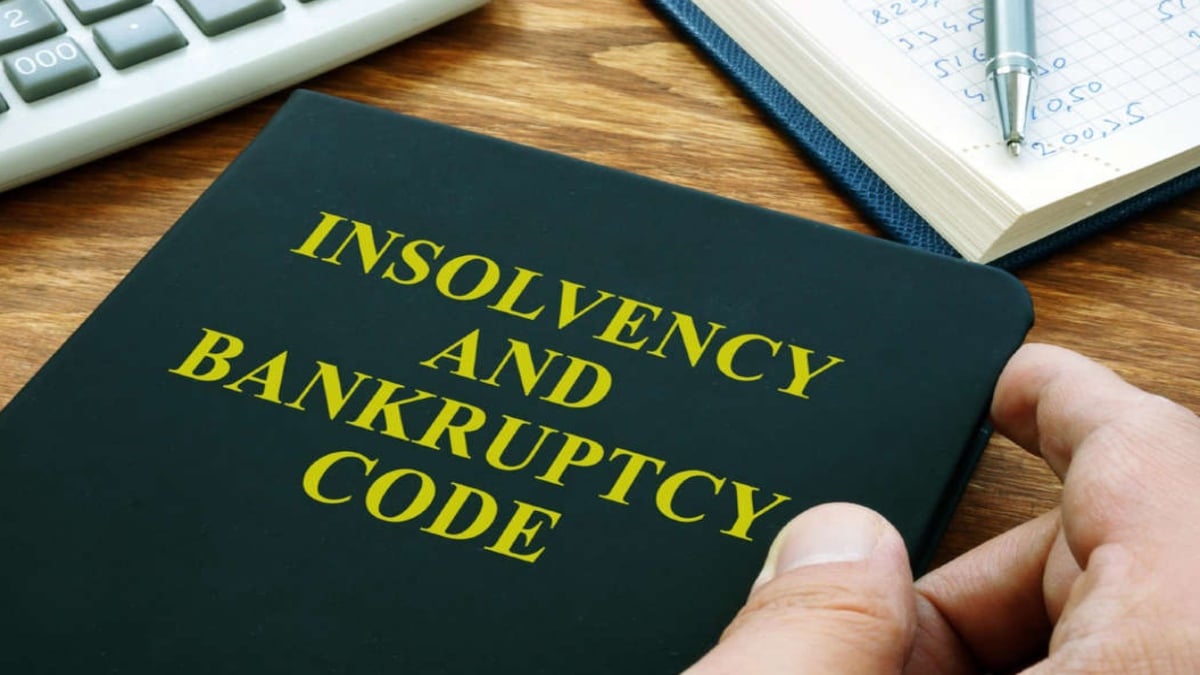
About Insolvency and Bankruptcy Code, 2016
- It is the bankruptcy law of India which seeks to consolidate the existing framework by creating a single law for insolvency and bankruptcy.
- It provides for a time-bound process to resolve insolvency.
- Applicability: The provisions of the Code are applicable to companies, limited liability entities, firms, and individuals (i.e. all entities other than financial service providers).
- Timeframe for completion of the exercise:
- Companies have to complete the entire insolvency exercise within 180 days under the IBC. The deadline may be extended if the creditors do not raise objections to the extension.
- For smaller companies, including startups with an annual turnover of Rs 1 crore, the whole exercise of insolvency must be completed in 90 days, and the deadline can be extended by 45 days.
- If debt resolution doesn’t happen, the company goes for liquidation.
- Who regulates the IBC proceedings?
- The Insolvency and Bankruptcy Board of India (IBBI) has been appointed as a regulator and it can oversee these proceedings.
- IBBI has 10 members appointed by the Central Government.
- IBBI regulates insolvency professionals, insolvency professional agencies, and information utilities set up under the Code.
- Who facilitates the insolvency resolution? A licensed professional administer the resolution process, manage the assets of the debtor, and provide information for creditors to assist them in decision-making.
- Who adjudicates over the proceedings?
- The proceedings of the resolution process will be adjudicated by the National Companies Law Tribunal (NCLT) for companies and the Debt Recovery Tribunal for individuals.
- The courts approve initiating the resolution process, appointing the insolvency professional, and giving nod to the final decision of creditors.
- What is the procedure to resolve insolvency under the Code?
- When a default occurs, the resolution process may be initiated by the debtor or creditor.
- The insolvency professional administers the process.
- The professional provides financial information of the debtor from the information utilities to the creditor and manages the debtor’s assets.
- This process lasts for 180 days, and any legal action against the debtor is prohibited during this period.
- What does the committee of creditors do?
- A committee consisting of the financial creditors who lent money to the debtor is formed by the insolvency professional.
- The creditors’ committee decides the future of the outstanding debt owed to them.
- They may choose to revive the debt owed to them by changing the repayment schedule or selling the assets of the debtor to get their dues back.
- If a decision is not taken in 180 days, the debtor’s assets go into liquidation.
- What happens under liquidation?
- If the debtor goes into liquidation, an insolvency professional administers the liquidation process.
- Proceeds from the sale of the debtor’s assets are distributed in the following order: First, insolvency resolution costs, including the remuneration to the insolvency professional; second, secured creditors, whose loans are backed by collateral; and third, dues to workers, other employees; forth, unsecured creditors.
Q1) What is Insolvency and Bankruptcy ?
Insolvency is when an individual or company can no longer meet their financial obligations to lenders as debts become due. Bankruptcy is a legal process that provides protection and relief for individuals who are unable to pay off their debts. Insolvency is a financial state whereas bankruptcy is a legal declaration and process.
Source: Supreme Court upholds validity of key provisions of Insolvency and Bankruptcy Code


 Last updated on Oct, 2026
→ UPSC 2027 Notification will be released on 13 January 2027 at upsconline.nic.in.
→ Check Nobel Prize 2026 Winners List here.
→ Download PIB PRiSM Monthly Magazine 2026 here.
→ Check UPSC Monthly Current Affairs Magazine The Recitals here.
→ Check out the latest UPSC Syllabus here.
→ Download UPSC Model Answers for Mains 2026
→ UPSC Mains Question Paper 2026 is out now for Essay & GS Paper 1, 2, 3 & 4.
→ UPSC Calendar 2027 has been released.
→ Enroll in Vajiram & Ravi’s UPSC Mains Test Series 2027 for structured answer writing practice, expert evaluation, and exam-oriented feedback.
→ Join Vajiram & Ravi’s UPSC Mentorship Program 2027 for personalized guidance, strategy planning, and one-to-one support from experienced mentors.
→ Go through the UPSC Mains Previous Year Papers to enhance your preparation.
→ UPSC has released UPSC Toppers List 2025 with the Civil Services final result on its official website.
→ Also check Best UPSC Coaching in India