What’s in today’s article?
- Why in News?
- What is the Background in which the Policy Came?
- What are the Key Highlights of the Indian Space Policy 2023?
- What are the Key Concerns?
- What is LIGO (Laser Interferometer Gravitational-Wave Observatory) – India?
Why in News?
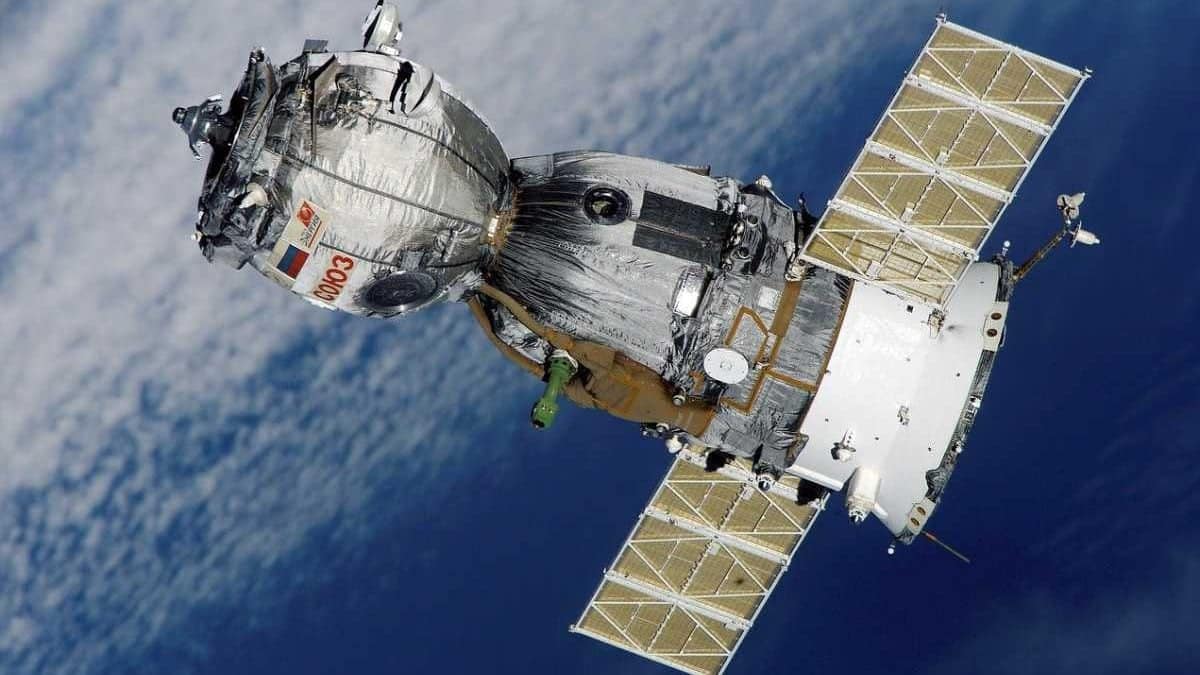
- Three years after opening up the space sector to private players, the Union Cabinet on Security (chaired by the PM) approved the Indian Space Policy 2023.
- The Cabinet also approved setting up of LIGO (Laser Interferometer Gravitational-Wave Observatory) at Maharashtra’s Hingoli.
What is the Background in which the Policy Came?
- A consolidated space policy has been long anticipated to clarify roles and ways of participation of the government space agency, start-ups and industries.
- Although the Indian National Space Promotion and Authorisation Centre set up in 2020 provided a single window for all approvals and resource sharing, these came on a case-to-case basis.
- Since the space sector was opened up to private players in 2020, over 200 space start-ups have come up in the country and many of them are also working towards providing launch services.
- Private company Skyroot Aerospace has already conducted a sub-orbital flight with its solid fuel based single-stage Vikram S rocket.


What are the Key Highlights of the Indian Space Policy 2023?
- It lays down the roles and responsibilities of organisations such as Indian Space Research Organisation (ISRO), NewSpace India Limited (NSIL) and private sector entities.
- It aims to enhance the role of the Department of Space, boost activities of ISRO missions and give a larger participation of research, academia, startups and industry.
- It will pave the way forward with much required clarity in space reforms and augment private industry participation to drive the space economy opportunity for the country.
What are the Key Concerns?
- Although a move in the right direction, the policy is still short of a Bill that can provide a legal framework for commercial use of space.
- Such a legal framework should create mechanisms for insurance against damage in space, something that comes at an extremely high cost to private players at the moment.
What is LIGO (Laser Interferometer Gravitational-Wave Observatory) – India?
- It is a planned advanced gravitational-wave observatory (meant to detect and track cosmic gravitational waves) as part of the worldwide network, which received the Indian Government’s in-principle approval in 2016.
- It will be built by the Department of Atomic Energy (DAE), Department of Science and Technology (DST), Government of India, with a MoU with the National Science Foundation (NSF), USA, etc.
- LIGO-India is a multidisciplinary mega-science project that requires expertise from a variety of fields (laser, vacuum, optics, computer, etc.) and provides cutting edge research opportunities – giving a global role to India.
- There were only two LIGO observatories in the world, both of them in the US and the Indian observatory is scheduled to be completed by 2030.
Q1) What is the Indian National Space Promotion and Authorization Center (IN-SPACe)?
IN-SPACe is an independent nodal agency under Department of Space for allowing space activities and usage of DOS owned facilities by non-governmental private entities (NGPEs) as well as to prioritise the launch manifest.
Q2) What is Vikram-S?
Vikram-S (Sarabhai) is India’s first privately-developed rocket developed by Hyderabad-based startup Skyroot Aerospace Private Limited. It is a single-stage solid fuelled, sub-orbital rocket that is lifted off in 2022 under the mission titled Prarambh.
Source: Union Cabinet gives nod to Indian Space Policy 2023 | IE

 Last updated on Oct, 2026
→ UPSC 2027 Notification will be released on 13 January 2027 at upsconline.nic.in.
→ Asian Games 2026 are being held in Aichi-Nagoya, Japan, from 19 September to 4 October.
→ Check Nobel Prize 2026 Winners List here.
→ Download PIB PRiSM Monthly Magazine 2026 here.
→ Check UPSC Monthly Current Affairs Magazine The Recitals here.
→ Check out the latest UPSC Syllabus here.
→ Download UPSC Model Answers for Mains 2026
→ UPSC Mains Question Paper 2026 is out now for Essay & GS Paper 1, 2, 3 & 4.
→ UPSC Calendar 2027 has been released.
→ Enroll in Vajiram & Ravi’s UPSC Mains Test Series 2027 for structured answer writing practice, expert evaluation, and exam-oriented feedback.
→ Join Vajiram & Ravi’s UPSC Mentorship Program 2027 for personalized guidance, strategy planning, and one-to-one support from experienced mentors.
→ Go through the UPSC Mains Previous Year Papers to enhance your preparation.
→ UPSC has released UPSC Toppers List 2025 with the Civil Services final result on its official website.
→ Also check Best UPSC Coaching in India