About Infrasound:
- It refers to sound waves with very low frequencies, in contrast to the more ubiquitous ultrasound.
- It can be produced by a passing meteor, a storm, an aurora up north, volcanoes, earthquakes or even nuclear explosions.
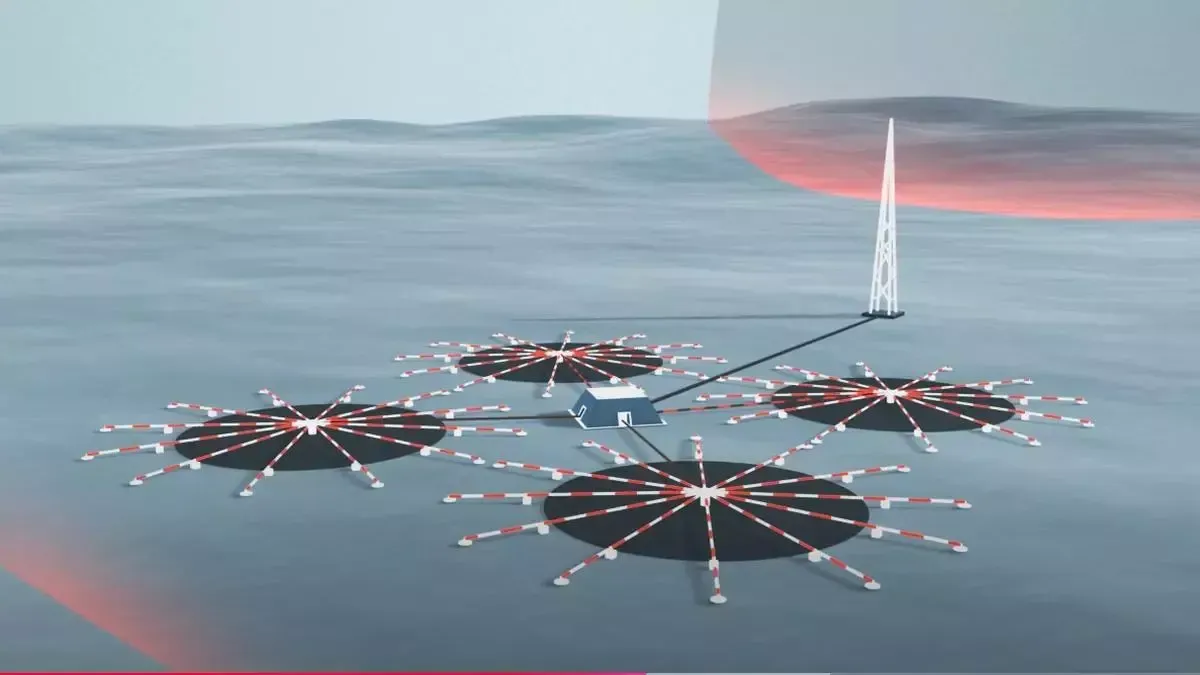
- Infrasonic waves can cause minute changes in the atmospheric pressure, which can be measured by microbarometers.
- These noiseless sounds can travel very long distances without losing steam — a property that CTBTO finds useful for detecting distant nuclear explosions.
- The CTBTO’s International Monitoring System (IMS) uses a range of technologies to detect nuclear explosions. Its Infrasound Network (that is being built) is the only global monitoring network of its kind, with plans to build a network of 60 array stations in 35 countries.
- Applications of Infrasound
- It can be used to check the structural health of buildings, dams or bridges — because infrasonic waves can pass through dense materials and reveal internal stress, cracks or other defects.
- In the field of aerospace, low-frequency sounds generated during a rocket’s lift-off can cue the stress and behaviour of a rocket, or detect aerodynamic instabilities of an aircraft.
- In mining, infrasound can help check the integrity of mine shafts or determine whether a dynamite blast was successful.
- This sound has also been used in wildlife tracking, such as monitoring the movement of whales.
Q1: What is Comprehensive Nuclear Test Ban Treaty (CTBT)?
The Comprehensive Test Ban Treaty prohibits “any nuclear weapon test explosion or any other nuclear explosion” anywhere in the world. The treaty was opened for signature in September 1996, and has been signed by 187 nations and ratified by 178. The treaty cannot formally enter into force until it is ratified by 44 specific nations, eight of which have yet to do so: India, China, Pakistan, North Korea, Israel, Iran, Egypt, and the United States.
Source: Sound Science. CTBTO tunes into infrasound


 Last updated on Oct, 2026
→ UPSC 2027 Notification will be released on 13 January 2027 at upsconline.nic.in.
→ Asian Games 2026 are being held in Aichi-Nagoya, Japan, from 19 September to 4 October.
→ Check Nobel Prize 2026 Winners List here.
→ Download PIB PRiSM Monthly Magazine 2026 here.
→ Check UPSC Monthly Current Affairs Magazine The Recitals here.
→ Check out the latest UPSC Syllabus here.
→ Download UPSC Model Answers for Mains 2026
→ UPSC Mains Question Paper 2026 is out now for Essay & GS Paper 1, 2, 3 & 4.
→ UPSC Calendar 2027 has been released.
→ Enroll in Vajiram & Ravi’s UPSC Mains Test Series 2027 for structured answer writing practice, expert evaluation, and exam-oriented feedback.
→ Join Vajiram & Ravi’s UPSC Mentorship Program 2027 for personalized guidance, strategy planning, and one-to-one support from experienced mentors.
→ Go through the UPSC Mains Previous Year Papers to enhance your preparation.
→ UPSC has released UPSC Toppers List 2025 with the Civil Services final result on its official website.
→ Also check Best UPSC Coaching in India