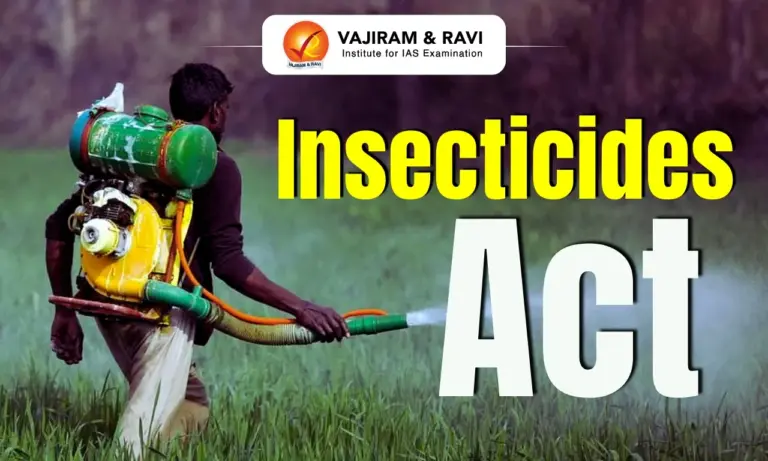
The Insecticides Act 1968 is a central legislation enacted by the Government of India to regulate the import, manufacture, sale, transport, distribution, and use of insecticides. The Act aims to ensure that insecticides available in the market are safe, effective, and of standard quality, thereby protecting human beings, animals, and the environment from harmful effects.
The Act came into force on 1 August 1971, along with the Insecticides Rules, 1971, which provide the procedural framework for its implementation.
Insecticides Act 1968
The Insecticides Act, 1968 was enacted to regulate the quality, registration, manufacture, and sale of insecticides in India. The Act also provides for licensing, inspection, and enforcement to protect farmers, consumers, and the environment.
Insecticides Act 1968 Objectives
The Insecticides Act 1968 was enacted to regulate the import, manufacture, sale, transport, distribution, and use of insecticides in India, ensuring their quality, safety, and effectiveness while protecting human health, livestock, crops, and the environment.
- Regulate the import, manufacture, sale, transport, distribution, and use of insecticides.
- Ensure that only safe, effective, and quality insecticides are available in the market.
- Prevent the manufacture and sale of misbranded, adulterated, and substandard insecticides.
- Protect human beings, animals, crops, and the environment from harmful effects of insecticides.
- Establish a system for the registration of insecticides before their commercial use.
- Provide a licensing framework for manufacturers, dealers, distributors, and sellers.
- Promote the safe handling, storage, packaging, and labeling of insecticides.
- Strengthen quality control through inspection, testing, and enforcement mechanisms.


Authorities Under the Act
The Insecticides Act, 1968 establishes various authorities to regulate the registration, manufacture, sale, quality control, and safe use of insecticides across India.
1. Central Insecticides Board (CIB)
- Advises the Central and State Governments on technical matters related to insecticides.
- Recommends measures for the safe use of insecticides.
- Reviews scientific developments and suggests policy improvements.
- Promotes coordination among government agencies on insecticide regulation.
2. Registration Committee (RC)
- Registers insecticides after evaluating their safety, efficacy, and quality.
- Examines applications for the import and manufacture of insecticides.
- May approve, refuse, suspend, or cancel registrations based on scientific evidence.
- Reviews registered insecticides when new safety concerns arise.
Also Read:- Indian Independence Act 1947
3. Licensing Authority
- Grants, renews, suspends, or cancels licences for the manufacture, sale, distribution, and stocking of insecticides.
- Ensures compliance with the provisions of the Act and the Insecticides Rules, 1971.
- Monitors whether licensees meet prescribed conditions.
4. Insecticide Inspectors
- Inspect manufacturing units, warehouses, and retail outlets.
- Collect insecticide samples for laboratory analysis.
- Search, seize, and investigate suspected violations.
- Initiate legal action against offenders under the Act.
5. Insecticide Analysts
- Analyze insecticide samples in notified laboratories.
- Determine whether products meet prescribed quality standards.
- Submit analytical reports used as evidence in enforcement proceedings.
- Assist regulatory authorities in maintaining quality control.
Importance of the Insecticides Act, 1968
The Insecticides Act, 1968 plays a vital role in regulating the quality, safety, and use of insecticides in India, ensuring the protection of farmers, consumers, livestock, and the environment while supporting sustainable agricultural practices.
- Ensures that only registered and quality-tested insecticides are manufactured, imported, and sold.
- Protects farmers from misbranded, adulterated, and substandard insecticides.
- Safeguards human health, livestock, and beneficial organisms from the harmful effects of unsafe insecticides.
- Promotes the safe manufacture, storage, packaging, labeling, and distribution of insecticides.
- Strengthens regulatory oversight through registration, licensing, inspection, and laboratory testing.
- Enhances agricultural productivity by ensuring the availability of effective crop protection products.
- Supports environmental protection by regulating the use of hazardous insecticides and encouraging responsible pesticide management.
Replacement by New Legislation
To modernize pesticide regulation, the Government introduced the Pesticide Management Bill (which seeks to replace the Insecticides Act, 1968). The proposed law aims to strengthen regulation, improve farmer protection, enhance compensation mechanisms, and align India’s pesticide framework with modern scientific and safety standards.

 Last updated on Oct, 2026
→ UPSC 2027 Notification will be released on 13 January 2027 at upsconline.nic.in.
→ Asian Games 2026 are being held in Aichi-Nagoya, Japan, from 19 September to 4 October.
→ Check Nobel Prize 2026 Winners List here.
→ Download PIB PRiSM Monthly Magazine 2026 here.
→ Check UPSC Monthly Current Affairs Magazine The Recitals here.
→ Check out the latest UPSC Syllabus here.
→ Download UPSC Model Answers for Mains 2026
→ UPSC Mains Question Paper 2026 is out now for Essay & GS Paper 1, 2, 3 & 4.
→ UPSC Calendar 2027 has been released.
→ Enroll in Vajiram & Ravi’s UPSC Mains Test Series 2027 for structured answer writing practice, expert evaluation, and exam-oriented feedback.
→ Join Vajiram & Ravi’s UPSC Mentorship Program 2027 for personalized guidance, strategy planning, and one-to-one support from experienced mentors.
→ Go through the UPSC Mains Previous Year Papers to enhance your preparation.
→ UPSC has released UPSC Toppers List 2025 with the Civil Services final result on its official website.
→ Also check Best UPSC Coaching in India
Insecticides Act 1968 FAQs
Q1. What is the Insecticides Act, 1968?+
Q2. What is the main objective of the Insecticides Act, 1968?+
Q3. Which authority registers insecticides in India?+
Q4. What is the role of the Central Insecticides Board (CIB)?+
Q5. What are misbranded insecticides?+
Tags: insecticides act insecticides act 1968