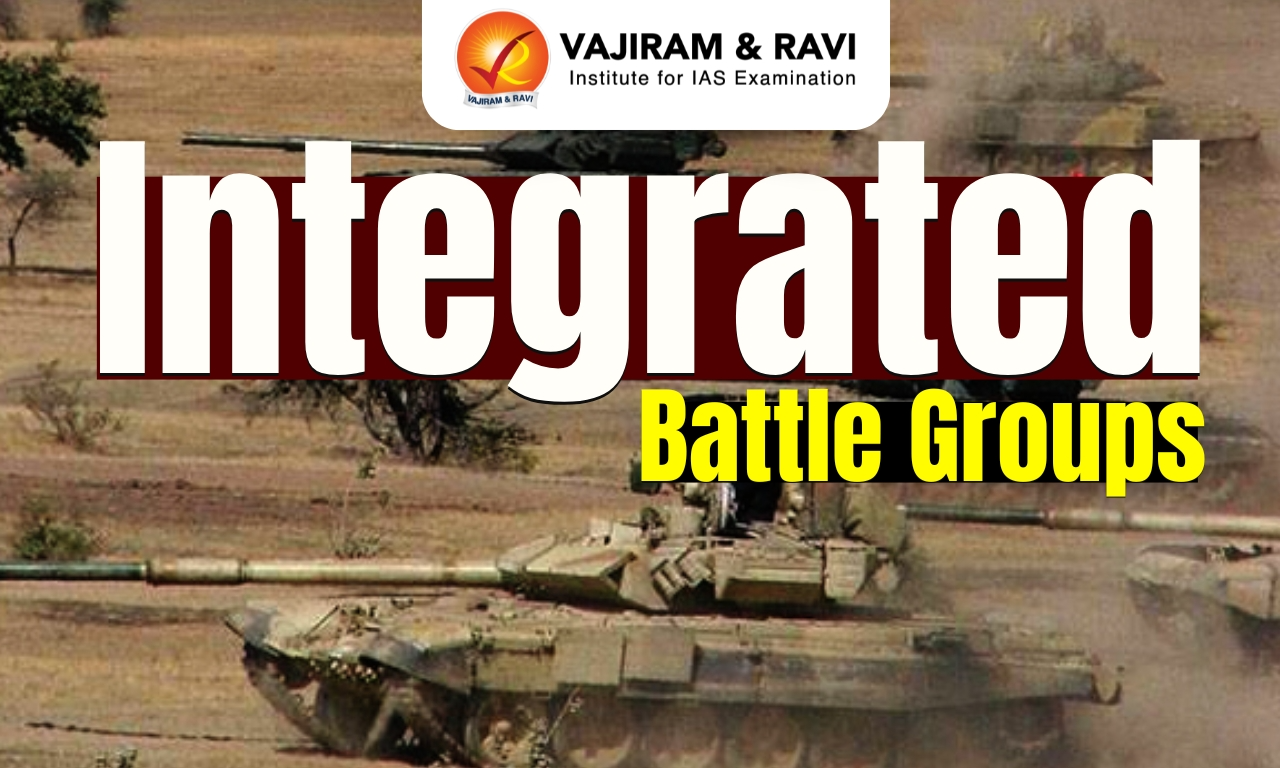
Integrated Battle Groups (IBGs) are brigade-sized, agile, and self-sufficient combat formations introduced to transform the warfighting capabilities of the Indian Army. These formations are designed to enable rapid mobilisation, swift strikes, and better coordination among different arms of the military during modern warfare.
Integrated Battle Groups Key Features
Integrated Battle Groups are a significant shift from conventional military structures due to their flexibility and efficiency. Some of their major features include:
- Rapid Mobilisation: IBGs can be deployed within 12-48 hours, depending on their location.
- Self-Sufficient Units: Each IBG includes combat, combat support, and logistical elements, making it capable of independent operations.
- Customised Composition: Formed based on the principle of Threat, Terrain, and Task (3Ts).
- High Mobility: Designed for quick movement and rapid response along borders.
- Integrated Structure: Combines infantry, artillery, armoured units, engineers, and communication systems.
Also Read: Defence Technology
The Concept of 3Ts
The design of each IBG is based on the 3Ts principle, ensuring maximum effectiveness:
- Threat: Nature and capability of the enemy
- Terrain: Geographic conditions such as deserts, plains, or mountains
- Task: Specific mission objectives (defence, offence, or strike operations)
For example:
- A desert IBG may have more tanks and mechanised units
- A mountain IBG may focus on light infantry and mobility equipment


Integrated Battle Groups Strategic Importance
The introduction of IBGs is a major military reform aimed at improving India’s combat readiness. Their importance lies in:
- Faster Response Time: Ability to act swiftly during crises
- Enhanced Combat Efficiency: Better coordination between different units
- Flexibility in Warfare: Adaptable to multiple battle scenarios
- Deterrence Capability: Acts as a strong signal to adversaries
The deployment of IBGs along borders with China and Pakistan strengthens India’s ability to handle two-front security challenges effectively.

 Last updated on Oct, 2026
→ UPSC 2027 Notification will be released on 13 January 2027 at upsconline.nic.in.
→ Check Nobel Prize 2026 Winners List here.
→ Download PIB PRiSM Monthly Magazine 2026 here.
→ Check UPSC Monthly Current Affairs Magazine The Recitals here.
→ Check out the latest UPSC Syllabus here.
→ Download UPSC Model Answers for Mains 2026
→ UPSC Mains Question Paper 2026 is out now for Essay & GS Paper 1, 2, 3 & 4.
→ UPSC Calendar 2027 has been released.
→ Enroll in Vajiram & Ravi’s UPSC Mains Test Series 2027 for structured answer writing practice, expert evaluation, and exam-oriented feedback.
→ Join Vajiram & Ravi’s UPSC Mentorship Program 2027 for personalized guidance, strategy planning, and one-to-one support from experienced mentors.
→ Go through the UPSC Mains Previous Year Papers to enhance your preparation.
→ UPSC has released UPSC Toppers List 2025 with the Civil Services final result on its official website.
→ Also check Best UPSC Coaching in India
Integrated Battle Groups FAQs
Q1. What are Integrated Battle Groups (IBGs)?+
Q2. What is the main objective of IBGs?+
Q3. How quickly can IBGs be mobilised?+
Q4. What is the 3Ts principle in IBGs?+
Q5. Who commands an IBG?+
Tags: defence