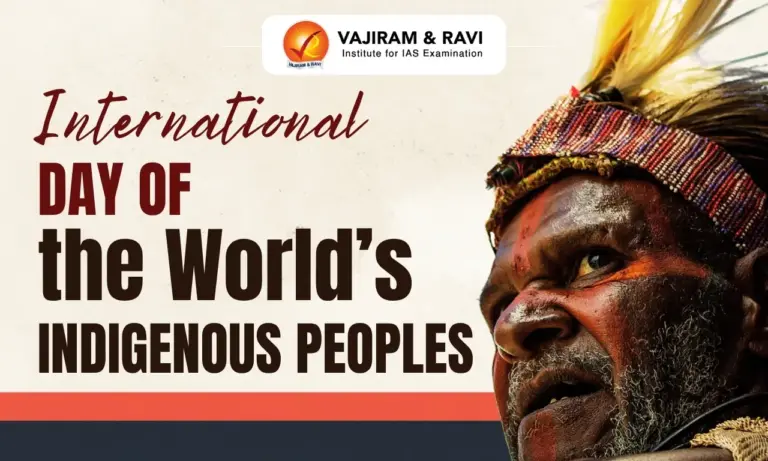
The International Day of the World’s Indigenous Peoples is observed annually on August 9 to recognise the rights, cultures, traditions, knowledge systems and contributions of Indigenous Peoples worldwide. The United Nations established the observance in December 1994, giving Indigenous issues a dedicated platform at the international level.
International Day of the World’s Indigenous Peoples 2026
The International Day of the World’s Indigenous Peoples 2026 will be observed on August 9. The United Nations General Assembly established the day in December 1994 to promote awareness of Indigenous rights and protect their unique cultural and knowledge systems.
International Day of the World’s Indigenous Peoples 2026 Theme
The theme for International Day of the World’s Indigenous Peoples 2026 is “Honouring Indigenous Midwives: Safeguarding Life and Well-being.” The theme recognises Indigenous midwives as important holders and practitioners of traditional knowledge related to pregnancy, childbirth, maternal care and community health. It also emphasises the need to respect Indigenous healthcare practices while ensuring access to safe and quality healthcare services.


International Day of the World’s Indigenous Peoples Objectives
The primary objective is to promote respect for the rights, dignity and cultural identity of Indigenous Peoples.
- Protect Indigenous rights: Promote the protection of fundamental human rights and freedoms.
- Promote self-determination: Support Indigenous Peoples’ participation in decisions that directly affect their lives and communities.
- Preserve cultures: Protect Indigenous traditions, customs, languages, art and cultural practices.
- Safeguard traditional knowledge: Recognise and preserve knowledge developed and transmitted across generations.
- Protect land and resources: Raise awareness about Indigenous communities’ relationship with their traditional lands and natural resources.
- Promote equality: Address discrimination, marginalisation and social inequalities.
- Improve healthcare: Encourage better and culturally appropriate healthcare services.
- Support education: Promote equitable access to quality education while respecting Indigenous languages and cultures.
- Strengthen participation: Encourage Indigenous representation in national and international decision-making.
International Day of the World’s Indigenous Peoples History
The history of the International Day of the World’s Indigenous Peoples dates back to the UN’s efforts to recognise and protect Indigenous rights, with August 9 commemorating the first meeting of the UN Working Group on Indigenous Populations in 1982.
- 1982: The UN Working Group on Indigenous Populations held its first meeting on August 9.
- 1994: The UN General Assembly proclaimed August 9 as the International Day of the World’s Indigenous Peoples.
- Purpose: To raise awareness about Indigenous rights, cultures, traditions and challenges.
- Focus: Promotes the protection of Indigenous heritage, traditional knowledge, land rights and self-determination.
- Global observance: The day is marked annually through cultural programmes, awareness campaigns, discussions and educational activities.
Major Challenges Faced by Indigenous Peoples
Despite their cultural and environmental contributions, Indigenous communities in many parts of the world continue to face significant challenges. Major challenges are:
- Land rights disputes: Development and other activities can affect traditional lands and resources.
- Cultural erosion: Globalisation and social changes can contribute to the decline of traditional practices.
- Language loss: Indigenous languages face the risk of declining use among younger generations.
- Limited healthcare access: Remote communities may face difficulties accessing quality healthcare.
- Educational inequalities: Some communities experience limited access to educational opportunities.
- Economic marginalisation: Indigenous communities may face fewer employment and livelihood opportunities.
- Discrimination: Social and institutional discrimination can affect access to basic services.
- Loss of traditional knowledge: Knowledge may disappear when it is not passed to younger generations.
- Environmental degradation: Pollution, deforestation and climate change can threaten traditional livelihoods.
About United Nations General Assembly
The United Nations General Assembly (UNGA) is the main deliberative body of the United Nations, where all 193 UN member states discuss global issues and adopt resolutions on international matters.
- Established: 1945
- Members: 193 UN Member States
- Headquarters: New York City, USA
- Main Role: Discusses and addresses international peace, security, development and human rights.
- Key Function: Approves the UN budget and elects members to various UN bodies.
- Representation: Each member state has one vote in the General Assembly.
- Sessions: Holds its regular annual session every year, beginning in September.

 Last updated on Oct, 2026
→ UPSC 2027 Notification will be released on 13 January 2027 at upsconline.nic.in.
→ Asian Games 2026 are being held in Aichi-Nagoya, Japan, from 19 September to 4 October.
→ Check Nobel Prize 2026 Winners List here.
→ Download PIB PRiSM Monthly Magazine 2026 here.
→ Check UPSC Monthly Current Affairs Magazine The Recitals here.
→ Check out the latest UPSC Syllabus here.
→ Download UPSC Model Answers for Mains 2026
→ UPSC Mains Question Paper 2026 is out now for Essay & GS Paper 1, 2, 3 & 4.
→ UPSC Calendar 2027 has been released.
→ Enroll in Vajiram & Ravi’s UPSC Mains Test Series 2027 for structured answer writing practice, expert evaluation, and exam-oriented feedback.
→ Join Vajiram & Ravi’s UPSC Mentorship Program 2027 for personalized guidance, strategy planning, and one-to-one support from experienced mentors.
→ Go through the UPSC Mains Previous Year Papers to enhance your preparation.
→ UPSC has released UPSC Toppers List 2025 with the Civil Services final result on its official website.
→ Also check Best UPSC Coaching in India
International Day of the World’s Indigenous Peoples 2026 FAQs
Q1. When is International Day of the World’s Indigenous Peoples observed?+
Q2. What is the theme of International Day of the World’s Indigenous Peoples 2026?+
Q3. When was the day established?+
Q4. Why is August 9 important?+
Q5. How many Indigenous people live in the world?+
Q6. What is the main purpose of the day?+
Q7. What does the 2026 theme focus on?+
Tags: important days important days 2026 international day international day of the world’s indigenous peoples world’s indigenous peoples