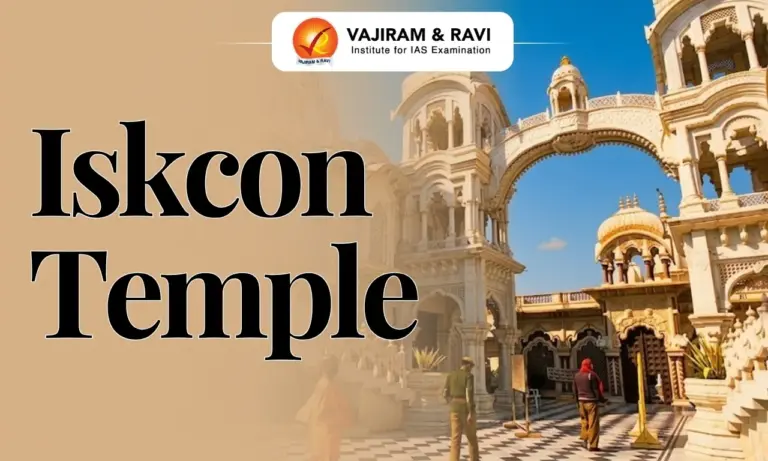
ISKCON Temple is a popular spiritual and cultural centre dedicated to Lord Krishna and Radha. Founded through the International Society for Krishna Consciousness (ISKCON), these temples promote Bhakti Yoga, devotional practices, Vedic teachings and selfless service. Known for their beautiful architecture, peaceful atmosphere and cultural activities, ISKCON temples attract devotees and visitors from across India and the world.
ISKCON History, Founder and Teachings
- ISKCON, or the International Society for Krishna Consciousness, was founded in 1966 in New York City by A.C. Bhaktivedanta Swami Prabhupada. It is popularly known as the Hare Krishna movement.
- The organisation focuses on spreading Krishna consciousness and Bhakti Yoga, which emphasises devotion, prayer, spiritual learning and service.
- ISKCON has played an important role in making Bhagavad Gita and other Vedic literature accessible to people around the world. Its literature has been translated into many languages.
- Srila Bhaktivedanta Swami Prabhupada, born as Abhay Charan De on 1 September 1896 in Calcutta, was the spiritual teacher who established ISKCON.
- Prabhupada travelled extensively and introduced Gaudiya Vaishnava teachings and Bhakti Yoga to audiences in India and abroad. He also established numerous temples and wrote several books on Krishna consciousness.
- ISKCON follows the tradition of Gaudiya Vaishnavism, which was inspired by Chaitanya Mahaprabhu. Its central focus is the devotional worship of Radha and Krishna.
- The Hare Krishna Mahamantra is an important part of ISKCON’s spiritual practice. Devotees commonly chant the names of Hare, Krishna and Rama through kirtan and devotional singing.
ISKCON Temple Architecture and Major Features
ISKCON temples combine traditional Indian architectural elements with modern design, creating spaces that reflect devotion, spirituality and Krishna consciousness. Their major features are discussed below:
- Blend of traditional and modern architecture: ISKCON temples generally combine elements of traditional Indian temple architecture with modern construction techniques and designs.
- No fixed architectural style: There is no single design followed by all ISKCON temples. Their architecture varies depending on the location, available space, local traditions and the scale of the temple complex.
- Main deity shrine: The central and most sacred part of the temple is the shrine where deities such as Radha-Krishna, Krishna-Balarama, Jagannath, Subhadra and Baladeva may be worshipped.
- Shikhara or temple tower: Many ISKCON temples have a prominent shikhara, a traditional temple tower placed above the main shrine. It gives the temple a distinctive Indian architectural appearance.
- Spacious prayer hall: Large halls are provided for kirtan, prayers, spiritual discourses and religious ceremonies. These spaces allow devotees to participate collectively in worship.
- Decorative interiors: Temples are often decorated with carved pillars, arches, paintings, sculptures and traditional motifs depicting stories associated with Lord Krishna and Vaishnavism.
- Colourful deity decoration: The deity area is usually decorated with flowers, colourful fabrics, jewellery and other ornaments, particularly during important festivals.
- Festival-oriented design: Temple spaces are designed to accommodate large gatherings during festivals such as Janmashtami, Radhashtami and Gaura Purnima.
- Community spaces: Many large ISKCON temple complexes include restaurants, prasadam halls, classrooms, libraries, guest houses, gardens and spaces for cultural programmes.
- Spiritual and cultural centre: ISKCON temples function not only as places of worship but also as centres for Bhagavad Gita teachings, meditation, devotional music, cultural activities and spiritual education.
- Use of traditional motifs: Lotus designs, floral patterns, religious symbols and other elements inspired by Indian artistic traditions are commonly incorporated into temple decoration.
- Emphasis on openness: The architecture of many temples focuses on creating welcoming and spacious areas where devotees and visitors can gather comfortably.
- Global adaptation: Since ISKCON has temples across different countries, its architecture often adapts to local building materials, climate and cultural surroundings while retaining important Indian religious elements.


ISKCON Temple Spiritual and Social Significance
- ISKCON promotes the idea that devotion and service go together. Its activities extend beyond temple worship to areas such as education, food distribution, healthcare and environmental awareness.
- The Food for Life initiative is one of its well-known community programmes, through which free vegetarian meals are distributed to people in need.
- ISKCON has also developed educational institutions, rural communities and other social initiatives based on its spiritual principles.
- The organisation works to spread values such as compassion, selfless service, peace and universal brotherhood through its teachings and activities.
- ISKCON temples also contribute to cultural awareness and spiritual tourism by introducing visitors to Indian traditions, devotional music, Vedic literature and Krishna consciousness.

 Last updated on Oct, 2026
→ UPSC 2027 Notification will be released on 13 January 2027 at upsconline.nic.in.
→ Check Nobel Prize 2026 Winners List here.
→ Download PIB PRiSM Monthly Magazine 2026 here.
→ Check UPSC Monthly Current Affairs Magazine The Recitals here.
→ Check out the latest UPSC Syllabus here.
→ Download UPSC Model Answers for Mains 2026
→ UPSC Mains Question Paper 2026 is out now for Essay & GS Paper 1, 2, 3 & 4.
→ UPSC Calendar 2027 has been released.
→ Enroll in Vajiram & Ravi’s UPSC Mains Test Series 2027 for structured answer writing practice, expert evaluation, and exam-oriented feedback.
→ Join Vajiram & Ravi’s UPSC Mentorship Program 2027 for personalized guidance, strategy planning, and one-to-one support from experienced mentors.
→ Go through the UPSC Mains Previous Year Papers to enhance your preparation.
→ UPSC has released UPSC Toppers List 2025 with the Civil Services final result on its official website.
→ Also check Best UPSC Coaching in India
ISKCON Temple FAQs
Q1. What is ISKCON Temple?+
Q2. What does ISKCON stand for?+
Q3. Who founded ISKCON?+
Q4. What are the main teachings of ISKCON?+
Q5. What is the role of Srila Prabhupada in ISKCON?+
Q6. What is Gaudiya Vaishnavism followed by ISKCON?+
Q7. Why is the Hare Krishna Mahamantra important in ISKCON?+
Tags: art and culture art and culture notes iskcon temple