


What are the key findings?
- Sediment profile dating back to 8000 years which helped decode climatic signatures indicated a relatively reduced rainfall and weak southwest monsoon during the late Holocene (around 2827 years BP).
- The seasonal lake in the Kaas Plateau is probably a product of an erosional localized shallow depression on a pediment (rock debris) developed over the crust.
- During the early to mid-Holocene, at around 8664 years ago, pollen, as well as diatom data, indicated a change in the climate from freshwater to drier conditions with low rainfall.
- Surprisingly, there was a significant rise in the number of diatoms in between.
- This suggests a major shift in the Indian summer Monsoon activity during that time, possibly resulting in intermittent humid periods amidst the dry spells.
- There was a decrease in rainfall and a weakened southwest Monsoon during the late Holocene (around 2827 years BP).
- During the recent past (around last 1000 years), pollen, as well as the presence of a high number of planktonic and pollution-tolerant diatom taxa indicated lake eutrophication, possibly due to human impact and cattle/livestock farming in the catchment.
About Kaas Plateau:
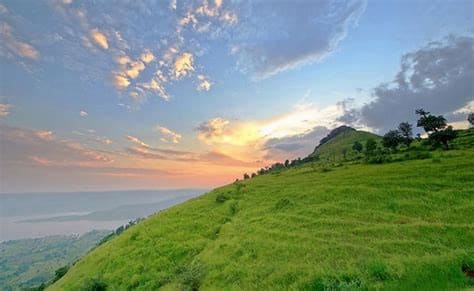
- It is nestled in the Western Ghats is about 140 km from Pune.
- It is part of the Western Ghats which was declared as world natural heritage site by United Nations Educational, Scientific and Cultural Organisation (UNESCO) in 2012
- It is known as Kaas Pathar in Marathi, its name is derived from the Kaasa tree, botanically known as Elaeocarpus glandulosus (rudraksha family).
- It is also known as valley of flowers which is situated at a mighty altitude of 1200 metres.
- It is a major biodiversity hotspot owing to the many varieties of endemic flowers and butterflies that are found here.
Q1) What are the characteristics of the Holocene?
The Holocene is characterized by the relatively stable and warm climatic conditions following the last major glacial period, known as the Pleistocene. It is a time of interglacial climate, marked by a general trend of increasing temperatures.
Source: Sediments decode climate and environmental changes on Kaas Plateau around 8664 years BP


 Last updated on Oct, 2026
→ UPSC 2027 Notification will be released on 13 January 2027 at upsconline.nic.in.
→ Check Nobel Prize 2026 Winners List here.
→ Download PIB PRiSM Monthly Magazine 2026 here.
→ Check UPSC Monthly Current Affairs Magazine The Recitals here.
→ Check out the latest UPSC Syllabus here.
→ Download UPSC Model Answers for Mains 2026
→ UPSC Mains Question Paper 2026 is out now for Essay & GS Paper 1, 2, 3 & 4.
→ UPSC Calendar 2027 has been released.
→ Enroll in Vajiram & Ravi’s UPSC Mains Test Series 2027 for structured answer writing practice, expert evaluation, and exam-oriented feedback.
→ Join Vajiram & Ravi’s UPSC Mentorship Program 2027 for personalized guidance, strategy planning, and one-to-one support from experienced mentors.
→ Go through the UPSC Mains Previous Year Papers to enhance your preparation.
→ UPSC has released UPSC Toppers List 2025 with the Civil Services final result on its official website.
→ Also check Best UPSC Coaching in India








