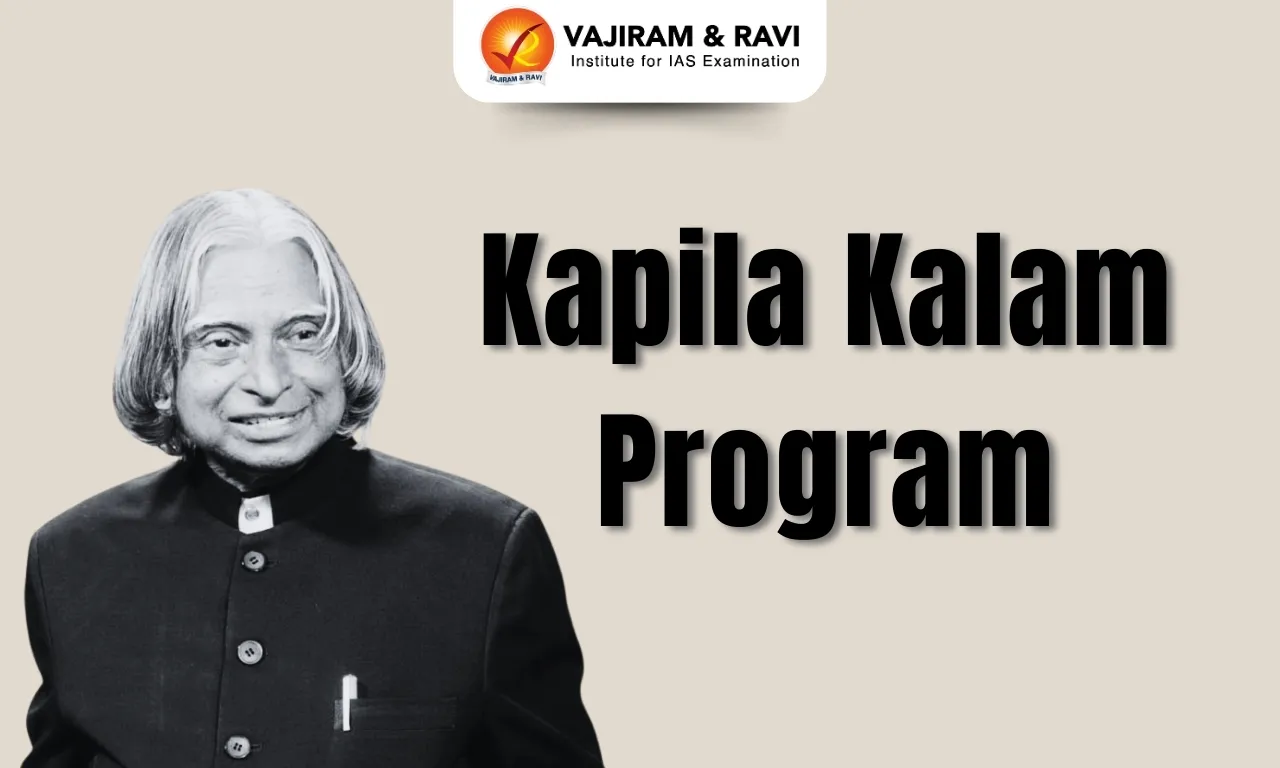
On the 89th anniversary of the late Dr. APJ Abdul Kalam on October 15, 2020, the Union Education Ministry launched the Kalam Program for Intellectual Property Literacy and Awareness Campaign (KAPILA) which was inaugurated by the Union Education Minister, Shri Ramesh Pokhriyal ‘Nishank’. The Ministry celebrates the week of October 15 to October 23 as “Intellectual Property Literacy Week” every year to raise awareness. This program aims to enhance awareness about the protection and utilization of Intellectual Property (IP) among Higher Education Institutions (HEIs). The initiative also includes funding support to encourage filing of IP, such as patents, trademarks, and copyrights.
Kapila Kalam Program Objectives
- Recognizing and facilitating intellectual property innovations and best practices in higher educational institutions (HEIs).
- The program seeks to address the lack of awareness among students and young researchers regarding Intellectual Property Rights (IPR), including the processes and benefits of filing patents for their inventions.
- KAPILA aims to empower innovators in HEIs to protect and benefit from their intellectual contributions.
- Development of credit courses on IPR, which provide in-depth knowledge about IP rules, the filing process, and the importance of protecting intellectual property.
- KAPILA highlights the gap in awareness among young researchers who consistently work on innovative projects under the guidance of their teachers but often lack the knowledge or resources to file patents effectively.
Kapila Kalam Program Significance
- The Kalam Program for Intellectual Property Literacy and Awareness Campaign (KAPILA) plays an important role in India’s journey towards becoming a 15 trillion US dollar economy by 2024-25 by focusing on innovation and strengthening intellectual property awareness among students and researchers.
- Under KAPILA, students in higher education institutions are provided with detailed information about the patent application process, ensuring they understand the correct system for filing patents to protect their inventions.
- The program facilitates colleges and institutions promoting patent filing and the preservation of intellectual property.


 Last updated on Oct, 2026
→ UPSC 2027 Notification will be released on 13 January 2027 at upsconline.nic.in.
→ Check Nobel Prize 2026 Winners List here.
→ Download PIB PRiSM Monthly Magazine 2026 here.
→ Check UPSC Monthly Current Affairs Magazine The Recitals here.
→ Check out the latest UPSC Syllabus here.
→ Download UPSC Model Answers for Mains 2026
→ UPSC Mains Question Paper 2026 is out now for Essay & GS Paper 1, 2, 3 & 4.
→ UPSC Calendar 2027 has been released.
→ Enroll in Vajiram & Ravi’s UPSC Mains Test Series 2027 for structured answer writing practice, expert evaluation, and exam-oriented feedback.
→ Join Vajiram & Ravi’s UPSC Mentorship Program 2027 for personalized guidance, strategy planning, and one-to-one support from experienced mentors.
→ Go through the UPSC Mains Previous Year Papers to enhance your preparation.
→ UPSC has released UPSC Toppers List 2025 with the Civil Services final result on its official website.
→ Also check Best UPSC Coaching in India
Kapila Kalam Program FAQs
Q1. Which ministry is the Kapila Kalam program?+
Q2. What is the Kapila scheme?+
Q3. Which Union Ministry of India has launched the Kapila campaign?+
Q4. What is the meaning of kapila?+
Tags: Kapila Kalam Program