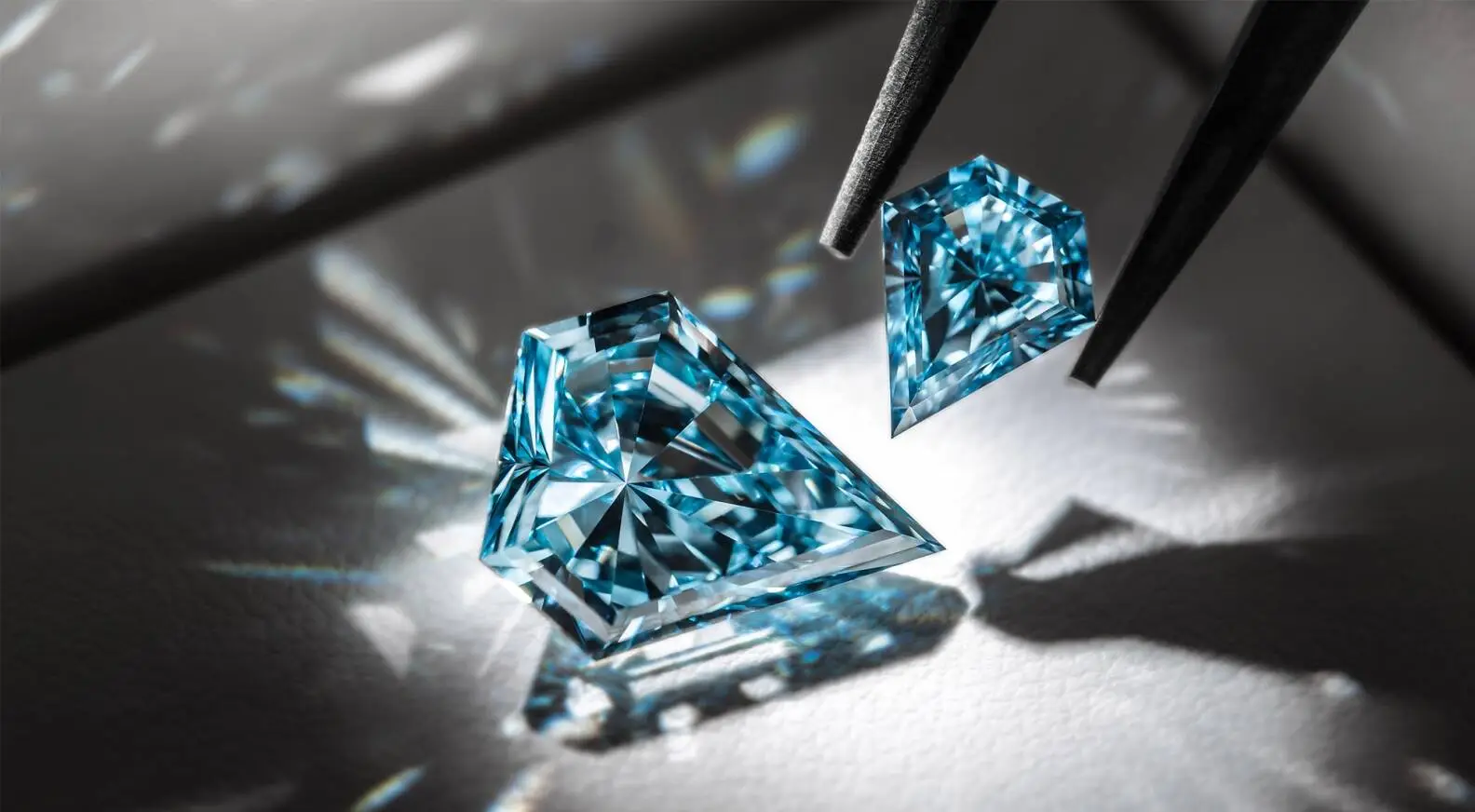
About Lab-Grown Diamonds
- Laboratory-grown diamonds have essentially the same chemical, optical, and physical properties and crystal structure as natural diamonds.
- Like natural diamonds, they are made of tightly-bonded carbon atoms.
- They respond to light in the same way and are just as hard as natural diamonds.
- The main differences between laboratory-grown and natural diamonds lie in their origin.
- Lab-grown diamonds are diamonds that are produced using specific technology which mimics the geological processes that grow natural diamonds.
- The diamond simulants such as Moissanite, Cubic Zirconia (CZ), White Sapphire, YAG, and others are used to make them look like natural diamonds.
- How are LGDs produced? There are multiple ways in which LGDs can be produced.
- High pressure, high temperature” (HPHT) method:
- It is the most common and cheapest method.
- This method mimics the conditions under which natural diamonds are formed inside the earth.
- To produce the lab diamond, a large machine is fed a certain amount of carbon materials that it then crushes under pressures of more than 870,000 lbs. per square inch at extreme temperatures ranging from 1300 – 1600 degrees Celsius.
- Lower-quality diamonds, whether natural or laboratory-grown, can also be put through the HPHT process to improve color. This process can also be used to change the color of diamonds to pink, blue or yellow.
- Chemical Vapor Deposition (CVD):
- This technique enables scientists to grow laboratory-grown diamonds using moderate temperatures (700°C to 1300°C) and lower pressures.
- Carbon-containing gas is pumped into a vacuum chamber and deposits onto a diamond seed, crystallizing as laboratory-grown diamond.
- The eventual size of the diamond depends on the time allowed for growth.
- Application of Lab-grown diamonds:
- Used for industrial purposes, in machines and tools and their hardness and extra strength make them ideal for use as cutters.
- Pure synthetic diamonds are used in electronics as a heat spreader for high-power laser diodes, laser arrays and high-power transistors.
- India produces more than three million lab-grown diamonds a year and accounts for 15 per cent of global production.
Q1: What is Carbon?
It is a very abundant element. It exists in pure or nearly pure forms – such as diamonds and graphite – but can also combine with other elements to form molecules.
Source: Will the sparkle of India’s lab-grown diamonds last forever?


 Last updated on Oct, 2026
→ UPSC 2027 Notification will be released on 13 January 2027 at upsconline.nic.in.
→ Check Nobel Prize 2026 Winners List here.
→ Download PIB PRiSM Monthly Magazine 2026 here.
→ Check UPSC Monthly Current Affairs Magazine The Recitals here.
→ Check out the latest UPSC Syllabus here.
→ Download UPSC Model Answers for Mains 2026
→ UPSC Mains Question Paper 2026 is out now for Essay & GS Paper 1, 2, 3 & 4.
→ UPSC Calendar 2027 has been released.
→ Enroll in Vajiram & Ravi’s UPSC Mains Test Series 2027 for structured answer writing practice, expert evaluation, and exam-oriented feedback.
→ Join Vajiram & Ravi’s UPSC Mentorship Program 2027 for personalized guidance, strategy planning, and one-to-one support from experienced mentors.
→ Go through the UPSC Mains Previous Year Papers to enhance your preparation.
→ UPSC has released UPSC Toppers List 2025 with the Civil Services final result on its official website.
→ Also check Best UPSC Coaching in India