About Mahanadi River:
- It is one of the major east-flowing peninsular rivers in India.
- It ranks second to the Godavari River among the peninsular rivers in respect of water potential.
- It is considered to be one of the most active silt-depositing streams in India.
- Course:
- Origin: The river originates from the Sihawa range of hills in the Dhamtari district of Chhattisgarh.
- It flows in a southeastern direction through Chhattisgarh and Odisha.
- Length: It flows a total of 860 km by distance before it ends up in the Bay of Bengal.
- The catchment area of the basin extends over major parts of Chhattisgarh and Odisha and comparatively smaller portions of Jharkhand, Maharashtra, and Madhya Pradesh.
- It passes through several major cities and towns, including Raipur, Sambalpur, and Cuttack.
- The Mahanadi basin extends over an area of 141,589 sq.km, which represents 4.3% of the total geographical area of the country.
- The river is bounded in the north by Central India hills, in the south and east by the Eastern Ghats, and in the west by the Maikal hill range.
- Tributaries: The main tributaries of Mahanadi are the Seonath River, Jonk River, HasdeoRiver, Mand River, Ib River, Ong River, and Telen River.
- Hirakud Dam:
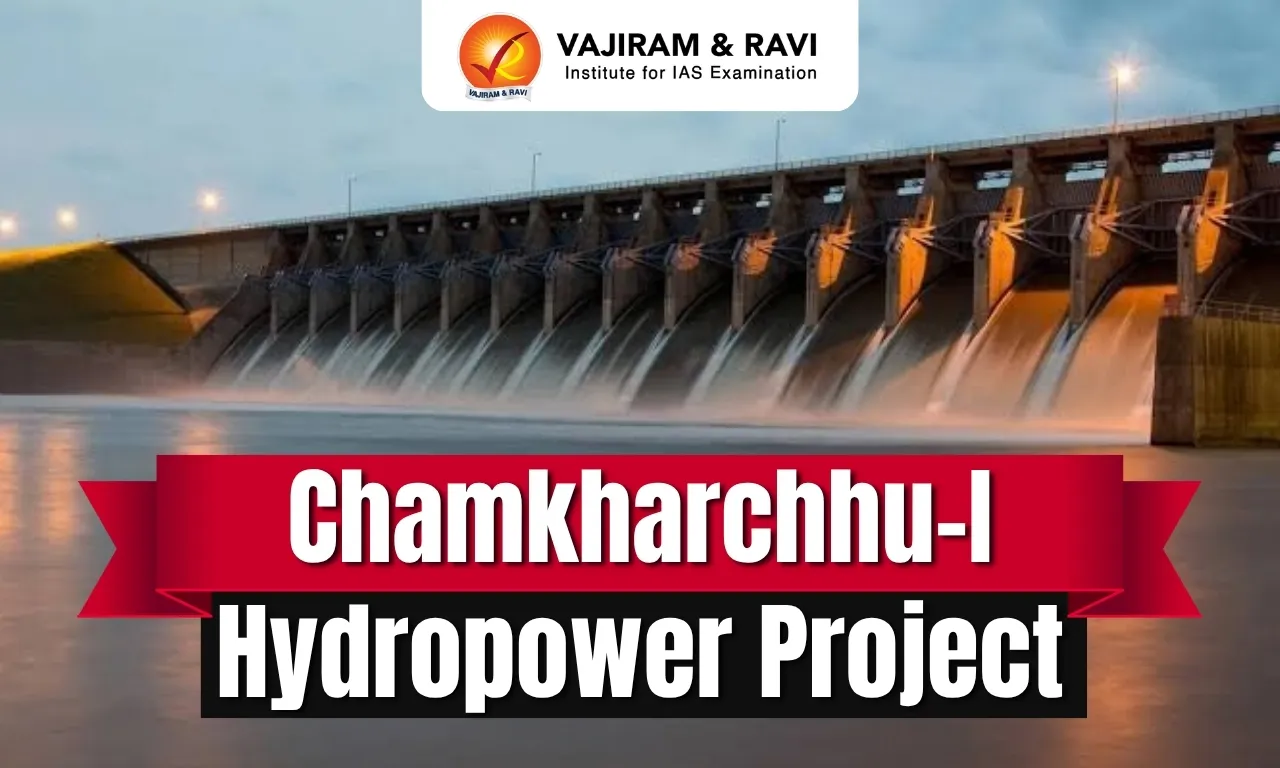
- The Hirakud Dam, the world’s longest earthen dam (26 km), is constructed across the Mahanadi River, about 15 km from Sambalpur in Odisha.
- The dam is used for irrigation, flood control, and power generation.
- Chilika Lake: Chilika, named a wetland of international importance under the Ramsar Convention, gets 61% of its inland flow from the Mahanadi River system, mainly from its distributaries – Daya and Bhargabi.
Q1: What is an earthen dam?
Earthen dams have been an essential part of human civilization for centuries, providing a reliable water source for agriculture, industry and domestic use. These dams are made from natural materials such as soil, sand, gravel and rock, making them a cost-effective and environmentally friendly solution for water management.
Source: No flood threat in Mahanadi river system: Odisha official


 Last updated on Oct, 2026
→ UPSC 2027 Notification will be released on 13 January 2027 at upsconline.nic.in.
→ Asian Games 2026 are being held in Aichi-Nagoya, Japan, from 19 September to 4 October.
→ Check Nobel Prize 2026 Winners List here.
→ Download PIB PRiSM Monthly Magazine 2026 here.
→ Check UPSC Monthly Current Affairs Magazine The Recitals here.
→ Check out the latest UPSC Syllabus here.
→ Download UPSC Model Answers for Mains 2026
→ UPSC Mains Question Paper 2026 is out now for Essay & GS Paper 1, 2, 3 & 4.
→ UPSC Calendar 2027 has been released.
→ Enroll in Vajiram & Ravi’s UPSC Mains Test Series 2027 for structured answer writing practice, expert evaluation, and exam-oriented feedback.
→ Join Vajiram & Ravi’s UPSC Mentorship Program 2027 for personalized guidance, strategy planning, and one-to-one support from experienced mentors.
→ Go through the UPSC Mains Previous Year Papers to enhance your preparation.
→ UPSC has released UPSC Toppers List 2025 with the Civil Services final result on its official website.
→ Also check Best UPSC Coaching in India