About Mass Wasting:
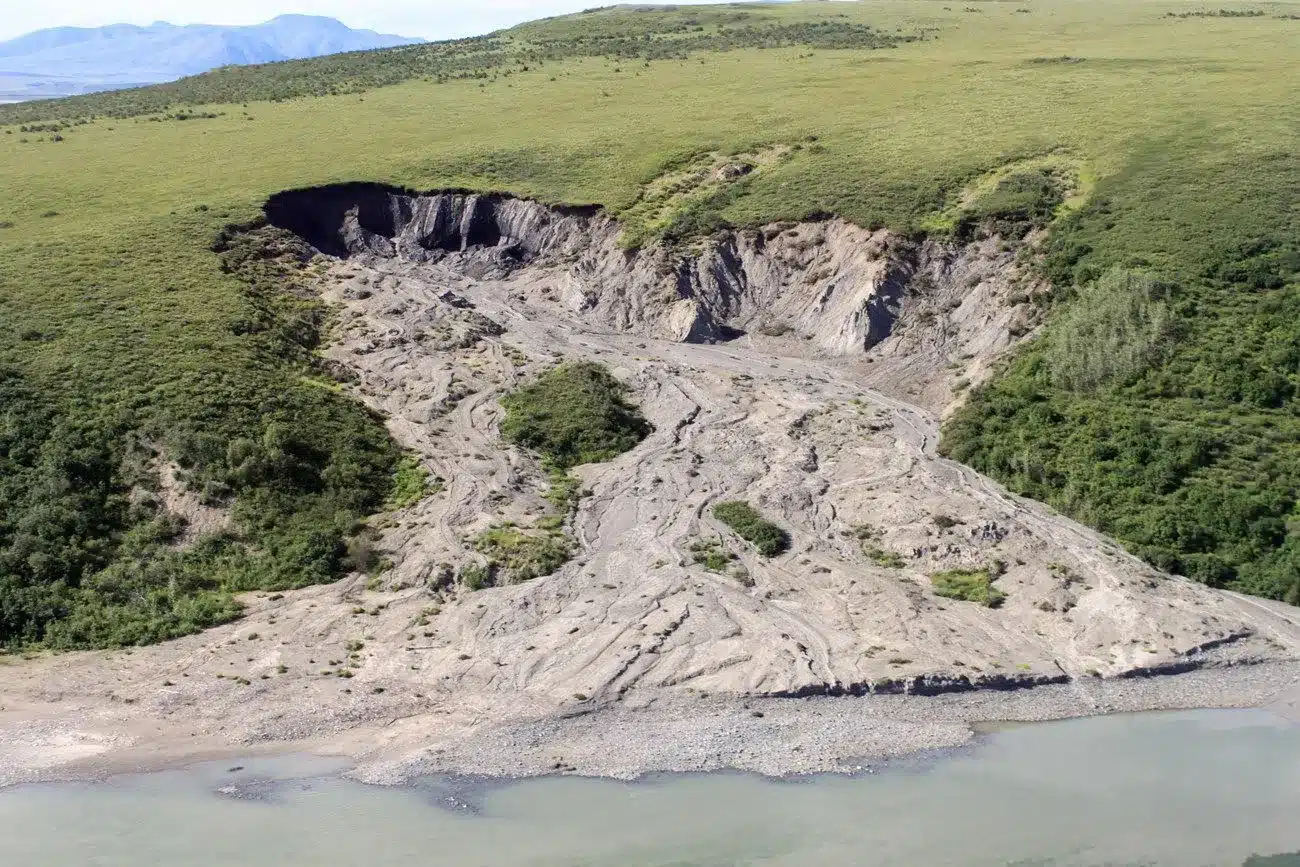
- It is the movement of rock and soil down slope under the influence of gravity.
- Causes:
- Mass wasting occurs when a slope is too steep to remain stable with existing material and conditions.
- Slope stability is determined by two factors: the angle of the slope and the shear strength of the accumulated materials.
- Mass-wasting events are triggered by changes that over steepen slope angles and weaken slope stability, such as rapid snow melt, intense rainfall, earthquake shaking, volcanic eruptions, storm waves, stream erosion, and human activities.
- Excessive precipitation is the most common trigger.
- Mass-wasting events are classified by their type of movement and material, and they share common morphological surface features.
- The most common types of mass-wasting events are rockfalls, slides, flows, and creep.
- Geologically, landslide is a general term for mass wasting that involves fast-moving geologic material.
- Loose material along with overlying soils are what typically move during a mass-wasting event.
- Moving blocks of bedrock are called rock topples, rock slides, or rock falls, depending on the dominant motion of the blocks.
- Movements of dominantly liquid material are called flows.
Movement by mass wasting can be slow or rapid. Rapid movement can be dangerous, such as during debris flows.
Q1: What is Debris flow?
Debris flows are fast-moving landslides that are particularly dangerous to life and property because they move quickly, destroy objects in their paths, and often strike without warning. Debris flows generally occur during periods of intense rainfall or rapid snowmelt and usually start on hillsides or mountains. Debris flows can travel at speeds up to and exceeding 35 mph and can carry large items such as boulders, trees, and cars.
Source: Frequent mass wasting in Tibet a cause for worry in India


 Last updated on Sep, 2026
→ UPSC 2027 Notification will be released on 13 January 2027 at upsconline.nic.in.
→ Asian Games 2026 are being held in Aichi-Nagoya, Japan, from 19 September to 4 October.
→ Check out the latest UPSC Syllabus here.
→ Download UPSC Model Answers for Mains 2026
→ UPSC Mains Question Paper 2026 is out now for Essay & GS Paper 1, 2, 3 & 4.
→ UPSC Calendar 2027 has been released.
→ Enroll in Vajiram & Ravi’s UPSC Mains Test Series 2027 for structured answer writing practice, expert evaluation, and exam-oriented feedback.
→ Join Vajiram & Ravi’s UPSC Mentorship Program 2027 for personalized guidance, strategy planning, and one-to-one support from experienced mentors.
→ Go through the UPSC Mains Previous Year Papers to enhance your preparation.
→ UPSC has released UPSC Toppers List 2025 with the Civil Services final result on its official website.
→ Also check Best UPSC Coaching in India