


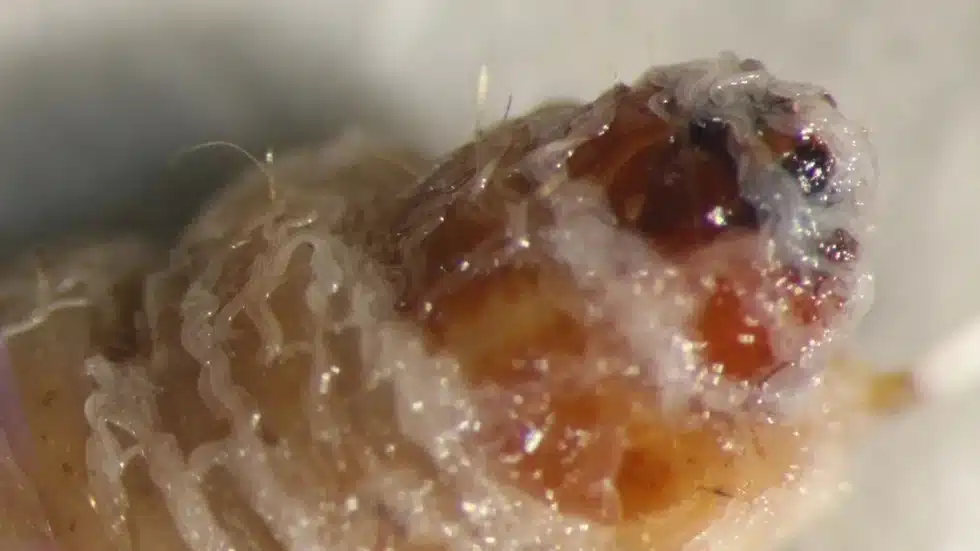
About Nematodes
- These are any worm of the phylum Nematoda.
- Nematodes are among the most abundant animals on Earth.
- They occur as parasites in animals and plants or as free-living forms in soil, fresh water, marine environments, and even such unusual places as vinegar, beer malts, and water-filled cracks deep within Earth’s crust.
- Features
- Nematodes are bilaterally symmetrical, elongate, and usually tapered at both ends.
- Some species possess a pseudocoel, a fluid-filled body cavity between the digestive tract and the body wall.
- Nematodes have been reported from every continent on earth and occur in deserts, swamps, the oceans, the tropics and Antarctica.
- Nematode parasites of animals occur in almost all organs of the body, but the most common sites are in the alimentary, circulatory, and respiratory systems. Some of these worms are known by such common names as hookworm, lungworm, pinworm and threadworm
- They can cause a variety of diseases (such as filariasis, ascariasis, and trichinosis) and parasitize many crop plants and domesticated animals.
- Significance
- Most nematodes feed on bacteria, fungi, or other microscopic creatures. As such, they are a major component of soil and sediment ecosystems.
Key facts about Steinernema adamsi
- This new species is a member of a family of nematodes called Steinernema that have long been used in agriculture to control insect parasites without pesticides.
- Steinernema are not harmful to humans or other mammals and were first discovered in the 1920s.
- This new species is part of a special group of nematodes considered beneficial to humans because it can infect and kill insect pests
- It is an entomopathogenic nematode that crawls inside of an insect, defecates highly pathogenic bacteria into its blood and then combines with that bacterium to kill the insect host.
Q1) What is a pest?
It is any living thing—a plant, an animal, or a microorganism—that has a negative effect on humans. It can be an unwanted plant (weed), fungi, nematode, microbe (such as bacteria or virus), insect, spider, mite, bird, fish, rodent,
Source: Discovery of new nematode species that could protect crops without pesticides


 Last updated on Oct, 2026
→ UPSC 2027 Notification will be released on 13 January 2027 at upsconline.nic.in.
→ Check Nobel Prize 2026 Winners List here.
→ Download PIB PRiSM Monthly Magazine 2026 here.
→ Check UPSC Monthly Current Affairs Magazine The Recitals here.
→ Check out the latest UPSC Syllabus here.
→ Download UPSC Model Answers for Mains 2026
→ UPSC Mains Question Paper 2026 is out now for Essay & GS Paper 1, 2, 3 & 4.
→ UPSC Calendar 2027 has been released.
→ Enroll in Vajiram & Ravi’s UPSC Mains Test Series 2027 for structured answer writing practice, expert evaluation, and exam-oriented feedback.
→ Join Vajiram & Ravi’s UPSC Mentorship Program 2027 for personalized guidance, strategy planning, and one-to-one support from experienced mentors.
→ Go through the UPSC Mains Previous Year Papers to enhance your preparation.
→ UPSC has released UPSC Toppers List 2025 with the Civil Services final result on its official website.
→ Also check Best UPSC Coaching in India








