About Neuromorphic Computing Technology:
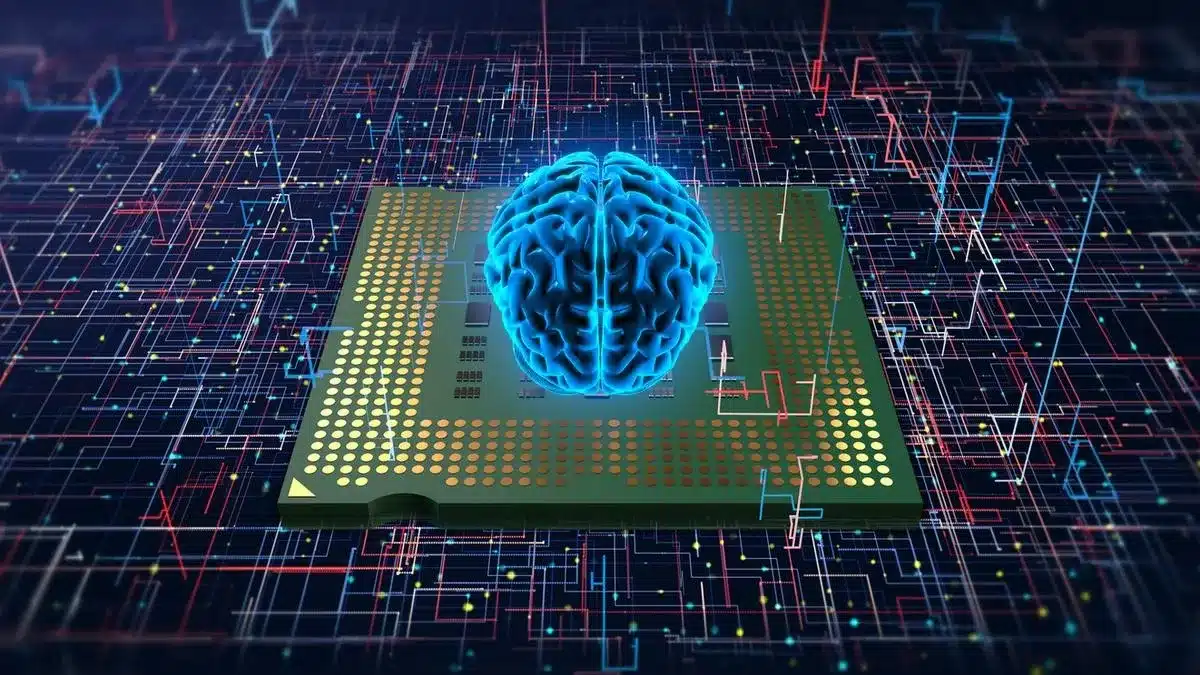
- It is also known as neuromorphic engineering, is an approach to computing that mimics the way the human brain works.
- It entails designing hardware and software that simulate the neural and synaptic structures and functions of the brain to process information.
- How does it Work?
- It is modeled in neuromorphic computing systems through spiking neural networks (SNNs).
- A spiking neural network is a type of artificial neural network composed of spiking neurons and synapses.
- These spiking neurons store and process data similar to biological neurons, with each neuron having its own charge, delay and threshold values.
- Synapses create pathways between neurons and also have delay and weight values associated with them.
- Benefits
- Adaptability: Neuromorphic devices are designed for real-time learning, continuously adapting to evolving stimuli in the form of inputs and parameters.
- Parallel processing: As SNN’s asynchronous nature, individual neurons can perform different operations concurrently. So neuromorphic devices can execute as many tasks as there are neurons at a given time.
Q1: What is neuron?
A neuron, also known as a nerve cell, is a specialized cell in the nervous system that is responsible for transmitting information through electrical and chemical signals. Neurons are the basic building blocks of the nervous system and play a crucial role in processing and transmitting information within the body.
Source: IISc scientists develop brain-inspired analog computing platform capable of storing, processing data


 Last updated on Oct, 2026
→ UPSC 2027 Notification will be released on 13 January 2027 at upsconline.nic.in.
→ Check Nobel Prize 2026 Winners List here.
→ Download PIB PRiSM Monthly Magazine 2026 here.
→ Check UPSC Monthly Current Affairs Magazine The Recitals here.
→ Check out the latest UPSC Syllabus here.
→ Download UPSC Model Answers for Mains 2026
→ UPSC Mains Question Paper 2026 is out now for Essay & GS Paper 1, 2, 3 & 4.
→ UPSC Calendar 2027 has been released.
→ Enroll in Vajiram & Ravi’s UPSC Mains Test Series 2027 for structured answer writing practice, expert evaluation, and exam-oriented feedback.
→ Join Vajiram & Ravi’s UPSC Mentorship Program 2027 for personalized guidance, strategy planning, and one-to-one support from experienced mentors.
→ Go through the UPSC Mains Previous Year Papers to enhance your preparation.
→ UPSC has released UPSC Toppers List 2025 with the Civil Services final result on its official website.
→ Also check Best UPSC Coaching in India