About Plasma waves
- These waves are often observed in the Earth’s magnetosphere, a magnetic field cavity around the Earth.
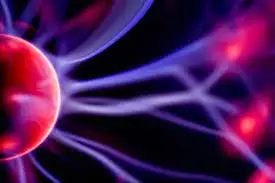
- In general, plasma waves are identified as the short-time scale fluctuations in the electric and magnetic field observations.
- These plasma waves play an important role in the energization and transport of the charged particles in the Earth’s magnetosphere.
- Some of the plasma waves like electromagnetic ion cyclotron waves act as a cleaning agent for the Earth’s radiation belt, which is hazardous to our satellites.
- Knowing this scenario, researchers are curious to understand the existence of various plasma waves in the vicinity of unmagnetized planets like Mars.
- The planet Mars does not have any intrinsic magnetic field therefore the high-speed solar wind coming from the Sun interacts directly with the Mars atmosphere, like an obstacle in the flow.
Key observations
- Scientists have examined the existence of high-frequency plasma waves in the Martian plasma environment by making use of the high-resolution electric field data from the Mars Atmosphere and Volatile Evolution Mission (MAVEN) spacecraft of NASA.
- These waves could be either electron oscillations that propagate parallel to the background magnetic field (Langmuir waves) or electron oscillations that propagate perpendicular to the background magnetic field (upper-hybrid type waves) in the magnetosheath region of Mars.
- They observed two distinct wave modes with frequency below and above the electron plasma frequency in the Martian magnetosphere.
- These waves are either broadband- or narrowband-type with distinguishable features in the frequency domain.
- The broadband waves were consistently found to have periodic patchy structures with a periodicity of 8–14 milliseconds.
- Significance
- Such waves provide a tool to explore how electrons gain or dissipate energy in the Martian plasma environment.
Q1) What is magnetosphere?
The magnetosphere is the region of space surrounding Earth where the dominant magnetic field is the magnetic field of Earth, rather than the magnetic field of interplanetary space. The magnetosphere is formed by the interaction of the solar wind with Earth’s magnetic field.


 Last updated on Oct, 2026
→ UPSC 2027 Notification will be released on 13 January 2027 at upsconline.nic.in.
→ Check Nobel Prize 2026 Winners List here.
→ Download PIB PRiSM Monthly Magazine 2026 here.
→ Check UPSC Monthly Current Affairs Magazine The Recitals here.
→ Check out the latest UPSC Syllabus here.
→ Download UPSC Model Answers for Mains 2026
→ UPSC Mains Question Paper 2026 is out now for Essay & GS Paper 1, 2, 3 & 4.
→ UPSC Calendar 2027 has been released.
→ Enroll in Vajiram & Ravi’s UPSC Mains Test Series 2027 for structured answer writing practice, expert evaluation, and exam-oriented feedback.
→ Join Vajiram & Ravi’s UPSC Mentorship Program 2027 for personalized guidance, strategy planning, and one-to-one support from experienced mentors.
→ Go through the UPSC Mains Previous Year Papers to enhance your preparation.
→ UPSC has released UPSC Toppers List 2025 with the Civil Services final result on its official website.
→ Also check Best UPSC Coaching in India