


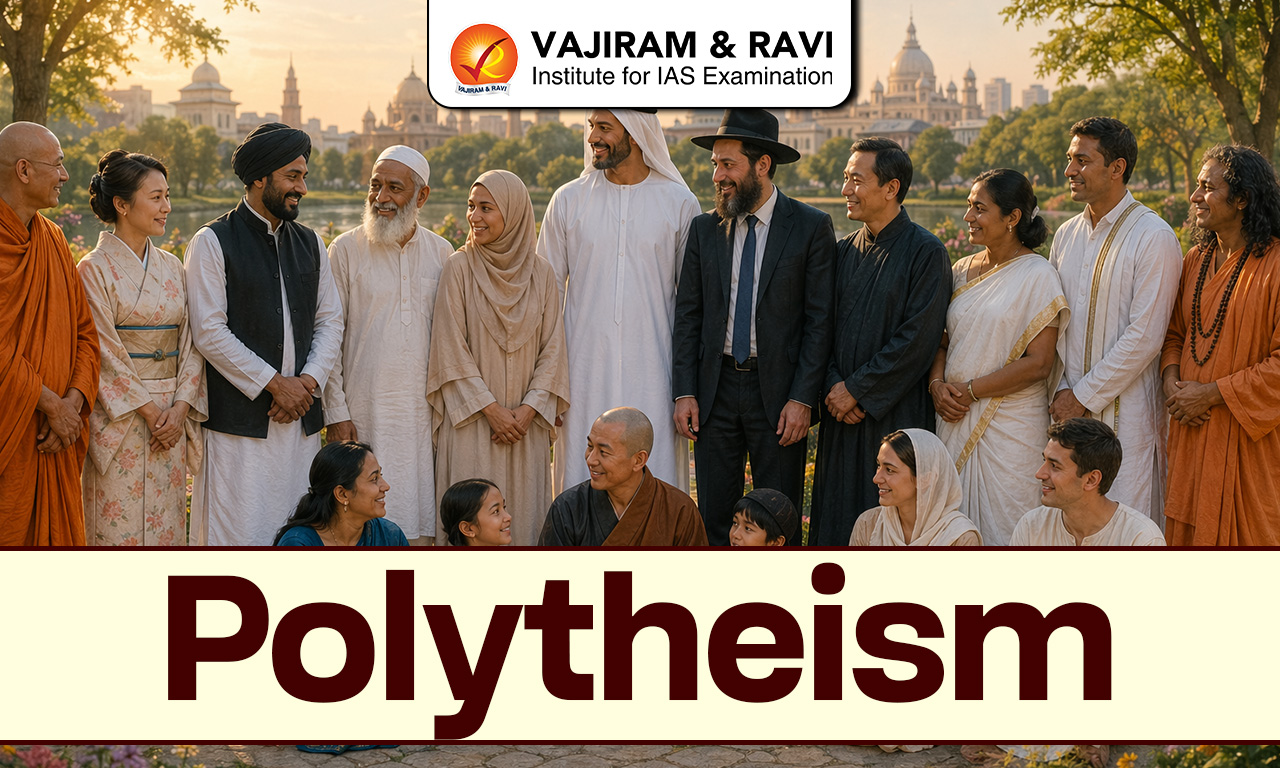
Polytheism is one of the oldest forms of religious belief in human history. It refers to the worship of multiple gods and goddesses, each having specific powers, roles, and responsibilities. From ancient civilizations to modern traditions, polytheism has played a key role in shaping cultures, rituals, and belief systems across the world.
Polytheism Key Features
Polytheism is a belief system centered on the worship of multiple gods and goddesses, each governing different aspects of life, nature, and the universe.
- Belief in Many Deities: Followers worship multiple gods, each with distinct identities and powers.
- Division of Responsibilities: Different gods control different forces like rain, war, wealth, or knowledge.
- Association with Nature: Many gods are linked to natural elements such as the sun, rivers, and mountains.
- Idol and Image Worship: Deities are often represented through statues, symbols, or pictures.
- Rich Mythology: Stories and legends explain the roles, powers, and relationships of gods.
- Rituals and Festivals: Various ceremonies and festivals are dedicated to specific deities.
- Flexibility in Belief: Worship practices can vary widely across regions and cultures.
Polytheistic Religions
Polytheistic religions are belief systems that involve the worship of multiple gods and goddesses, each associated with different powers, natural forces, or aspects of human life.
- Hinduism: One of the oldest living religions in the world, it includes the worship of many deities such as Vishnu, Shiva, and Lakshmi. It emphasizes concepts like dharma, karma, and rebirth.
- Ancient Egyptian religion: Practiced in ancient Egypt, it involved the worship of gods like Ra and Isis. Religion was closely connected to life after death and the power of nature.
- Greek mythology: Featured gods such as Zeus, Hera, and Athena. These beliefs influenced ancient Greek culture, politics, and literature.
- Norse mythology: Followed by ancient Scandinavian societies, it included gods like Odin and Thor, with strong connections to war, fate, and heroism.
- Shinto: The traditional religion of Japan, it involves the worship of “kami” (spirits or gods) associated with nature, ancestors, and sacred places.
- Tribal and Indigenous Religions: Many tribal communities around the world practice polytheism, worshipping nature spirits, ancestors, and local deities as part of their daily life and traditions.


 Last updated on Oct, 2026
→ UPSC 2027 Notification will be released on 13 January 2027 at upsconline.nic.in.
→ Check Nobel Prize 2026 Winners List here.
→ Download PIB PRiSM Monthly Magazine 2026 here.
→ Check UPSC Monthly Current Affairs Magazine The Recitals here.
→ Check out the latest UPSC Syllabus here.
→ Download UPSC Model Answers for Mains 2026
→ UPSC Mains Question Paper 2026 is out now for Essay & GS Paper 1, 2, 3 & 4.
→ UPSC Calendar 2027 has been released.
→ Enroll in Vajiram & Ravi’s UPSC Mains Test Series 2027 for structured answer writing practice, expert evaluation, and exam-oriented feedback.
→ Join Vajiram & Ravi’s UPSC Mentorship Program 2027 for personalized guidance, strategy planning, and one-to-one support from experienced mentors.
→ Go through the UPSC Mains Previous Year Papers to enhance your preparation.
→ UPSC has released UPSC Toppers List 2025 with the Civil Services final result on its official website.
→ Also check Best UPSC Coaching in India
Polytheism FAQs
Q1. What is polytheism?+
Q2. Which religions are polytheistic?+
Q3. Is polytheism still practiced today?+
Q4. What is the difference between polytheism and monotheism?+
Q5. Why did polytheism develop in early societies?+
Tags: indian society











