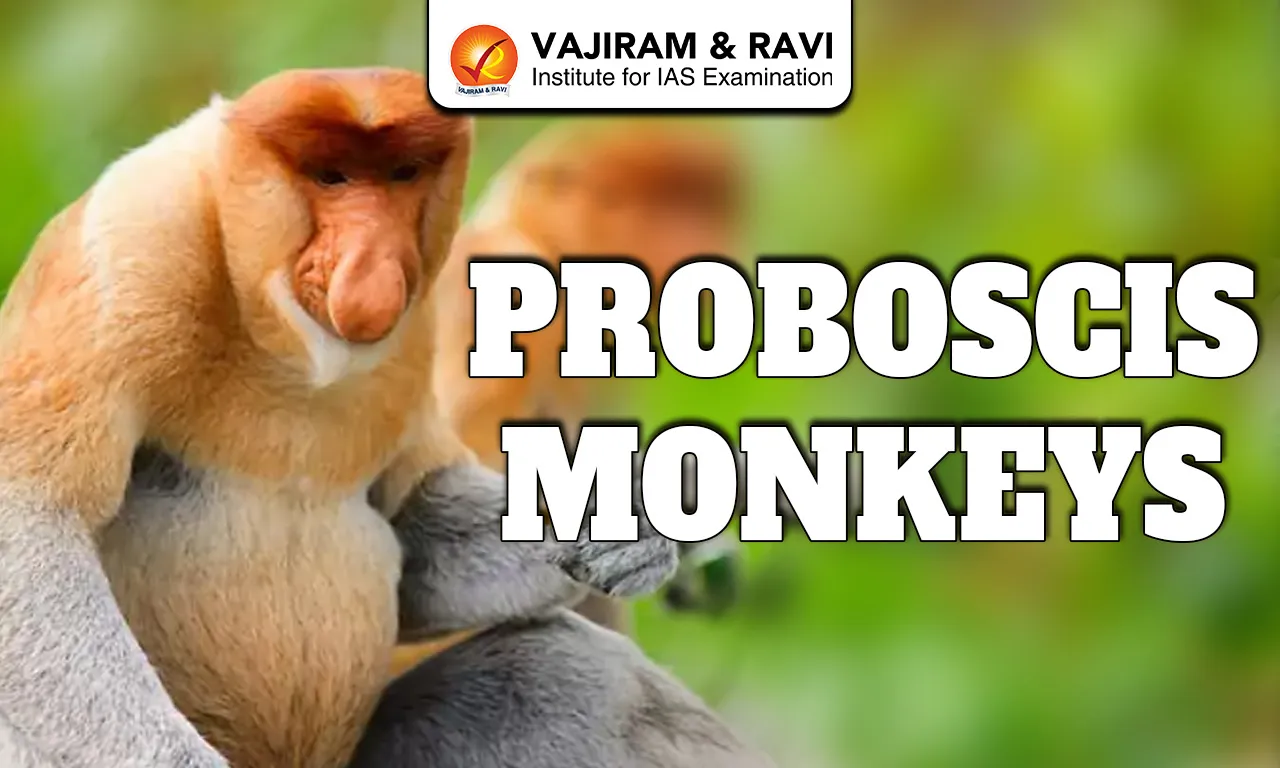
The Proboscis Monkey (Nasalis larvatus) is a large arboreal Old World monkey found only on the island of Borneo. It belongs to the genus Nasalis, named after the Latin word nasus meaning nose. The species is well known for the male’s long hanging nose and pot shaped belly. It lives mainly in mangrove, coastal and riverine forests and is one of the best swimming monkeys in Asia.
Proboscis Monkeys Features
Proboscis Monkeys show clear differences between males and females in size and nose shape.
- Large Nose: Male noses can grow over 10 cm long. The large nasal cavity helps produce loud honks and roars for attracting females and showing dominance.
- Colour: Fur is reddish-brown with lighter underparts. Babies are born with blue faces.
- Adaptation: Partially webbed toes help them swim and cross rivers.
- Diet: They eat leaves, unripe fruits, seeds and flowers from over 55 plant species.
- Groups: Groups usually have one male and several females, while larger bands can reach 60 individuals.
Also Read: Tropical Evergreen Forests
Proboscis Monkeys Distribution
Proboscis Monkeys are limited to Borneo. The island divided in three countries:
- Indonesia: Found mainly in Kalimantan, including Tanjung Puting and Kutai National Parks. The largest populations remain here.
- Malaysia: Present in Sabah and Sarawak, especially along the Kinabatangan River and Bako National Park.
- Brunei: Found in small riverine and coastal forest areas with legal protection.
Also Read: Coniferous Forest


Proboscis Monkeys Conservation Status
The Proboscis Monkeys species is facing serious decline. The conservation efforts include:
- IUCN Status: Listed as Endangered.
- Population: More than 50% population decline in about 40 years.
- CITES: Listed under Appendix I.
- Threats: Main threats include logging, oil palm plantations and hunting.
- Conservation: Found in protected areas across Brunei, Indonesia and Malaysia to support conservation efforts.

 Last updated on Oct, 2026
→ UPSC 2027 Notification will be released on 13 January 2027 at upsconline.nic.in.
→ Check Nobel Prize 2026 Winners List here.
→ Download PIB PRiSM Monthly Magazine 2026 here.
→ Check UPSC Monthly Current Affairs Magazine The Recitals here.
→ Check out the latest UPSC Syllabus here.
→ Download UPSC Model Answers for Mains 2026
→ UPSC Mains Question Paper 2026 is out now for Essay & GS Paper 1, 2, 3 & 4.
→ UPSC Calendar 2027 has been released.
→ Enroll in Vajiram & Ravi’s UPSC Mains Test Series 2027 for structured answer writing practice, expert evaluation, and exam-oriented feedback.
→ Join Vajiram & Ravi’s UPSC Mentorship Program 2027 for personalized guidance, strategy planning, and one-to-one support from experienced mentors.
→ Go through the UPSC Mains Previous Year Papers to enhance your preparation.
→ UPSC has released UPSC Toppers List 2025 with the Civil Services final result on its official website.
→ Also check Best UPSC Coaching in India
Proboscis Monkeys FAQs
Q1. What is the scientific name of the Proboscis Monkey?+
Q2. Where are Proboscis Monkeys found?+
Q3. Why do male Proboscis Monkeys have large noses?+
Q4. What do Proboscis Monkeys eat?+
Q5. What is the conservation status of the Proboscis Monkey?+
Tags: biology proboscis monkeys