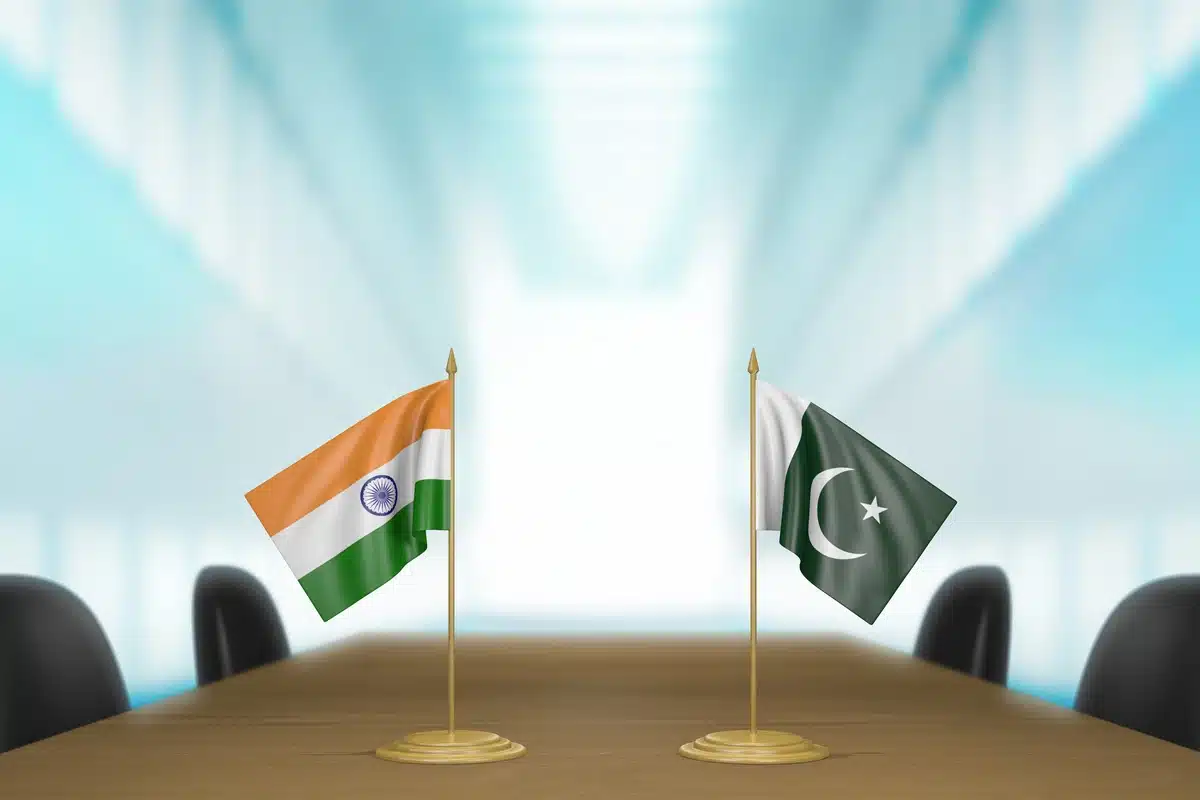
About Agreement on the Prohibition of Attack against Nuclear Installations and Facilities
- It was signed on December 31, 1988, by the then Pakistani Prime Minister Benazir Bhutto and Indian PM Rajiv Gandhi.
- The treaty came into force on January 27, 1991, and has two copies each in Urdu and Hindi.
- Need for the Agreement:
- In 1986, the Indian army carried out a massive exercise ‘Brasstacks’, raising fears of an attack on nuclear facilities.
- Since then, both countries have been negotiating to reach an understanding towards the control of nuclear weapons, which culminated in the treaty.
- Provisions:
- The agreement mandates both countries to inform each other about any nuclear installations and facilities to be covered under the agreement on the first of January of every calendar year, providing a confidence-building security measure environment.
- The term ‘nuclear installation or facility’ includes nuclear power and research reactors, fuel fabrication, uranium enrichment, iso-topes separation, and reprocessing facilities, as well as any other installations with fresh or irradiated nuclear fuel and materials in any form and establishments storing significant quantities of radioactive materials.
Q1) What is the Nuclear Non-Proliferation Treaty (NPT)?
The NPT is an international treaty whose objective is to prevent the spread of nuclear weapons and weapons technology, to foster the peaceful uses of nuclear energy, and to further the goal of disarmament. The Treaty represents the only binding commitment in a multilateral treaty to the goal of disarmament by the nuclear-weapon States.A total of 191 States have joined the Treaty, including the five nuclear-weapon States.South Sudan, India, Pakistan, and Israel have never joined the NPT. North Korea joined the NPT in 1985, but withdrew in 2003.
Source: India, Pakistan exchange list of nuclear installations


 Last updated on Oct, 2026
→ UPSC 2027 Notification will be released on 13 January 2027 at upsconline.nic.in.
→ Check Nobel Prize 2026 Winners List here.
→ Download PIB PRiSM Monthly Magazine 2026 here.
→ Check UPSC Monthly Current Affairs Magazine The Recitals here.
→ Check out the latest UPSC Syllabus here.
→ Download UPSC Model Answers for Mains 2026
→ UPSC Mains Question Paper 2026 is out now for Essay & GS Paper 1, 2, 3 & 4.
→ UPSC Calendar 2027 has been released.
→ Enroll in Vajiram & Ravi’s UPSC Mains Test Series 2027 for structured answer writing practice, expert evaluation, and exam-oriented feedback.
→ Join Vajiram & Ravi’s UPSC Mentorship Program 2027 for personalized guidance, strategy planning, and one-to-one support from experienced mentors.
→ Go through the UPSC Mains Previous Year Papers to enhance your preparation.
→ UPSC has released UPSC Toppers List 2025 with the Civil Services final result on its official website.
→ Also check Best UPSC Coaching in India