About:
- PIL has not been defined in any Indian statute. However, Courts have interpreted and defined PIL.
- The Hon’ble Supreme Court of India has, in the case of Janata Dal v. H.S.Chaudhary, [(AIR 1993 SC 892) held that lexically, the expression ‘PIL’ means a legal action started in a court of law for the enforcement of public/general interest where the public or a particular class of the public some interest (including pecuniary interest) that affects their legal rights or liabilities.
- Any individual or organisation can file a PIL either in his/her/their own standing i.e. to protect or enforce a right owed to him/her/them by the government or on behalf of a section of society who is disadvantaged or oppressed and is not able to enforce their own rights.
- The concept of “Locus Standi” has been relaxed in the case of PILs so as to enable the Hon’ble Court to look into grievances that are filed on behalf of those who are poor, illiterate, deprived or disabled and are unable to approach the courts themselves.
- Suo moto cognizance may also be taken by the Court.
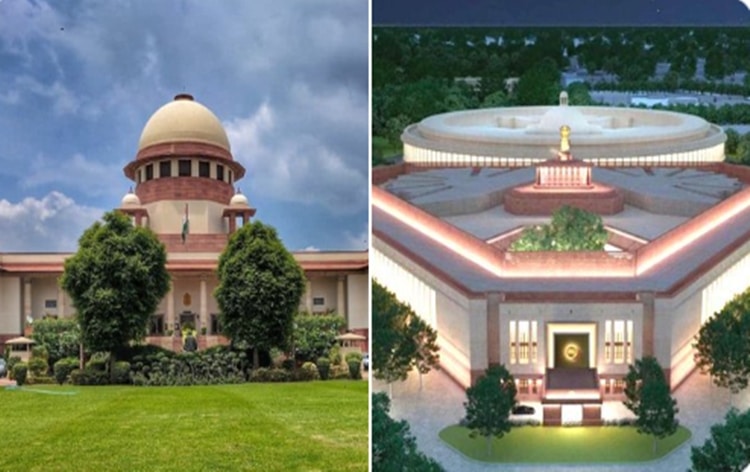
- PILs are extensions of Writ Jurisdiction. Therefore, PILs may be filed either before the Hon’ble Supreme Court of India under Article 32 of the Indian Constitution or any High Court under Article 226 of the Indian Constitution.
Q1) What is writ jurisdiction in India?
What is a writ jurisdiction. The Supreme Court acts as a custodian of the fundamental rights of citizens. It is considered the “guarantor” and “defender” of the fundamental rights of the citizens of India. It has the power to issue five types of writs; habeas corpus, mandamus, quo warranto, certiorari, and prohibition.


 Last updated on Oct, 2026
→ UPSC 2027 Notification will be released on 13 January 2027 at upsconline.nic.in.
→ Asian Games 2026 are being held in Aichi-Nagoya, Japan, from 19 September to 4 October.
→ Check Nobel Prize 2026 Winners List here.
→ Download PIB PRiSM Monthly Magazine 2026 here.
→ Check UPSC Monthly Current Affairs Magazine The Recitals here.
→ Check out the latest UPSC Syllabus here.
→ Download UPSC Model Answers for Mains 2026
→ UPSC Mains Question Paper 2026 is out now for Essay & GS Paper 1, 2, 3 & 4.
→ UPSC Calendar 2027 has been released.
→ Enroll in Vajiram & Ravi’s UPSC Mains Test Series 2027 for structured answer writing practice, expert evaluation, and exam-oriented feedback.
→ Join Vajiram & Ravi’s UPSC Mentorship Program 2027 for personalized guidance, strategy planning, and one-to-one support from experienced mentors.
→ Go through the UPSC Mains Previous Year Papers to enhance your preparation.
→ UPSC has released UPSC Toppers List 2025 with the Civil Services final result on its official website.
→ Also check Best UPSC Coaching in India