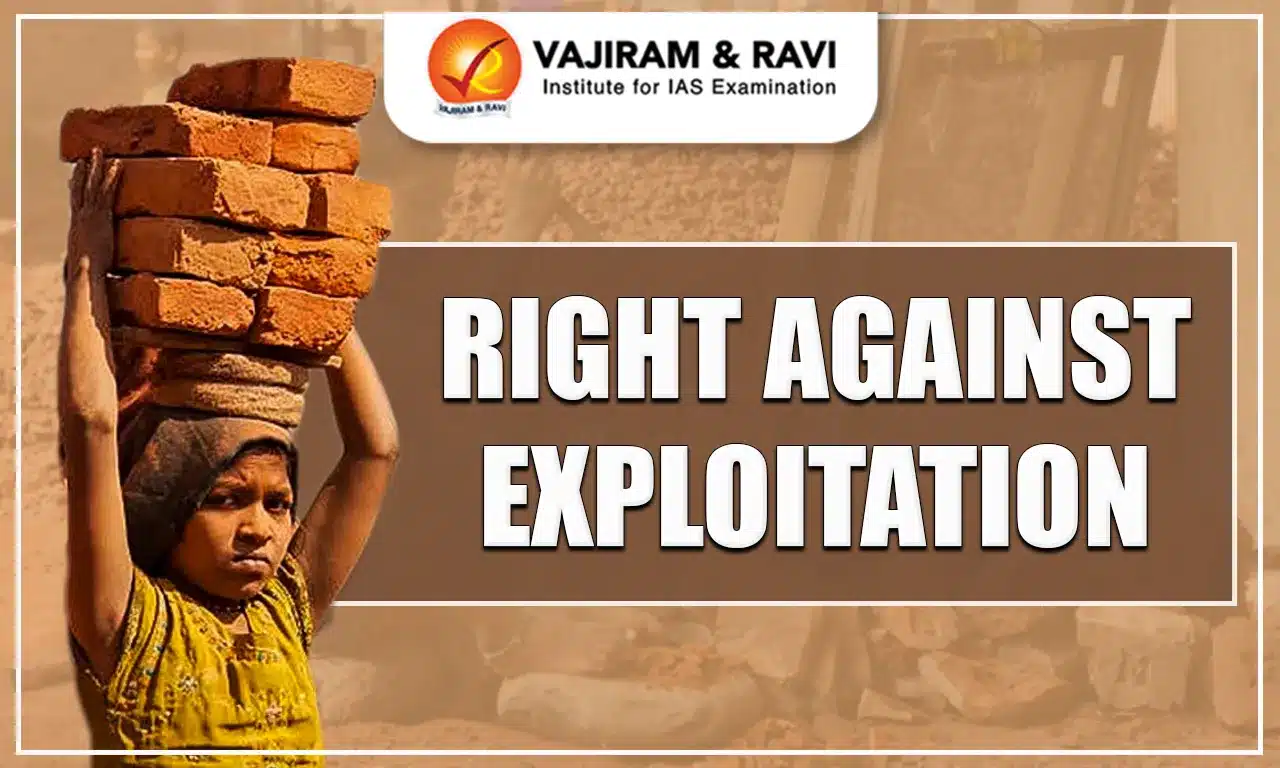
Right against exploitation is a fundamental right written in the Constitution of India in the form of Article 23 and Article 24. This right helps in protecting the dignity and freedom of citizens of India and ensure social justice. Individuals are provided protection against forced labour, human trafficking and child exploitation under this right. In this article, we are going to cover all about Article 23 and Article 24 that is Right against Exploitation.
Right Against Exploitation Meaning
The Right Against Exploitation is mentioned in the Constitution of India as a fundamental right. The provisions of the article are written in the form of Article 23 and Article 24 and cover the types of exploitation. This makes sure that the individual rights are protected and the principles of social justice are maintained so that people are not subject to coercion, abuse and dehumanisation.
Right Against Exploitation Provisions in Indian Constitution
Right Against Exploitation has the following provisions mentioned in the Constitution of India:
Article 23- Prohibition of Trafficking in Human Beings and Forced Labour
Article 23 prohibits trafficking in human beings and all forms of forced labour, including begar and bonded labour. Violations are punishable by law, and the right applies to both citizens and non-citizens, protecting individuals against both State and private actions.
Traffic in Human Beings
The term covers:
- Buying and selling of men, women, and children as commodities.
- Immoral trafficking in women and children, including prostitution.
- Practices like devadasi system and slavery.
- To curb these practices, Parliament enacted the Immoral Traffic (Prevention) Act, 1956.
Forced Labour
Forced labour means forcing a person to work against their will through physical, legal, or economic coercion (e.g., work for less than minimum wages).
Begar: A form of unpaid forced labour under the Zamindari System where tenants were made to work without remuneration.
Key laws against forced labour:
1. Bonded Labour System (Abolition) Act, 1976: It abolishes all forms of bonded labour in India and declares such agreements illegal and void. It frees bonded labourers from debt obligations and prohibits forced labour linked to loans or social obligations. The Act also provides for rehabilitation of freed labourers and prescribes penalties for offenders.
2. Minimum Wages Act, 1948: It empowers the government to fix minimum wage rates for workers in scheduled employments. It aims to prevent exploitation by ensuring workers receive fair and basic remuneration for their labour. The Act allows both Central and State Governments to revise wages periodically based on economic conditions.
3. Contract Labour (Regulation and Abolition) Act, 1970: It regulates the employment of contract workers in certain establishments. It ensures proper working conditions, welfare facilities, and payment of wages to contract labourers. The Act also empowers the government to prohibit contract labour in specific processes where exploitation is likely.
4. Equal Remuneration Act, 1976: It ensures equal pay for men and women workers performing the same or similar work. It prohibits discrimination in recruitment, promotions, and wages based on gender. The Act promotes gender equality and fairness in employment practices across sectors.
Exception: The State may impose compulsory service for public purposes (e.g., military or social service) without payment, provided there is no discrimination based on religion, race, caste, or class.
Also Read: Right to Equality
Article 24- Prohibition of Employment of Children in Hazardous Activities
Article 24 bans employment of children below 14 years in factories, mines, and other hazardous occupations, but allows it in non-hazardous work.
Important laws included are:
- Child Labour (Prohibition and Regulation) Act, 1986 (and amendments)
- Employment of Children Act, 1938
- Factories Act, 1948
- Mines Act, 1952
- Merchant Shipping Act, 1958
- Plantation Labour Act, 1951
- Motor Transport Workers Act, 1951
- Apprentices Act, 1961
- Bidi and Cigar Workers Act, 1966
Some Important Government Initiatives include:
- Creation of Child Labour Rehabilitation Welfare Fund, funded by penalties paid by offending employers.
- Establishment of National and State Commissions for Protection of Child Rights.
- Setting up of Children’s Courts for speedy trials of offences against children.


Right Against Exploitation Importance
Right Against Exploitation has the following significance:
- Protection of Human Rights: Protects individuals from exploitation, giving dignity and fundamental rights.
- Prevention of Human Trafficking: Does not allow the illegal trade of people for forced labour, slavery, or other exploitative purposes.
- Elimination of Forced Labour: Eradicates bonded labour, begar, and other coercive work practices, ensuring fair and voluntary employment.
- Protects Children: Bans child labour in hazardous jobs, protecting their health, education, and overall well-being.
- Promotion of Social Justice: Holds both state and private actors accountable, fostering fairness and equality in society.
- Support for Vulnerable Groups: Protects women, children, and marginalised communities from exploitation and abuse.
- Encouragement of Ethical Labour Practices: Promotes fair wages, humane working conditions, and respect for workers’ rights.

 Last updated on Oct, 2026
→ UPSC 2027 Notification will be released on 13 January 2027 at upsconline.nic.in.
→ Check Nobel Prize 2026 Winners List here.
→ Download PIB PRiSM Monthly Magazine 2026 here.
→ Check UPSC Monthly Current Affairs Magazine The Recitals here.
→ Check out the latest UPSC Syllabus here.
→ Download UPSC Model Answers for Mains 2026
→ UPSC Mains Question Paper 2026 is out now for Essay & GS Paper 1, 2, 3 & 4.
→ UPSC Calendar 2027 has been released.
→ Enroll in Vajiram & Ravi’s UPSC Mains Test Series 2027 for structured answer writing practice, expert evaluation, and exam-oriented feedback.
→ Join Vajiram & Ravi’s UPSC Mentorship Program 2027 for personalized guidance, strategy planning, and one-to-one support from experienced mentors.
→ Go through the UPSC Mains Previous Year Papers to enhance your preparation.
→ UPSC has released UPSC Toppers List 2025 with the Civil Services final result on its official website.
→ Also check Best UPSC Coaching in India
Right Against Exploitation FAQs
Q1. What is the right against exploitation?+
Q2. What is exploitation of rights?+
Q3. Does Article 21 include right against exploitation?+
Q4. What is Article 23 of the Indian Constitution?+
Q5. What is Article 24 of the Indian Constitution?+
Tags: right against exploitation