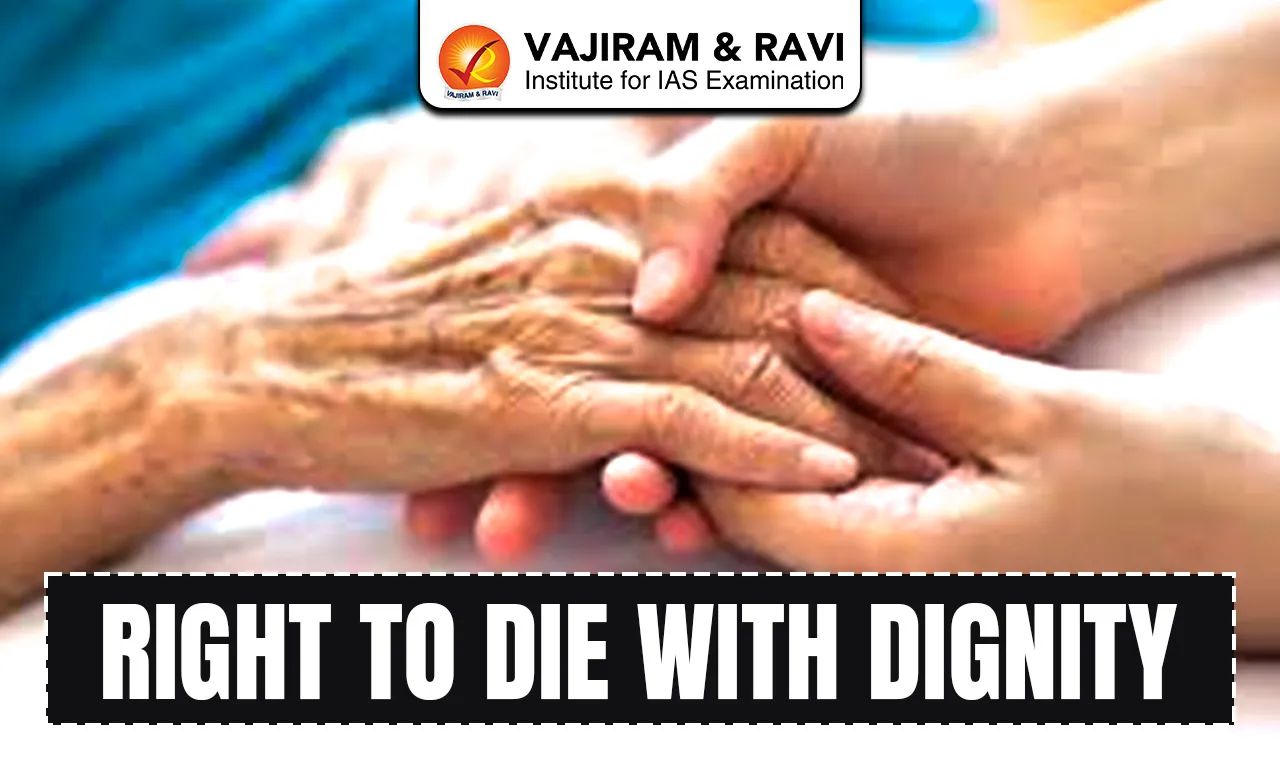
The Right to Die with Dignity refers to a person’s right to refuse life-prolonging medical treatment and to die peacefully without unnecessary suffering. It is closely linked to the concept of passive euthanasia and the idea that life under Article 21 of the Indian Constitution includes the right to live with dignity. In recent years, this issue has gained major legal and ethical attention in India, especially after landmark judgments by the Supreme Court of India.
What is a Living Will?
A Living Will is a written legal document in which a person clearly states their wishes about medical treatment in case they become terminally ill or unable to communicate. It allows an individual to refuse life-support or extraordinary medical procedures that only prolong suffering. In India, the concept was recognized by the Supreme Court of India in 2018 as part of the Right to Die with Dignity. It ensures that a person’s autonomy and dignity are respected even at the end of life.
Active vs Passive Euthanasia
Active vs Passive Euthanasia refers to two different approaches to ending life in cases of terminal illness. Active euthanasia involves deliberately causing death through medical intervention, while passive euthanasia involves withdrawing or withholding life-support treatment to allow natural death.
| Active vs Passive Euthanasia | ||
|
Basis |
Active Euthanasia |
Passive Euthanasia |
|
Meaning |
Direct act to cause death (e.g., lethal injection) |
Withdrawal or withholding of life-support treatment |
|
Nature |
Intentional medical intervention to end life |
Allows natural death by stopping extraordinary treatment |
|
Legal Status in India |
Illegal |
Legal under strict guidelines |
|
Judicial Position |
Not permitted by the Supreme Court of India |
Recognized and permitted by the Supreme Court of India (2011, 2018) |
|
Example |
Administering a fatal drug dose |
Removing ventilator support in terminal illness |


 Last updated on Oct, 2026
→ UPSC 2027 Notification will be released on 13 January 2027 at upsconline.nic.in.
→ Check Nobel Prize 2026 Winners List here.
→ Download PIB PRiSM Monthly Magazine 2026 here.
→ Check UPSC Monthly Current Affairs Magazine The Recitals here.
→ Check out the latest UPSC Syllabus here.
→ Download UPSC Model Answers for Mains 2026
→ UPSC Mains Question Paper 2026 is out now for Essay & GS Paper 1, 2, 3 & 4.
→ UPSC Calendar 2027 has been released.
→ Enroll in Vajiram & Ravi’s UPSC Mains Test Series 2027 for structured answer writing practice, expert evaluation, and exam-oriented feedback.
→ Join Vajiram & Ravi’s UPSC Mentorship Program 2027 for personalized guidance, strategy planning, and one-to-one support from experienced mentors.
→ Go through the UPSC Mains Previous Year Papers to enhance your preparation.
→ UPSC has released UPSC Toppers List 2025 with the Civil Services final result on its official website.
→ Also check Best UPSC Coaching in India
Right to Die With Dignity FAQs
Q1. What is the Right to Die with Dignity?+
Q2. Is the Right to Die legal in India?+
Q3. What is passive euthanasia?+
Q4. What is active euthanasia?+
Q5. What is a Living Will?+
Tags: indian constitution right to die with dignity