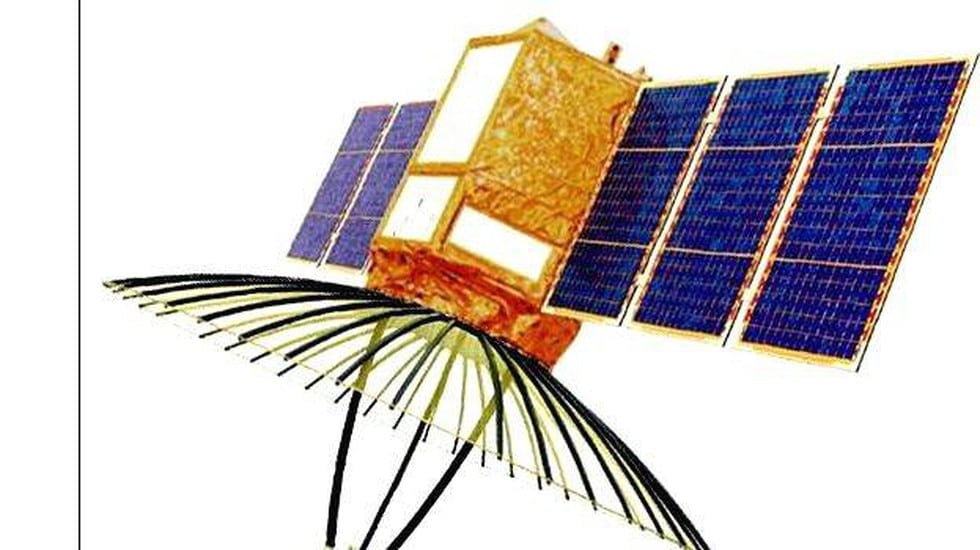
About RISAT-2 satellite:
- It was launched on 20 April 2009 by a PSLV C-12 rocket following the 2008 Mumbai terror attacks.
- It was India’s first “eye in the sky” to keep surveillance on the country’s borders as part of anti-infiltration and anti-terrorist operations.
- It was also used to track enemy ships at sea.
- The main sensor of RISAT-2, which was able to observe in all weather conditions day and night, was Israel Aerospace Industries’ X-band Synthetic Aperture Radar.
- It carried 30 kg of fuel for an initial designed life of four years.
- Due to proper maintenance of orbit and mission planning by the spacecraft operations team in ISRO and by economical usage of fuel, RISAT-2 provided very useful payload data for 13 years.
Source : The Hindu


 Last updated on Oct, 2026
→ UPSC 2027 Notification will be released on 13 January 2027 at upsconline.nic.in.
→ Asian Games 2026 are being held in Aichi-Nagoya, Japan, from 19 September to 4 October.
→ Check Nobel Prize 2026 Winners List here.
→ Download PIB PRiSM Monthly Magazine 2026 here.
→ Check UPSC Monthly Current Affairs Magazine The Recitals here.
→ Check out the latest UPSC Syllabus here.
→ Download UPSC Model Answers for Mains 2026
→ UPSC Mains Question Paper 2026 is out now for Essay & GS Paper 1, 2, 3 & 4.
→ UPSC Calendar 2027 has been released.
→ Enroll in Vajiram & Ravi’s UPSC Mains Test Series 2027 for structured answer writing practice, expert evaluation, and exam-oriented feedback.
→ Join Vajiram & Ravi’s UPSC Mentorship Program 2027 for personalized guidance, strategy planning, and one-to-one support from experienced mentors.
→ Go through the UPSC Mains Previous Year Papers to enhance your preparation.
→ UPSC has released UPSC Toppers List 2025 with the Civil Services final result on its official website.
→ Also check Best UPSC Coaching in India