What’s in today’s article:
- Why in news?
- Background:
- What are ‘self-respect’ marriages?
- What has the top court ruled on ‘self-respect’ marriages in the past?
Why in news?
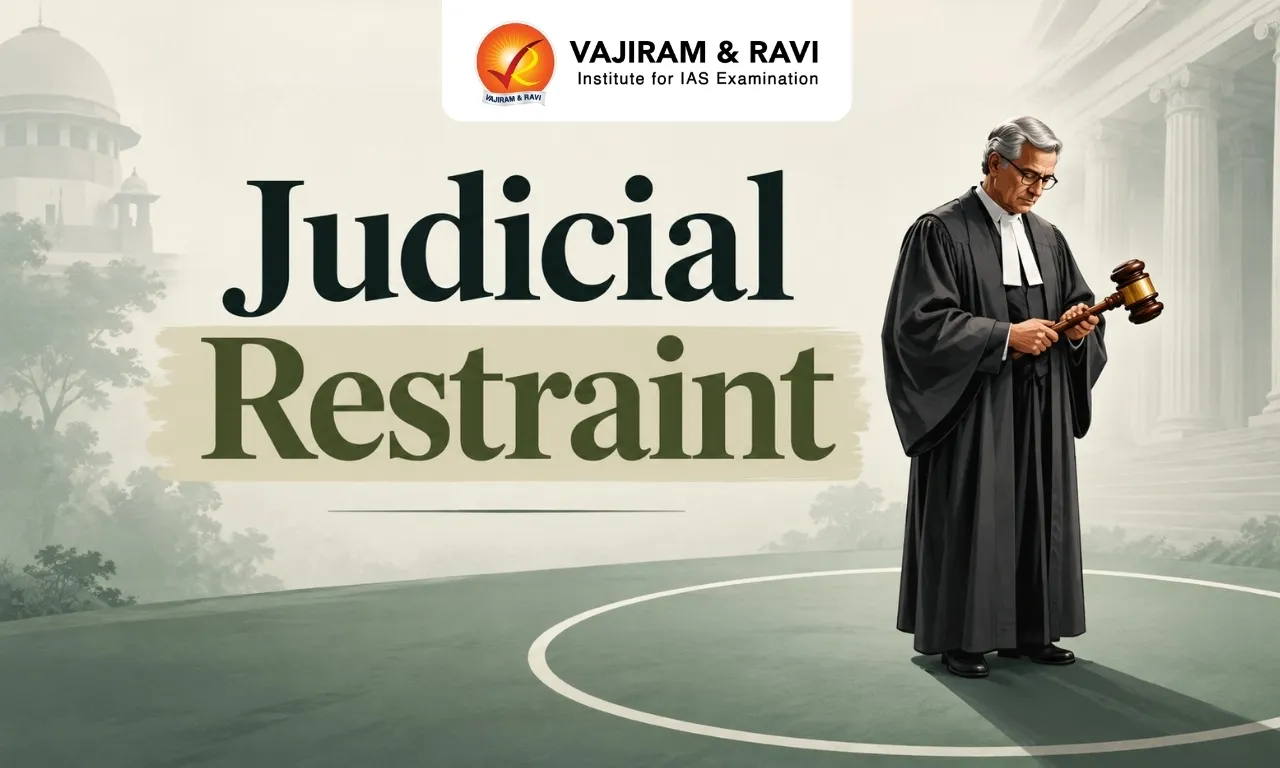
- Recently, the Supreme Court said that the advocates can solemnise these marriages in their personal capacity as friends or relatives of the couple.
- It ruled that not every valid marriage requires a public declaration or solemnisation in a particular manner.
- Couples intending to marry may refrain from making a public declaration due to various reasons, such as familial opposition or fear for their safety.
- In such cases, enforcing a public declaration could put lives at risk and potentially result in forced separation.
- The apex court also underlined the importance of autonomy in choosing life partners and approved a Tamil Nadu law that allowed “self-respect” marriages.
Background:
- A 2014 ruling of the Madras High Court had held that marriages performed by the advocates are not valid.
- It also said that “suyamariyathai” or “self-respect” marriages cannot be solemnised in secrecy.
- This was challenged in the Supreme Court, which set aside the Madras HC Judgement.


What are ‘self-respect’ marriages?
- Background:
- In 1968, the Hindu Marriage (Tamil Nadu Amendment) Act, 1967, received the President’s approval and became the law.
- This amendment modified the Hindu Marriage Act of 1955, by inserting Section 7-A into it.
- However, it extended only to the state of Tamil Nadu.
- Section 7-A deals with the special provision on “self-respect and secular marriages”.
- It legally recognises any marriage between any two Hindus, which can be referred to as “suyamariyathai” or “seerthiruththa marriage” or by any other name.
- About
- Such marriages are solemnised in the presence of relatives, friends, or other persons, with parties declaring each other to be husband or wife, in a language understood by them.
- Further, each party to the marriage garlands the other or puts a ring on the other’s finger or ties a “thali” or mangal sutra.
- However, such marriages are also required to be registered as per the law.
- Rationale behind the Tamil Nadu government amending the Hindu Marriage Act, 1955
- The idea was to radically simplify weddings by shunning the need for mandatory Brahmin priests, holy fire and saptapadi (seven steps).
- This allowed marriages to be declared in the presence of the couple’s friends or family or any other persons.
- In a nutshell, the amendment was made to do away with the need for priests and rituals, which were otherwise required to complete wedding ceremonies.
What has the top court ruled on ‘self-respect’ marriages in the past?
- In “S. Nagalingam vs Sivagami” (2001), the apex court recognised the petitioner’s marriage with his wife to be a valid one despite the ceremony of “saptapadi” or seven steps around the sacred fire, not taking place.
- As per the court, the main thrust of this provision is that the presence of a priest is not necessary for the performance of a valid marriage.
- Parties can enter into a marriage in the presence of relatives or friends or other persons.
Q1) What is saptapadi (seven steps)?
Saptapadi, also known as the “Seven Steps” or “Seven Vows,” is a significant ritual in Hindu weddings. It is a symbolic and sacred part of the wedding ceremony where the bride and groom take seven steps together around a sacred fire (Agni) while making seven promises or vows to each other. These vows represent their commitment, love, and mutual responsibilities in their marital journey.
Q2) What is Hindu Marriage Act, 1955?
The Hindu Marriage Act, 1955 is a significant piece of legislation in India that governs Hindu marriages. It was enacted to codify and regulate the institution of marriage among Hindus. The Act applies to Hindus, including Buddhists, Jains, and Sikhs, as well as to any person who is not a Muslim, Christian, Parsi, or Jew by religion.
Source: What the Supreme Court order on the validity of ‘self-respect’ marriages says | Hindustan Times

 Last updated on Oct, 2026
→ UPSC 2027 Notification will be released on 13 January 2027 at upsconline.nic.in.
→ Check Nobel Prize 2026 Winners List here.
→ Download PIB PRiSM Monthly Magazine 2026 here.
→ Check UPSC Monthly Current Affairs Magazine The Recitals here.
→ Check out the latest UPSC Syllabus here.
→ Download UPSC Model Answers for Mains 2026
→ UPSC Mains Question Paper 2026 is out now for Essay & GS Paper 1, 2, 3 & 4.
→ UPSC Calendar 2027 has been released.
→ Enroll in Vajiram & Ravi’s UPSC Mains Test Series 2027 for structured answer writing practice, expert evaluation, and exam-oriented feedback.
→ Join Vajiram & Ravi’s UPSC Mentorship Program 2027 for personalized guidance, strategy planning, and one-to-one support from experienced mentors.
→ Go through the UPSC Mains Previous Year Papers to enhance your preparation.
→ UPSC has released UPSC Toppers List 2025 with the Civil Services final result on its official website.
→ Also check Best UPSC Coaching in India