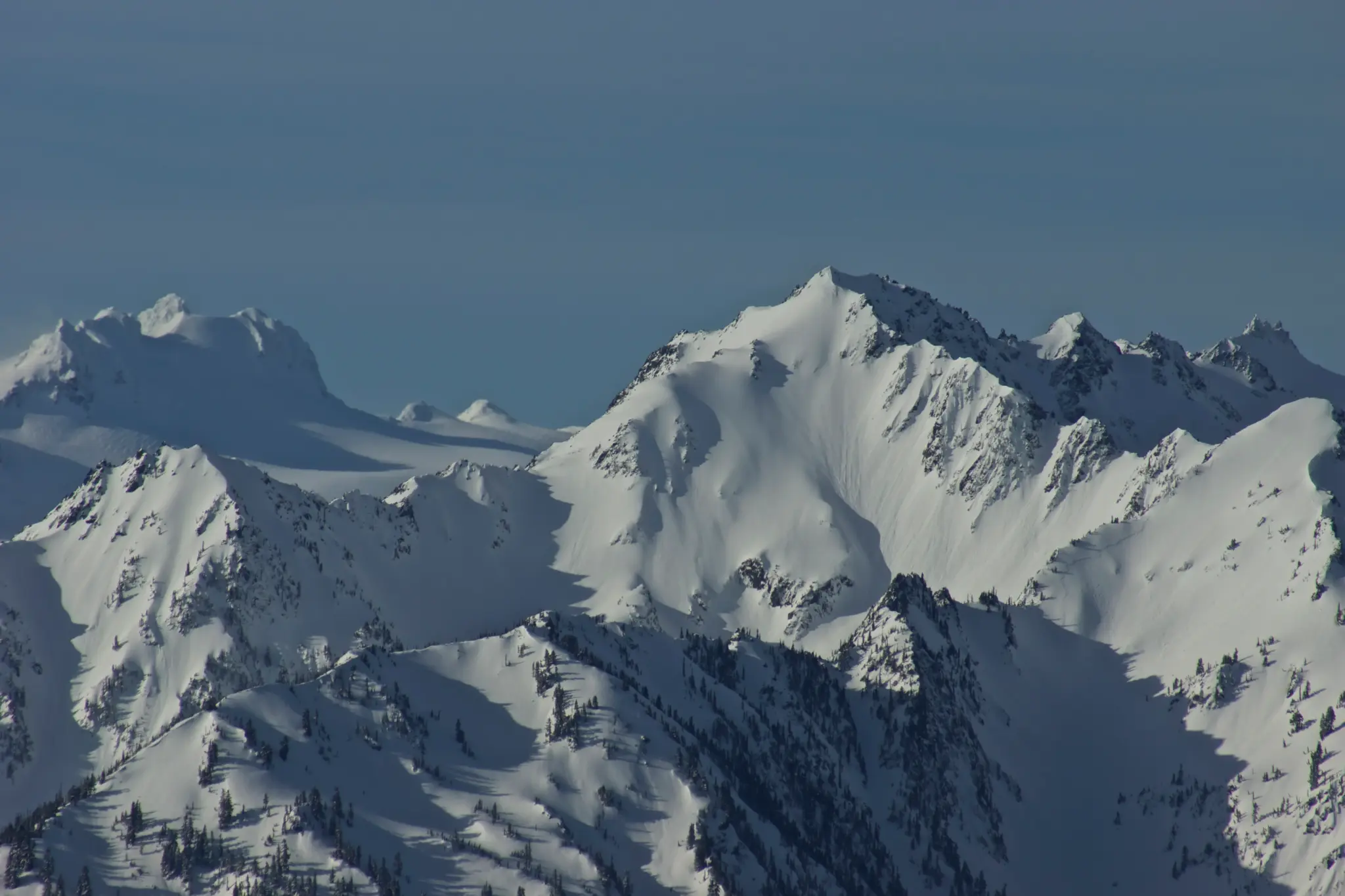
About Snowpacks
- In mountainous areas that experience a winter season, precipitation can fall in the form of snow.
- Snow that has fallen on the ground and does not melt for months due to below-freezing temperatures is called a snowpack.
- Snowpacks can consist of multiple layers of snow, each one from a different snowfall, that become compacted under the weight of the subsequent layers that lie on top.
- The snowpack remains on the ground until the arrival of above-freezing temperatures in the spring, which causes it to start to melt.
- The water from the melting snowpack is called snowmelt.
- It is an important water source that keeps streams flowing in the warmer months.
- It is also an important water source for humans, replenishing reservoirs.
- The depth of the snowpack is influenced not only by the amount of snowfall but also by temperature and wind.
- Strong winds can evaporate snow cover, eroding the top layers of the snowpack, while an increase in temperature can cause layers to melt.
- In areas with an abundance of snow and proper conditions, the snowpack can accumulate to a depth of three meters (10 feet) or more.
- The density of a snowpack—how closely packed the snow particles are—increases as more layers accumulate, pushing down on the layers below.
- Weak layers, such as snow-covered surface hoar, can increase the risk of avalanches.
- Snowpack data is valuable for monitoring the effects of climate change.
Q1) What is an avalanche?
An avalanche is a mass of material moving rapidly down a slope. An avalanche is typically triggered when material on a slope breaks loose from its surroundings; this material then quickly collects and carries additional material down the slope. There are various kinds of avalanches, including rock avalanches, ice avalanches , and debris avalanches .
Source: New technique devised to measure water held in snowpacks, could help manage supply


 Last updated on Oct, 2026
→ UPSC 2027 Notification will be released on 13 January 2027 at upsconline.nic.in.
→ Check Nobel Prize 2026 Winners List here.
→ Download PIB PRiSM Monthly Magazine 2026 here.
→ Check UPSC Monthly Current Affairs Magazine The Recitals here.
→ Check out the latest UPSC Syllabus here.
→ Download UPSC Model Answers for Mains 2026
→ UPSC Mains Question Paper 2026 is out now for Essay & GS Paper 1, 2, 3 & 4.
→ UPSC Calendar 2027 has been released.
→ Enroll in Vajiram & Ravi’s UPSC Mains Test Series 2027 for structured answer writing practice, expert evaluation, and exam-oriented feedback.
→ Join Vajiram & Ravi’s UPSC Mentorship Program 2027 for personalized guidance, strategy planning, and one-to-one support from experienced mentors.
→ Go through the UPSC Mains Previous Year Papers to enhance your preparation.
→ UPSC has released UPSC Toppers List 2025 with the Civil Services final result on its official website.
→ Also check Best UPSC Coaching in India