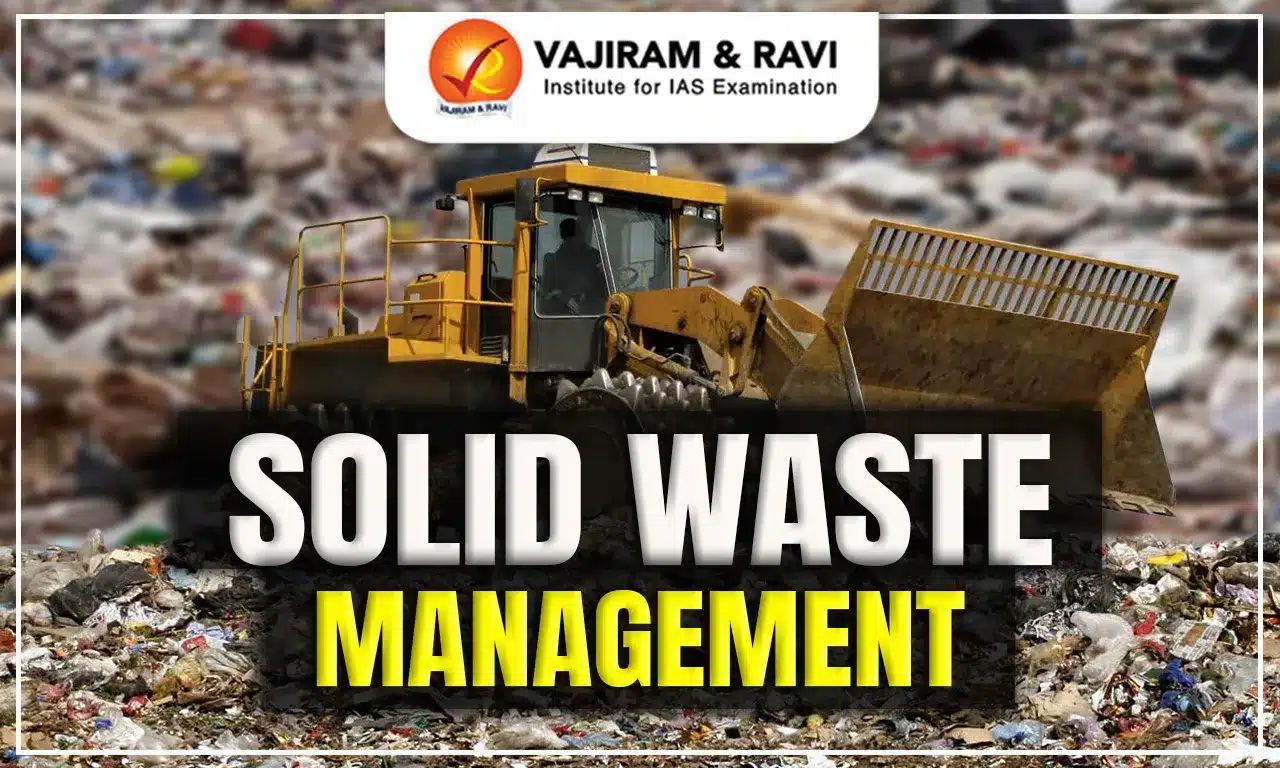
Solid Waste Management in India has increased due to increasing urbanisation, industrialisation and changing lifestyles all over the world. Wrong and improper management makes waste a source of environmental pollution, public health hazards and urban management challenges. In this article, we are going to cover solid waste management, its categories, its types and methods.
What is Solid Waste Management?
Solid waste management is just the collection and dumping of waste but also adoption of a systematic approach that covers generation, segregation, transportation, processing, recycling and safe disposal.
Solid Waste Management Process
The Solid Waste Management Process involves a systematic series of activities to handle discarded materials from households, businesses and industries, minimise pollution, protect public health and recover useful resources.
- Source Reduction: Waste generation is reduced at the initial stage by designing products efficiently and selecting packaging that uses fewer materials, thereby limiting the amount of waste requiring further treatment.
- Waste Segregation and Storage: Waste is separated at its place of origin into suitable categories, such as wet, dry and hazardous waste, and stored in appropriately labelled bins for safe handling.
- Collection of Waste: Segregated waste is collected from households, commercial establishments and industrial areas through an organised collection system to prevent accumulation and maintain hygienic surroundings.
- Transportation of Waste: Collected materials are transported using suitable vehicles to designated processing facilities. Efficient transportation routes help move waste systematically and support timely treatment.
- Treatment and Resource Recovery: Waste undergoes suitable treatment methods, including recycling, biological composting and waste-to-energy conversion, to recover useful materials, produce compost or generate energy.
- Final Disposal: Residual waste that cannot be recycled or recovered is disposed of in engineered sanitary landfills, helping reduce environmental contamination and the risks associated with uncontrolled dumping.


What is Solid Waste?
Solid waste is the unwanted or useless solid material generated from human activities in residential, commercial, industrial, agricultural and institutional sectors. According to the US Environment Protection Agency, solid waste includes:
- Household garbage
- Industrial, commercial, and agricultural discards
- Residues from treatment plants and pollution control facilities
Solid Waste Categories
Solid waste can be classified into many categories:
- Based on Source:
- Residential waste: food leftovers, plastics, paper, etc.
- Commercial & industrial waste: metals, glass, packaging, chemicals.
- Agricultural waste: stubble, food grains, husk, litter.
- Based on Content:
- Organic waste: biodegradable, mainly from households & agriculture.
- Plastic waste: non-biodegradable, difficult to manage.
- Metallic waste: hazardous industrial by-products, often carcinogenic.
- Based on Hazard Potential:
- Toxic waste: dangerous to health (chemicals, radioactive substances).
- Flammable waste: prone to causing fire outbreaks in landfills.
Solid Waste Types
Solid waste has the following types:
- Municipal Solid Waste (MSW): Generated in daily life from homes, schools, shops, and hospitals (includes plastics, food waste, packaging).
- Hazardous Waste: Industrial by-products, e-waste, pesticides, paints, and chemicals that pose long-term health and environmental risks.
- Biomedical Waste: Waste from hospitals and labs (syringes, bandages, pharmaceutical residues). WHO classifies it into 8 categories including sharps, infectious, radioactive, and pharmaceutical wastes.
Harmful Effects of Solid Waste
Improper Solid Waste Management has serious consequences:
- Water Pollution: Leaching contaminates groundwater; run-off pollutes rivers/lakes.
- Air Pollution: Methane and toxic gases from landfills contribute to climate change.
- Health Hazards: Epidemics spread due to rodents, pests, and stray animals.
- Fire Risks: Frequent landfill fires (e.g., Bhalswa landfill in Delhi).
- Aviation Hazards: Bird menace near dumping sites causes threats to flights.
Methods of Solid Waste Disposal
- Open Dumping: Primitive method; causes foul smell, groundwater pollution, and spread of diseases.
- Landfills: Common disposal method; however, leaching and methane emissions are major issues.
- Sanitary Landfills: Engineered with liners to prevent contamination; more eco-friendly, often later converted into parks.
- Incineration: Burning waste; reduces volume, destroys pathogens, and can generate electricity. However, it releases toxic gases and carcinogenic heavy metals.
- Pyrolysis: Decomposition of organic waste at high temperatures in absence of oxygen; eco-friendly and energy-yielding.
- Composting: Decomposing organic matter into natural fertilizer, improving soil quality.
- Vermi-Composting: Using earthworms to produce nutrient-rich organic manure.
Solid Waste Management in India
India has been generating ~ 1,60,000 tonnes of municipal solid waste per day but only 20-25% of this waste gets scientifically processed. Many cities rely heavily on landfills, fire incidents, air pollution and groundwater contamination. These challenges included:
- Poor segregation at source
- Over-dependence on landfills
- Lack of modern waste treatment facilities
- Informal waste pickers not fully integrated into waste management systems
Solid Waste Management Rules 2026
The Solid Waste Management Rules 2026, effective from 1 April 2026, replace the 2016 framework and strengthen waste segregation, resource recovery, accountability and circular economy practices across India.
- Four Category Waste Segregation: Waste generators must separate waste at its source into four categories: wet waste, dry waste, sanitary waste and special care waste, enabling appropriate treatment and disposal.
- Wet Waste Management: Food scraps and other wet waste should be processed through composting or bio methanation to support resource recovery and reduce the burden on landfills.
- Dry Waste Recovery: Paper, plastic, glass and metal waste should be directed to Material Recovery Facilities, supporting recycling and the reuse of valuable materials.
- Sanitary Waste Disposal: Diapers and sanitary products must be securely wrapped before disposal to ensure safer handling and reduce risks associated with improper waste management.
- Special Care Waste Handling: Batteries, bulbs and medicines require appropriate handling through authorised agencies to prevent unsafe disposal and ensure proper management.
- Bulk Waste Generator Criteria: The rules cover entities with a built up area of at least 20,000 square metres, water consumption of 40,000 litres per day or more, or waste generation of at least 100 kg daily.
- Extended Bulk Waste Generator Responsibility: Bulk Waste Generators must process wet waste on site or obtain Extended Bulk Waste Generator Responsibility certificates through local bodies, strengthening accountability for waste management.
- Restrictions on Landfills: Sanitary landfills are intended only for inert waste that cannot be recycled or used for energy recovery. Mixed or unsegregated waste can attract substantial financial penalties.
- Polluter Pays Principle: State Pollution Control Boards can impose environmental compensation for violations, including inaccurate reporting and improper waste handling, making waste generators more accountable for non compliance.
- Centralised Online Portal: The Centralized Online Portal for Solid Waste Management supports the implementation of the rules, including compliance requirements applicable to Bulk Waste Generators.
- Circular Economy Approach: The framework moves beyond simple waste collection and dumping towards segregation, processing, recycling and resource recovery, supporting the broader principles of the 7R approach.
- Stronger Environmental Accountability: By combining segregation requirements, landfill restrictions and financial consequences for violations, the rules encourage responsible waste management by institutions and other waste generators.
Solid Waste Management Rules 2016 vs 2026
The Solid Waste Management Rules 2016 focused on waste collection and municipal management, while the 2026 framework strengthens source segregation, digital monitoring, resource recovery and accountability. The main difference between SWM Rules 2026 and 2016 are:
- Waste Segregation: The 2016 Rules prescribed three waste streams: biodegradable, non-biodegradable and domestic hazardous waste. The 2026 Rules introduce four streams: wet, dry, sanitary and special-care or hazardous waste.
- Waste Management Approach: The 2016 framework emphasised municipal infrastructure and waste collection. The 2026 Rules formally establish a hierarchy of prevention, reduction, reuse, recycling, recovery and disposal, promoting a circular economy.
- Digital Monitoring and Tracking: The 2016 Rules relied largely on manual reporting and physical records. The 2026 Rules introduce a centralised CPCB online portal and GPS tracking of waste transport vehicles in larger cities.
- Compliance and Financial Penalties: The 2016 framework relied on general or locally determined fines. The 2026 Rules strengthen enforcement through environmental compensation under the Polluter Pays Principle for non-compliance, improper waste disposal and false reporting.

 Last updated on Oct, 2026
→ UPSC 2027 Notification will be released on 13 January 2027 at upsconline.nic.in.
→ Check Nobel Prize 2026 Winners List here.
→ Download PIB PRiSM Monthly Magazine 2026 here.
→ Check UPSC Monthly Current Affairs Magazine The Recitals here.
→ Check out the latest UPSC Syllabus here.
→ Download UPSC Model Answers for Mains 2026
→ UPSC Mains Question Paper 2026 is out now for Essay & GS Paper 1, 2, 3 & 4.
→ UPSC Calendar 2027 has been released.
→ Enroll in Vajiram & Ravi’s UPSC Mains Test Series 2027 for structured answer writing practice, expert evaluation, and exam-oriented feedback.
→ Join Vajiram & Ravi’s UPSC Mentorship Program 2027 for personalized guidance, strategy planning, and one-to-one support from experienced mentors.
→ Go through the UPSC Mains Previous Year Papers to enhance your preparation.
→ UPSC has released UPSC Toppers List 2025 with the Civil Services final result on its official website.
→ Also check Best UPSC Coaching in India
Solid Waste Management FAQs
Q1. What is solid waste management?+
Q2. What are the 4 types of solid waste management?+
Q3. What are 7 types of solid wastes?+
Q4. What are the objectives of solid waste management?+
Q5. What are rules to control solid waste management?+
Tags: solid waste management