About Star Clusters:
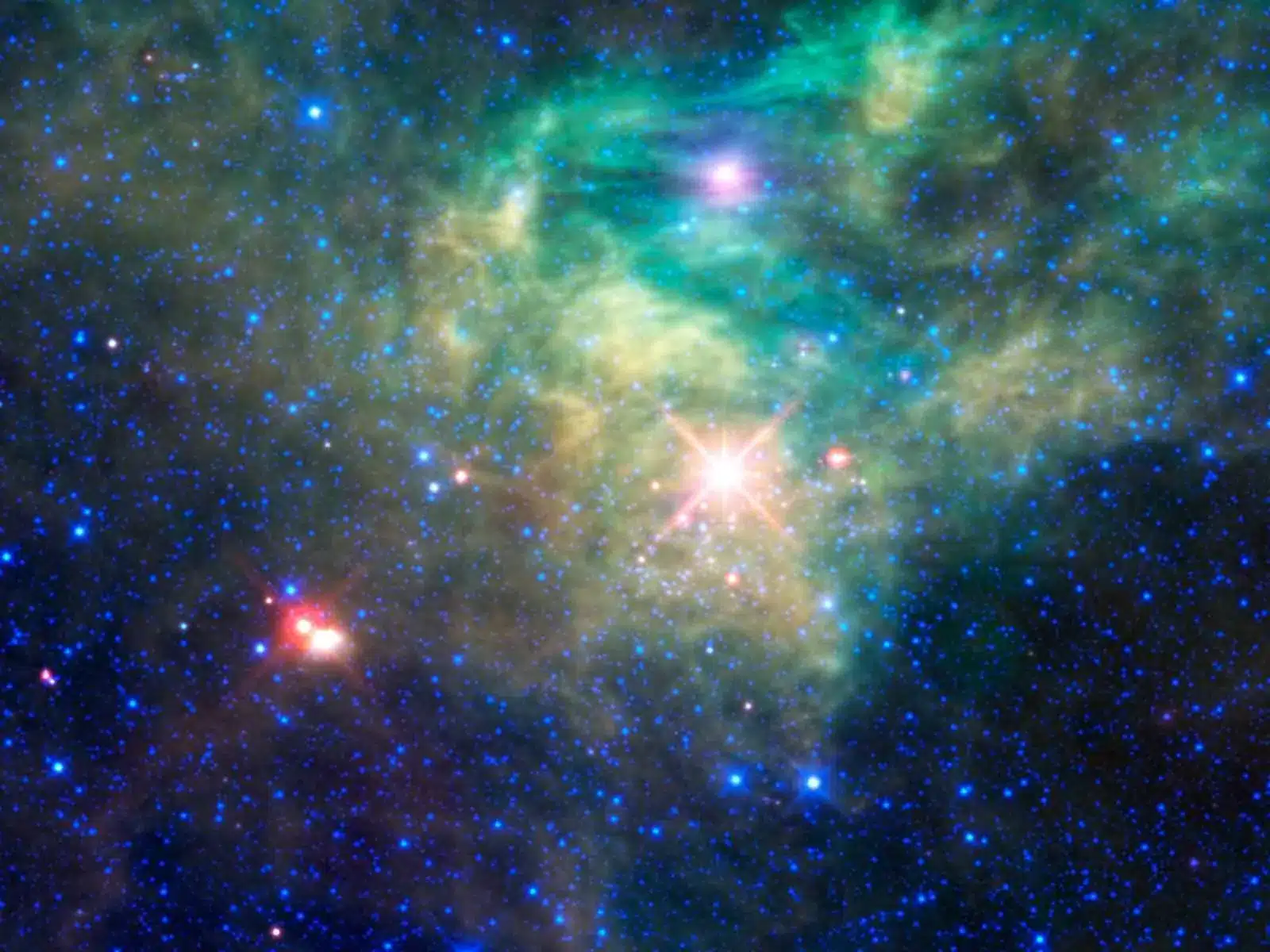
- A Star cluster is either of two general types of stellar assemblages held together by the mutual gravitational attraction of its members, which are physically related through common origin.
- They are particularly useful to astronomers as they provide a way to study and model stellar evolution and ages.
- The two basic categories of stellar clusters are open clusters, also known as galactic clusters, and globular clusters.
- Open (Galactic) Clusters:
- Open clusters are so named due to the fact that the individual component stars are easily resolved through a telescope.
- They are sometimes called galactic clusters due to their location on the dusty spiral arms on the plane of spiral galaxies.
- Stars in an open cluster have a common origin: they formed from the same initial giant molecular cloud.
- Open clusters contain from a dozen to many hundreds of stars, usually in an unsymmetrical arrangement.
- Globular Clusters:
- Globular clusters contain several thousand to one million stars in a spherical, gravitationally-bound system.
- Located mostly in the halo surrounding the galactic plane, they comprise the oldest stars in the galaxy.
- There is little free dust or gas found in globular clusters, so no new star formation is taking place in them.
- Stellar densities within the inner regions of a globular cluster are very high compared with regions such as those around the Sun.
- In addition, groups called associations, made up of a few dozen to hundreds of stars of similar type and common origin whose density in space is less than that of the surrounding field, are also recognized.
Q1: What is a Spiral Galaxy?
Spiral galaxies are twisted collections of stars and gas that often have beautiful shapes and are made up of hot, young stars. Most of the galaxies that scientists have discovered so far are spiral galaxies, as opposed to the other two main categories of galaxy shapes—elliptical and irregular. Approximately 60% of all galaxies are thought to be spiral galaxies. The Milky Way, the galaxy that includes Earth and our solar system, is an example of a spiral galaxy.
Source: Massive 5 star clusters discovered from the era when Universe was infant


 Last updated on Oct, 2026
→ UPSC 2027 Notification will be released on 13 January 2027 at upsconline.nic.in.
→ Asian Games 2026 are being held in Aichi-Nagoya, Japan, from 19 September to 4 October.
→ Check Nobel Prize 2026 Winners List here.
→ Download PIB PRiSM Monthly Magazine 2026 here.
→ Check UPSC Monthly Current Affairs Magazine The Recitals here.
→ Check out the latest UPSC Syllabus here.
→ Download UPSC Model Answers for Mains 2026
→ UPSC Mains Question Paper 2026 is out now for Essay & GS Paper 1, 2, 3 & 4.
→ UPSC Calendar 2027 has been released.
→ Enroll in Vajiram & Ravi’s UPSC Mains Test Series 2027 for structured answer writing practice, expert evaluation, and exam-oriented feedback.
→ Join Vajiram & Ravi’s UPSC Mentorship Program 2027 for personalized guidance, strategy planning, and one-to-one support from experienced mentors.
→ Go through the UPSC Mains Previous Year Papers to enhance your preparation.
→ UPSC has released UPSC Toppers List 2025 with the Civil Services final result on its official website.
→ Also check Best UPSC Coaching in India