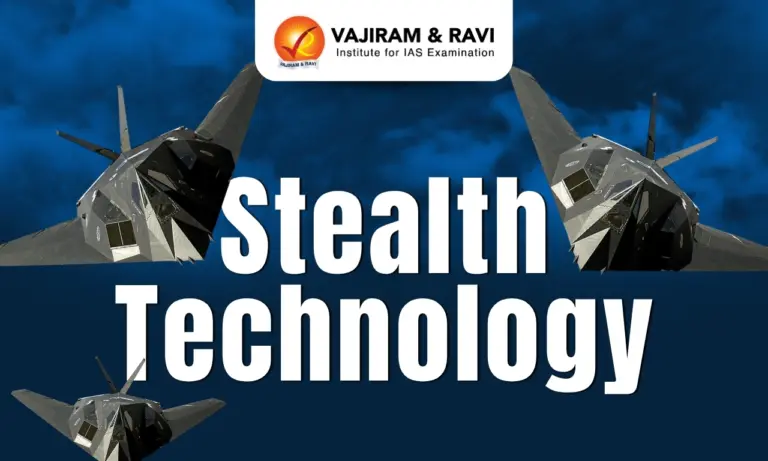
Stealth technology, also known as low-observable technology, is one of the most advanced developments in modern defense systems. It is designed to reduce the detection of military assets such as aircraft, submarines, missiles, and warships by enemy radar, infrared sensors, sonar, and other surveillance systems. By minimizing visibility and detectability, stealth technology improves operational secrecy, survivability, and strategic advantage during military missions.
What is Stealth Technology?
Stealth technology refers to a combination of design techniques, materials, coatings, and engineering methods used to make military platforms difficult to detect or track by enemy systems.
The primary objective of stealth technology is to reduce the “signature” of an object. A signature refers to the detectable characteristics of a military asset, such as:
- Radar reflections
- Heat emissions
- Noise levels
- Visual appearance
- Electromagnetic signals
Stealth Technology Features
Stealth Technology includes advanced design techniques and special materials that reduce the detection of military assets by radar, infrared, sonar, and other surveillance systems, improving survivability and operational effectiveness in modern warfare.
- Low Radar Visibility: Stealth systems are designed to reduce the Radar Cross Section (RCS), making aircraft, ships, and missiles difficult to detect by enemy radar.
- Radar-Absorbent Materials (RAM): Special coatings and composite materials absorb radar waves instead of reflecting them back to radar systems.
- Angular and Smooth Design: Stealth platforms use carefully shaped surfaces and smooth structures to deflect radar signals away from the source.
- Infrared Signature Reduction: Advanced cooling systems and shielded exhausts minimize heat emissions, reducing detection by infrared sensors and heat-seeking missiles.
- Noise Reduction Capability: Submarines and stealth vehicles use silent engines, vibration control, and sound-absorbing materials to avoid sonar detection.
- Internal Weapon Storage: Weapons are stored inside the body of stealth aircraft to reduce external radar reflections and maintain low observability.
- Electronic Emission Control: Communication and electronic signals are carefully managed to prevent enemy interception and tracking.
- Advanced Composite Materials: Lightweight composite materials improve stealth performance while enhancing speed, durability, and fuel efficiency.
- High Operational Survivability: Stealth technology increases the chances of mission success by reducing the risk of detection and attack.


Applications of Stealth Technology
Stealth Technology is widely used in modern defense systems to reduce detection by enemy radar, sonar, infrared, and surveillance systems. It enhances the effectiveness, survivability, and secrecy of military operations across air, sea, and land domains.
- Stealth Aircraft: Fighter jets and bombers such as the F-35 Lightning II and B-21 Raider use stealth technology to conduct air strikes, reconnaissance, and surveillance missions with minimal radar detection.
- Stealth Submarines: Modern submarines like the Type-039C Yuan-class submarine use sonar-absorbing materials and silent propulsion systems to operate undetected underwater.
- Naval Warships: Advanced destroyers such as the Zumwalt-class destroyer use angular hull designs and radar-reducing materials to lower visibility to enemy radar systems.
- Unmanned Aerial Vehicles (UAVs): Stealth drones like the RQ-170 Sentinel perform intelligence, surveillance, and reconnaissance missions in high-risk areas without exposing human pilots.
- Stealth Missiles: Missiles such as the AGM-158 JASSM use low radar signatures and infrared suppression to evade enemy air defense systems and strike targets accurately.
- Reconnaissance Operations: Stealth technology supports covert intelligence gathering by allowing military assets to enter enemy territory without early detection.
- Electronic Warfare: Stealth systems help disrupt enemy communication, radar, and defense networks while reducing the chances of counter-detection.
- Special Military Missions: Stealth technology is used in precision strike operations, hostage rescue missions, and strategic attacks in heavily defended regions.
- Border and Maritime Surveillance: Stealth-enabled systems assist in monitoring sensitive borders and maritime zones without revealing their presence.
Recent Developments in Stealth Technology
Recent developments in Stealth Technology show major advancements in radar evasion, sonar reduction, Artificial Intelligence (AI) integration, and next-generation military platforms. Countries around the world are investing heavily in advanced stealth systems to improve survivability, precision strike capability, and operational superiority in modern warfare.
- The B-21 Raider developed by the United States represents a new generation of stealth bombers with advanced radar-evasion capabilities, improved aerodynamics, and the ability to operate in highly defended environments.
- The F-35 Lightning II continues to receive upgrades in sensor fusion, electronic warfare systems, and stealth coatings, improving combat performance and survivability.
- China’s Type-039C Yuan-class submarine introduces advanced sonar-deflecting designs and angled structures that reduce underwater detection by enemy sonar systems.
- Modern stealth platforms are increasingly using Radar-Absorbent Materials (RAM) and advanced composite materials to further lower radar cross-section (RCS) and improve durability.
- Researchers are developing metamaterials, which can manipulate electromagnetic waves more effectively and significantly enhance stealth performance against modern radar systems.
- Artificial Intelligence (AI) is being integrated into stealth systems to support adaptive stealth capabilities, threat detection, automated navigation, and real-time mission planning.
- Stealth technology is now being incorporated into advanced unmanned aerial vehicles (UAVs) and drones, allowing covert intelligence, surveillance, and reconnaissance (ISR) operations without risking human pilots.
- Several countries are focusing on hypersonic stealth weapons, combining extreme speed with low observability to make interception more difficult.
- Naval stealth technology is advancing through improved hull shaping, infrared suppression systems, and reduced acoustic signatures in next-generation destroyers and submarines.
Stealth Technology and Modern Warfare
Stealth Technology has become a crucial part of modern warfare, transforming the way military operations are planned and executed. By reducing detection from radar, infrared sensors, sonar, and other surveillance systems, stealth technology enhances combat survivability, strategic advantage, and mission success in high-threat environments.
- Air Superiority: Stealth aircraft such as the F-22 Raptor and F-35 Lightning II help nations dominate enemy airspace by avoiding radar detection and conducting precision attacks.
- Precision Strike Capability: Stealth bombers and missiles can penetrate heavily defended regions and destroy strategic targets with greater accuracy and reduced risk of interception.
- Strategic Deterrence: Advanced stealth systems strengthen a country’s military power and act as a deterrent against potential adversaries by increasing offensive and defensive capabilities.
- Surprise Attacks: Stealth technology allows forces to launch sudden military operations without early warning, providing a major tactical advantage during conflicts.
- Enhanced Intelligence Gathering: Stealth drones and reconnaissance aircraft can conduct covert surveillance, monitoring, and intelligence collection deep inside hostile territory.
- Electronic Warfare Support: Modern stealth platforms are integrated with advanced electronic warfare systems that can jam enemy radar, communication, and missile defense networks.

 Last updated on Oct, 2026
→ UPSC 2027 Notification will be released on 13 January 2027 at upsconline.nic.in.
→ Check Nobel Prize 2026 Winners List here.
→ Download PIB PRiSM Monthly Magazine 2026 here.
→ Check UPSC Monthly Current Affairs Magazine The Recitals here.
→ Check out the latest UPSC Syllabus here.
→ Download UPSC Model Answers for Mains 2026
→ UPSC Mains Question Paper 2026 is out now for Essay & GS Paper 1, 2, 3 & 4.
→ UPSC Calendar 2027 has been released.
→ Enroll in Vajiram & Ravi’s UPSC Mains Test Series 2027 for structured answer writing practice, expert evaluation, and exam-oriented feedback.
→ Join Vajiram & Ravi’s UPSC Mentorship Program 2027 for personalized guidance, strategy planning, and one-to-one support from experienced mentors.
→ Go through the UPSC Mains Previous Year Papers to enhance your preparation.
→ UPSC has released UPSC Toppers List 2025 with the Civil Services final result on its official website.
→ Also check Best UPSC Coaching in India
Stealth Technology FAQs
Q1. What is Stealth Technology?+
Q2. Why is Stealth Technology important?+
Q3. Where is Stealth Technology used?+
Q4. How does Stealth Technology work?+
Q5. What are Radar-Absorbent Materials (RAM)?+
Q6. Which countries have advanced Stealth Technology?+
Q7. What is the role of Stealth Technology in modern warfare?+
Tags: defense studies science and technology stealth technology