About Summer solstice:
- In Latin, “Solstice” means “sun stands still”.
- It is an annual astronomical phenomenon that brings the longest day of the year.
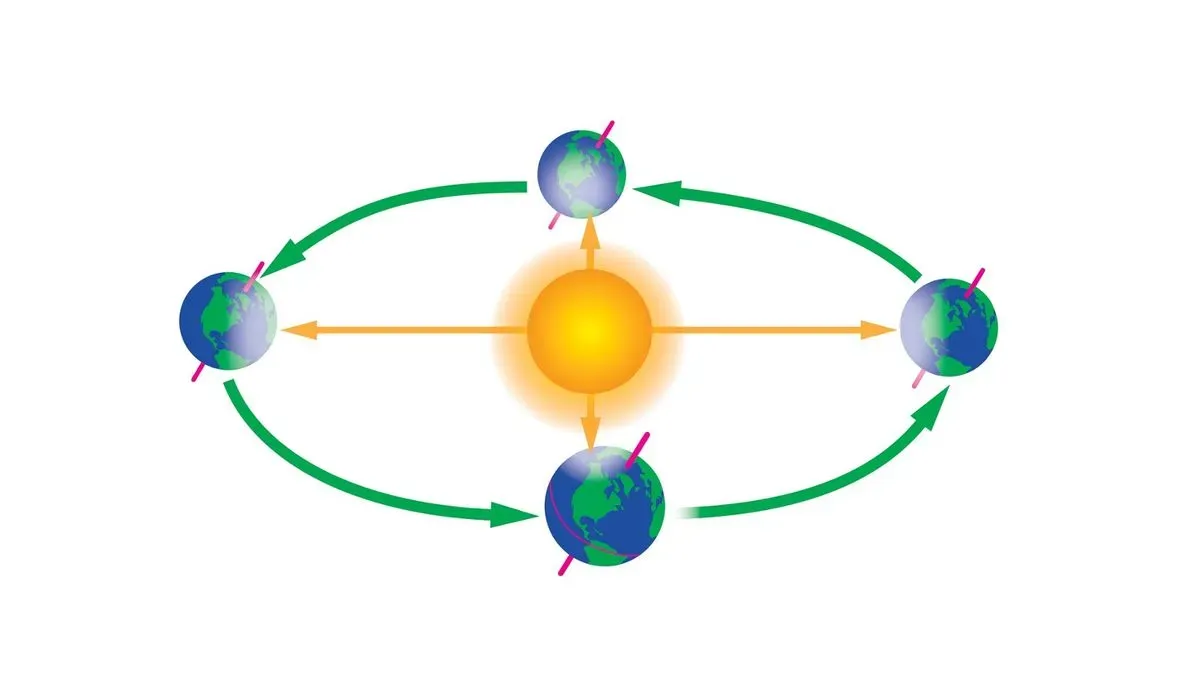
- On the summer solstice, the Northern Hemisphere is tilted toward the sun, receiving the full glare of the sun’s rays.
- During the solstice, the Earth’s axis — around which the planet spins, is tilted in a way that the North Pole is tipped towards the Sun and the South Pole is away from it.
- Typically, this imaginary axis passes right through the middle of the Earth from top to bottom and is always tilted at 23.5 degrees with respect to the Sun.
- What happens during the solstice?
- This day sees the Earth receiving a greater amount of energy from the Sun.
- Each year, the summer solstice in the Northern Hemisphere falls on one of two days: June 20 or June 21. In the Southern Hemisphere, the summer solstice happens on Dec. 21 or Dec. 22.
- The date varies because the Gregorian calendar has 365 days, with an extra leap day added in February every four years.
- The amount of light received by a specific area in the Northern Hemisphere during the summer solstice depends on the latitudinal location of the place.
- The further north one moves from the equator, the more light one receives during the summer solstice. At the Arctic Circle, the sun does not set during the solstice.
Q1: What is solar flare?
A solar flare is an intense burst of radiation coming from the release of magnetic energy associated with sunspots. Flares are our solar system’s largest explosive events. They are seen as bright areas on the sun, and they can last from minutes to hours.
Source: Summer solstice 2024: When is the solstice, why does it happen, and how do cultures celebrate?


 Last updated on Oct, 2026
→ UPSC 2027 Notification will be released on 13 January 2027 at upsconline.nic.in.
→ Check Nobel Prize 2026 Winners List here.
→ Download PIB PRiSM Monthly Magazine 2026 here.
→ Check UPSC Monthly Current Affairs Magazine The Recitals here.
→ Check out the latest UPSC Syllabus here.
→ Download UPSC Model Answers for Mains 2026
→ UPSC Mains Question Paper 2026 is out now for Essay & GS Paper 1, 2, 3 & 4.
→ UPSC Calendar 2027 has been released.
→ Enroll in Vajiram & Ravi’s UPSC Mains Test Series 2027 for structured answer writing practice, expert evaluation, and exam-oriented feedback.
→ Join Vajiram & Ravi’s UPSC Mentorship Program 2027 for personalized guidance, strategy planning, and one-to-one support from experienced mentors.
→ Go through the UPSC Mains Previous Year Papers to enhance your preparation.
→ UPSC has released UPSC Toppers List 2025 with the Civil Services final result on its official website.
→ Also check Best UPSC Coaching in India