About Thrombotic Thrombocytopenic Purpura (TTP):
- It is a rare, life-threatening blood disorder.
- “Thrombotic” refers to the blood clots that form.
- “Thrombocytopenic” means the blood has a lower-than-normal platelet count.
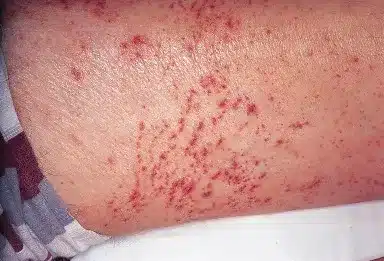
- “Purpura” refers to purple bruises caused by bleeding under your skin.
- In TTP, blood clots form in small blood vessels throughout your body.
- The clots can limit or block the flow of blood to your organs, such as your brain, kidneys, and heart. This can prevent your organs from working properly and damage your organs.
- The increased clotting that occurs in TTP also uses up your platelets. Platelets are tiny blood cells that help form blood clots. These cell fragments stick together to seal small cuts and breaks in your blood vessels to stop bleeding.
- When your platelets are used up, you do not have enough platelets to form blood clots when necessary. This can cause internal bleeding, bleeding underneath the skin, and other bleeding problems.
- What causes TTP?
- TTP occurs when you do not have the right amount of an enzyme (a type of protein in your blood) called ADAMTS13.
- This enzyme controls how your blood clots. If you do not have enough ADAMTS13, your body makes too many blood clots.
- TTP can be inherited or acquired.
- TTP usually occurs suddenly and lasts for days or weeks, but it can continue for months.
- TTP can also cause red blood cells to break apartfaster than your body can replace them. This leads to a rare form of anemia called hemolytic anemia.
- Symptoms of TTP may include any of the following:
- Bleeding into the skin or mucus membranes
- Confusion
- Fatigue, weakness
- Fever
- Headache
- Pale skin color or yellowish skin color
- Shortness of breath
- Fast heart rate (over 100 beats per minute)
- TTP can be fatal. Without treatment, it can cause long-term problems, such as brain damage or a stroke.
- Treatment: Plasma treatments and medicines are the most common ways to treat TTP. If these treatments do not work, you may need surgery.
Q1: What are red blood cells (RBCs)?
A type of blood cell that is made in the bone marrow and found in the blood. Red blood cells contain a protein called hemoglobin, which carries oxygen from the lungs to all parts of the body.Oxygen turns into energy and your tissues release carbon dioxide. Your red blood cells also transport carbon dioxide to your lungs for you to exhale.
Source: Inactivated COVID-19 vaccine CoronaVac associated with TTP


 Last updated on Oct, 2026
→ UPSC 2027 Notification will be released on 13 January 2027 at upsconline.nic.in.
→ Check Nobel Prize 2026 Winners List here.
→ Download PIB PRiSM Monthly Magazine 2026 here.
→ Check UPSC Monthly Current Affairs Magazine The Recitals here.
→ Check out the latest UPSC Syllabus here.
→ Download UPSC Model Answers for Mains 2026
→ UPSC Mains Question Paper 2026 is out now for Essay & GS Paper 1, 2, 3 & 4.
→ UPSC Calendar 2027 has been released.
→ Enroll in Vajiram & Ravi’s UPSC Mains Test Series 2027 for structured answer writing practice, expert evaluation, and exam-oriented feedback.
→ Join Vajiram & Ravi’s UPSC Mentorship Program 2027 for personalized guidance, strategy planning, and one-to-one support from experienced mentors.
→ Go through the UPSC Mains Previous Year Papers to enhance your preparation.
→ UPSC has released UPSC Toppers List 2025 with the Civil Services final result on its official website.
→ Also check Best UPSC Coaching in India