About Tibetan Buddhism:
- Buddhism originated in India and became the predominant religion in Tibet by the 9th century AD.
- It evolved from the Mahayana and Vajrayana traditions of Buddhism, incorporating many tantric and shamanic practices of both post-Gupta period Buddhism in India.
- Tibetan Buddhism also incorporates the Bon religion which was spread across Tibet before Buddhism’s arrival.
- Tibetan Buddhism has 4 major schools: Nyingma (8th century), Kagyu (11th century), Sakya (1073) and Gelug (1409)
- The Janang school (12th century) is one of the smaller schools that grew as an offshoot of the Sakya school.
What is Gelug School?
- Since 1640, the Gelug School has been the predominant school of Tibetan Buddhism.
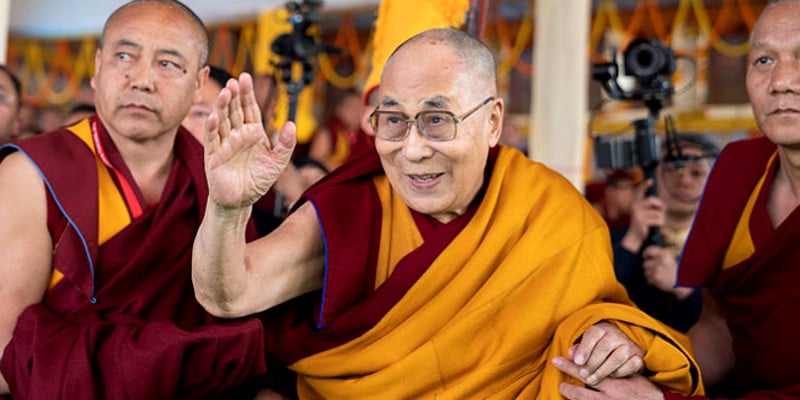
- The Dalai Lama belongs to Gelug School (‘Dalai’ means ‘ocean’ in Mongol).
- The Dalai Lama is the foremost spiritual and temporal authority of Tibet.
- The 5th grand lama of the school, Ngawang Lobsang Gyatso, was first conferred the title of Dalai Lama.
- To consolidate his rule, he instituted the tradition of succession through reincarnation in the Gelug School.
- He claimed to be the reincarnation of Avalokiteshvara, one of the most important Bodhisattvas in Mahayana traditions.
Q1) What is the Nyingma School of Buddhism?
The Nyingma School is also called Nyingmapa, is the oldest of the schools of Tibetan Buddhism. It was established in Tibet during the reign of the Emperor Trisong Detsen (742-797 CE), who brought the tantric masters Shantarakshita and Padmasambhava to Tibet to teach and to found the first Buddhist monastery in Tibet.
Source: The question of the Dalai Lama’s succession: what tradition says and Chinese interference


 Last updated on Oct, 2026
→ UPSC 2027 Notification will be released on 13 January 2027 at upsconline.nic.in.
→ Check Nobel Prize 2026 Winners List here.
→ Download PIB PRiSM Monthly Magazine 2026 here.
→ Check UPSC Monthly Current Affairs Magazine The Recitals here.
→ Check out the latest UPSC Syllabus here.
→ Download UPSC Model Answers for Mains 2026
→ UPSC Mains Question Paper 2026 is out now for Essay & GS Paper 1, 2, 3 & 4.
→ UPSC Calendar 2027 has been released.
→ Enroll in Vajiram & Ravi’s UPSC Mains Test Series 2027 for structured answer writing practice, expert evaluation, and exam-oriented feedback.
→ Join Vajiram & Ravi’s UPSC Mentorship Program 2027 for personalized guidance, strategy planning, and one-to-one support from experienced mentors.
→ Go through the UPSC Mains Previous Year Papers to enhance your preparation.
→ UPSC has released UPSC Toppers List 2025 with the Civil Services final result on its official website.
→ Also check Best UPSC Coaching in India