Corporate Responsibility in India – Jobs, Wages and Domestic Manufacturing

Corporate Responsibility

Corporate Responsibility Latest News

  • Prime Minister Narendra Modi criticised India Inc at the Federation of Indian Chambers of Commerce and Industry (FICCI) centenary celebrations on November 19, 2026, questioning the failure of corporates to translate tax benefits and ease-of-doing-business reforms into higher employee salaries, greater employment and better-quality products.

Background: Prime Minister's Message to India Inc

  • Addressing business leaders at FICCI's centenary event at Bharat Mandapam, New Delhi, the Prime Minister questioned whether the private sector had adequately contributed to employment generation and wage growth despite receiving significant policy support from the government.
  • He highlighted that the corporate tax rate had been reduced from 30% in 2014 to 22% in 2019, while income up to Rs. 12 lakh had effectively become tax-free under the new tax regime, subject to applicable conditions.
  • However, he argued that these measures had not been matched by comparable increases in employee salaries or the number of people employed by companies. 
  • He criticised businesses for retaining the gains rather than passing them on to employees and consumers.
  • The Prime Minister also questioned the quality of products manufactured for Indian consumers, arguing that the size of India's domestic market should not become an excuse for compromising on quality.

Corporate Profits and the Wage-Growth Gap

  • The criticism comes amid evidence of rising corporate profitability alongside concerns over wage stagnation and the quality of employment.
    • Corporate earnings: Nifty-500 companies recorded a 28.7% compound annual growth rate (CAGR) in earnings between FY2020 and FY2026, compared with 9.5% CAGR for India's GDP.
    • Profitability: The Reserve Bank of India's March 2026 assessment found that the aggregate profits of 7,992 non-government, non-financial public limited companies increased by 23.1% in FY2024-25. Their combined profits rose from Rs. 2.5 trillion in FY2020-21 to Rs. 7.1 trillion in FY2024-25.
    • Profit-to-GDP ratio: The corporate profit-to-GDP ratio for Nifty-500 companies reached 5.2% in FY2025-26, an all-time high, while the ratio for listed Indian companies stood at 5.7%, an 18-year high.
    • Direct tax composition: Personal income-tax collections, including Securities Transaction Tax (STT), reached Rs. 10.45 lakh crore in FY2023-24, exceeding corporate tax collections of Rs. 9.11 lakh crore.
  • These figures highlight the growing debate over the distribution of economic gains between businesses, employees and the government.

Employment Growth and the Quality of Jobs

  • According to the Periodic Labour Force Survey (PLFS), the Worker Population Ratio (WPR) for people aged 15 years and above increased from 46.8% in 2017-18 to 58.2% in 2023-24. The unemployment rate declined from 6% to 3.2% during the same period.
  • However, higher employment does not necessarily translate into the creation of secure, formal-sector jobs.
  • Informal employment: A NITI Aayog report based on PLFS 2023-24 data estimated that nearly 87% of India's 63.4 crore employed workers were in informal employment, with only around 13% in formal jobs.
  • Skill mismatch: The Economic Survey 2024-25 found that more than 53% of graduates and around 36% of postgraduates were employed in occupations below their educational qualifications.
  • Job security: A significant proportion of workers remain outside the organised workforce and lack benefits such as medical insurance and provident fund coverage.

Improving Product Quality and Consumer Protection

  • The Prime Minister also criticised manufacturers for relying on India's large domestic consumer base rather than investing sufficiently in product quality.
  • He argued that a market of 1.4 billion people should be treated as an opportunity to build globally competitive products, not as a guarantee that substandard goods will continue to find buyers.
  • The emphasis on quality also reflects the need to move beyond low-cost production towards globally competitive manufacturing standards.

Strengthening Domestic Manufacturing and Reducing Import Dependence

  • The Prime Minister identified several areas requiring greater investment:
  • Pharmaceuticals
    • Although India is known as the "Pharmacy of the World" for its finished medicines, it continues to import substantial quantities of active pharmaceutical ingredients (APIs), bulk drugs and drug intermediates.
    • The industry was urged to invest in advanced technologies and large-scale production facilities to develop domestic capabilities in pharmaceutical ingredients.
  • Steel and Aluminium
    • India exports iron ore but continues to import certain grades of finished steel.
    • Similarly, despite possessing substantial bauxite reserves, India imports specialised aluminium alloys and related products. Developing domestic manufacturing capabilities in these segments could strengthen industrial self-reliance.
  • Agriculture and Food Processing
    • India's share in global agricultural exports remains only 2-2.5%, despite its large agricultural base.
    • The Prime Minister urged corporates to increase investment in agriculture and food processing, establish dependable procurement systems and develop products according to the requirements of specific overseas markets.
  • Engineering Goods and Industrial Machinery
    • Indian companies were encouraged to explore global demand for engineering products, including packaging equipment, irrigation systems and factory-related machinery.
    • The Prime Minister also called upon larger companies to help smaller enterprises improve product quality, manufacturing scale and competitiveness.

Leveraging Free Trade Agreements and Global Markets

  • The Prime Minister urged FICCI to prepare a strategy for maximising opportunities arising from India's free trade agreements (FTAs).
  • Businesses need to understand the requirements of international markets, identify products with export potential and develop manufacturing capabilities accordingly.
  • He emphasised an "India First" approach, encouraging businesses to look beyond domestic demand and prepare for global opportunities over the next two decades.
  • The broader objective is to strengthen India's position in global value chains through higher-quality products, greater domestic value addition and competitive manufacturing.

Source: IE | IT

Corporate Responsibility FAQs

Q1: What did Prime Minister Narendra Modi criticise India Inc for?

Ans: He criticised corporates for not adequately increasing employee salaries or employment despite receiving corporate tax reductions and other policy support. He also questioned the quality of products manufactured for Indian consumers.

Q2: How was India's corporate tax rate reduced?

Ans: The corporate tax rate was reduced from 30% in 2014 to 22% in 2019 for eligible domestic companies opting for the concessional tax regime.

Q3: What is the Worker Population Ratio (WPR)?

Ans: WPR is the proportion of the population that is employed. India's WPR for people aged 15 years and above increased from 46.8% in 2017-18 to 58.2% in 2023-24.

Q4: What is informal employment?

Ans: Informal employment generally refers to work that lacks adequate formal employment arrangements and social security benefits such as provident fund and medical insurance.

Q5: Why is India dependent on imports in the pharmaceutical sector?

Ans: Despite its strength in finished medicines, India continues to import significant quantities of APIs, bulk drugs and drug intermediates, highlighting gaps in domestic manufacturing capabilities.

EPFO Systematic Withdrawal Plan: Transforming Retirement Payouts

EPFO Systematic Withdrawal Plan

EPFO Systematic Withdrawal Plan Latest News

  • The Central Board of Trustees (CBT) of the Employees’ Provident Fund Organisation (EPFO), in its 240th meeting, discussed a landmark proposal: allowing retiring members a Systematic Withdrawal Plan (SWP) with periodic payouts, instead of the current practice of a lump-sum withdrawal of the entire corpus at retirement. 
  • The meeting also eased several existing withdrawal norms, marking a significant shift in India’s retirement savings framework.

About Systematic Withdrawal Plan (SWP)

  • Allows retiring members to retain savings within the EPF ecosystem, continue earning EPF interest, and receive post-retirement income without giving up ownership of the residual corpus.
  • Multiple withdrawal options proposed: 
    • Full systematic withdrawal
    • Partial lump-sum withdrawal + SWP for the remaining balance
    • Interest-only withdrawal model
  • Members can withdraw savings at regular intervals — monthly, quarterly, or half-yearly — based on personal preference.
  • Completely voluntary: The Ministry of Labour and Employment clarified there is “no compulsion on members to opt for withdrawals.”
  • May be extended to eligible family members and beneficiaries for added flexibility and financial security.

Why Introduce SWP? Key Objectives

  • Ensure stable post-retirement income.
  • Reduce reinvestment risks that retirees face when managing a lump sum themselves.
  • Strengthen fund sustainability within the EPF system.
  • Facilitate extension of social security coverage to gig and platform workers.
  • Internal EPFO estimates suggest periodic SWP withdrawals could generate higher monthly payouts compared to equivalent bank fixed deposits or annuity products.

Additional SWP Features

  • Voluntary digital contributions: Members can make additional contributions directly into their EPF accounts via EPFO-designated digital channels, independent of employer payroll systems — with no employer matching required.
  • Exit flexibility: Retirees can terminate the SWP and withdraw the remaining balance at any time.
  • Nominee protection: Spouse or nominee rights continue on the same terms for the balance corpus if the member dies during the SWP tenure.

Easing of Existing Withdrawal Rules

  • Minimum balance requirement reduced from 25% to 10% — reversing an earlier decision that had triggered social media backlash and Opposition criticism.
  • Premature final settlement relief: Members can now claim premature final PF settlement after being unemployed for just 2 months, down from the 12-month waiting period introduced in October 2025.
  • Pension withdrawal: The minimum waiting period for final pension withdrawal remains unchanged at 36 months.
  • Current baseline: EPFO members can currently withdraw 100% of their PF balance at retirement (age 58); those with 10+ years of eligible service separately receive a monthly pension under the Employees’ Pension Scheme (EPS).

Scale and Beneficiaries

  • ~6.32 lakh members above age 55, holding PF savings exceeding ₹5 lakh, are expected to benefit from SWP.
  • EPFO’s overall scale: over 8 crore active contributing members, 34+ crore total members, managing a retirement corpus of nearly ₹32 lakh crore.

Extending Coverage to Gig and Informal Workers

  • The proposal introduces a framework for direct voluntary contributions and third-party micro-contributions (e.g., customer tips) directly into EPF accounts via Universal Account Number (UAN)-linked digital payment mechanisms — entirely independent of employer payroll systems.
  • This would convert informal and incidental income into long-term retirement savings.
  • Contributions will be capped per Income-tax Act limits and governed by CBT-specified rules.
  • Target beneficiaries: Gig workers, platform workers, construction workers, domestic workers, street vendors, and home-based workers.

Investment Diversification: AIF Approval

  • EPFO’s Board gave in-principle approval to invest up to 3% of fresh annual accretions in eligible Alternative Investment Funds (AIFs), within the existing overall investment ceiling.
  • Initial focus: Government-backed entities — specifically the National Investment and Infrastructure Fund (NIIF) and SIDBI’s “Startup India Fund of Funds 2.0”.
  • What is an AIF? A privately pooled investment vehicle (trust/company/LLP/body corporate) collecting funds for a defined investment strategy — not covered under SEBI’s Mutual Funds or Collective Investment Schemes Regulations.
  • Risk-return distinction discussed: AIFs (especially startup/VC-focused) differ significantly from InvITs (infrastructure assets like highways, power transmission) and REITs (commercial real estate like office parks, warehouses) — AIFs don’t necessarily generate regular income, justifying the cautious 3% cap.

Conclusion

  • EPFO’s proposed Systematic Withdrawal Plan marks a structural shift from a one-time lump-sum payout model to a flexible, income-generating retirement framework — reducing reinvestment risk while preserving fund growth. 
  • Combined with eased withdrawal norms and a pathway for gig workers’ inclusion, this reform could meaningfully strengthen India’s social security architecture, provided implementation remains simple and genuinely voluntary for all EPF subscribers.

Source: IE

EPFO Systematic Withdrawal Plan FAQs

Q1: What is the EPFO systematic withdrawal plan?

Ans: The EPFO systematic withdrawal plan allows retiring members to receive periodic payments from their PF corpus while retaining the remaining savings within the EPF ecosystem.

Q2: What withdrawal options are proposed under the EPFO systematic withdrawal plan?

Ans: The EPFO systematic withdrawal plan offers full systematic withdrawals, partial lump-sum withdrawals with periodic payouts, and interest-only withdrawal options.

Q3: How will the EPFO systematic withdrawal plan benefit retirees?

Ans: The EPFO systematic withdrawal plan can provide stable retirement income, reduce reinvestment risks and allow retirees to retain ownership of their remaining corpus.

Q4: What changes have been made to EPFO withdrawal rules?

Ans: Alongside the EPFO systematic withdrawal plan, the minimum balance requirement was reduced to 10%, while premature final settlement became available after two months of unemployment.

Q5: Can gig workers benefit from the EPFO systematic withdrawal plan framework?

Ans: The EPFO systematic withdrawal plan framework proposes voluntary contributions through digital channels, potentially extending retirement savings opportunities to gig, platform and informal workers.

COP31 Fossil Fuel Phase-out: Global Divide Over Climate Commitments

COP31

COP31 Latest News

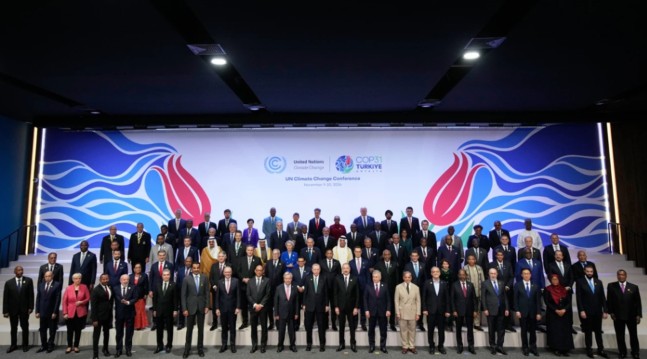
  • With just one day left in the two-week COP31 climate conference in Antalya, Türkiye, the latest draft of the cover text (dated November 19, 2026) dropped all references to fossil fuel phase-out and net-zero dates, triggering anger among negotiators. 
  • This marks a stark regression from the conference’s opening draft and echoes a similar failure at last year’s Brazil summit, where over 80 countries had pushed unsuccessfully for the issue’s inclusion.

What Changed in the Draft?

  • The first draft had called for “accelerated action to phase out fossil fuels” and an “immediate transition away from fossil fuels in energy systems.”
  • Later, the revised draft removed every single mention of fossil fuels — not just these two phrases.
  • Experts called it a glaring regression, stating: “You cannot solve a fossil fuel crisis by pretending we don’t need to phase out fossil fuels.”
  • The cover text itself is a broad political framing document for the summit’s outcome, finalised last and requiring consensus of all Parties.
  • The revised cover decision shrank from 144 paragraphs (November 16) to 80 paragraphs (November 19), indicating significant paring down of contested provisions.

Why Fossil Fuels Remain the Core Sticking Point

  • Burning fossil fuels (coal, oil, gas) accounts for nearly three-quarters of global greenhouse gas emissions, yet they still meet over 80% of global energy needs.
  • For almost three decades, climate negotiations avoided using the term “fossil fuels” entirely in COP decisions.
  • It was only at COP28 in Dubai (2023) that “fossil fuels” was mentioned for the first time in a main agreement.
  • Divergent Interests
    • European Union has led calls for a fossil fuel phase-out roadmap.
    • Major oil-producing economies oppose such mechanisms, given dependence on fossil fuel revenues.
    • Major consumers like India and China are also not enthusiastic, reflecting their energy security concerns.
  • At least 8 European countries have announced their own national roadmaps for transitioning away from fossil fuels, independent of the COP process.

The 1.5°C Target: A More “Realistic” Tone

  • Two scientific reports earlier in 2026 concluded that the window to keep warming within 1.5°C (Paris Agreement target) is no longer firmly open — a rise to 1.7-1.8°C now appears inevitable.
  • This time, the first draft had called to return to 1.5°C “as early as possible” and proposed a ‘work programme’ to study pathways back to 1.5°C after overshoot.
  • Later, the draft softened this significantly — it merely “resolves to continue pursuing efforts” toward 1.5°C and to limit the duration/magnitude of overshoot; the proposed ‘work programme’ was dropped entirely.

What Survived in the Draft

  • A target to raise electricity’s share in global final energy consumption to 35% by 2035 (up from 23% currently) — a proposal championed by host nation Türkiye, now elevated from a voluntary pledge to a negotiated decision.
  • Scaling up carbon capture utilisation technologies.
  • Making early warning systems universal by 2027.
  • A broad (non-specific) commitment to triple adaptation finance.
  • India’s perspective
    • India’s electricity use rose 13% in 2025 due to the Hormuz crisis alone. 
    • While 35% electrification by 2035 is ambitious, India’s growing renewable energy mix should bring it to 32-34% by then.

What Was Dropped — A Blow to Developing Nations

  • A firm $120 billion annual adaptation-finance target, which developing countries sought as a “legally binding financial obligation” on developed nations, was eliminated.
  • The proposal to phase out unilateral trade measures like the EU’s Carbon Border Adjustment Mechanism (CBAM) by 2027 — a major developing-country concern — was also removed.
  • Analysts criticised rich nations, particularly EU countries, for resisting the $120 billion commitment: “Some countries seem willing to push negotiations toward failure.”

The Bigger Picture

  • The removal of both the fossil fuel phase-out demand (developing/climate-vulnerable nations’ key ask) and the firm adaptation finance target (developed nations’ key resistance point) suggests the most ambitious demands of both blocs have been diluted — a classic COP compromise-through-dilution pattern.
  • Climate conferences rarely end on schedule; despite an official November 20 end date, negotiations often overshoot into the weekend.

Conclusion

  • COP31’s watered-down draft reveals the persistent fault lines in global climate diplomacy — between fossil-fuel producers and climate-vulnerable nations, and between developed countries’ reluctance on finance and developing nations’ demand for accountability. 
  • With the 1.5°C target now effectively unreachable and key commitments diluted, the summit risks reinforcing scepticism about whether COP negotiations can still deliver meaningful, equitable climate action.

Source: IE | TH

COP31 FAQs

Q1: Why was the COP31 fossil fuel phase-out proposal removed from the draft?

Ans: The COP31 fossil fuel phase-out proposal was removed amid disagreements between oil-producing economies, energy-dependent nations and countries demanding stronger climate commitments.

Q2: What did the initial COP31 draft propose regarding fossil fuels?

Ans: The initial COP31 fossil fuel phase-out draft called for accelerated action and an immediate transition away from fossil fuels in energy systems.

Q3: Why is the COP31 fossil fuel phase-out issue controversial?

Ans: The COP31 fossil fuel phase-out debate reflects conflicting priorities involving economic dependence, energy security, climate vulnerability and the transition towards cleaner energy systems.

Q4: What climate commitments survived in the revised COP31 draft?

Ans: Despite removing COP31 fossil fuel phase-out references, the draft retained electricity expansion, carbon capture, universal early-warning systems and a broad adaptation-finance commitment.

Q5: How does the COP31 fossil fuel phase-out debate affect developing countries?

Ans: The COP31 fossil fuel phase-out setback, alongside removal of the adaptation-finance target and CBAM proposal, weakened key demands of developing countries.

ULLAS – 11 States and UTs Declared Fully Literate

ULLAS Programme

ULLAS Latest News

  • As many as 11 States and Union Territories (UTs) have declared themselves “fully literate” under the Centre’s ULLAS – Nav Bharat Saaksharta Karyakram, an adult education initiative aligned with the National Education Policy (NEP) 2020.
  • The initiative aims to achieve Foundational Literacy and Numeracy (FLN) among non-literate individuals aged 15 years and above, thereby promoting inclusive education and lifelong learning.

States and UTs Achieving Full Literacy Status

  • The 11 States and UTs that have declared themselves fully literate are -
    • UTs: Ladakh, Chandigarh, Andaman and Nicobar Islands, Jammu and Kashmir and Lakshadweep.
    • States: Mizoram, Goa, Tripura, Himachal Pradesh, Sikkim and Uttarakhand.
  • Criteria for full literacy:
    • A literacy rate of 95% or above is considered equivalent to achieving full literacy.
    • Achieving 100% literacy is practically difficult due to factors such as advanced age and certain intellectual disabilities that may affect an individual's ability to read and write.

ULLAS - Progress and Key Achievements

  • The Department of School Education and Literacy, under the Ministry of Education, has been imple
  • menting ULLAS (Understanding of Lifelong Learning for All in Society) since 2022-23.
  • Assessment through FLNAT:
    • The Foundational Literacy and Numeracy Assessment Test (FLNAT) evaluates learners' reading, writing and numeracy skills.
    • It is conducted twice a year to assess learning outcomes.
    • Successful candidates receive a literacy certificate from the National Institute of Open Schooling (NIOS).
  • Participation and performance:
    • Over 90.96 lakh learners aged 15 years and above have appeared for FLNAT during 2026-27 so far.
    • Overall, approximately 4.15 crore learners across 34 States and UTs have taken the assessment.
    • The overall success rate is above 90%.
  • State-wise participation:
    • In Madhya Pradesh, adult learners assessed were 20.43 lakh. Similarly, in Rajasthan (18.18 lakh), Odisha (12 lakh), Telangana (7.54 lakh), Maharashtra (6.5 lakh), and Tamil Nadu (4.5 lakh)
    • Madhya Pradesh leads in the number of adult learners assessed under the programme.

Components of the ULLAS Scheme

  • In pursuance of NEP 2020, ULLAS adopts a comprehensive approach to adult education through five components:
    • Foundational Literacy and Numeracy: Developing basic reading, writing and mathematical skills.
    • Critical Life Skills: Promoting essential skills related to financial literacy, digital literacy, legal awareness, health and family welfare.
    • Basic Education: Providing opportunities to acquire equivalent foundational and elementary education.
    • Vocational Skills: Enhancing employability and livelihood opportunities through skill development.
    • Continuing Education: Encouraging lifelong learning through further educational and skill-development opportunities.

Implementation Mechanism and Community Participation

  • Target group: Non-literate individuals aged 15 years and above.
  • Implementation mode: Hybrid approach combining digital and community-based learning.
  • Volunteerism: Encourages educated citizens to participate as volunteer teachers.
  • Institutional support: Utilises schools and Higher Education Institutions (HEIs) as platforms for adult learning.
  • Community engagement: Promotes local participation to improve access and learning outcomes.
  • Digital participation: More than 4.17 crore learners have registered on the ULLAS mobile application. Around 52.89 lakh volunteer teachers have registered on the platform.

Impact on India’s Literacy Rate

  • According to government figures, India's literacy rate has increased to 81.1%, compared with 74.04% in Census 2011.
  • The programme seeks to address educational exclusion among adults who missed formal schooling opportunities.
  • It also promotes social empowerment, economic participation and intergenerational learning.

Significance of the Initiative

  • Inclusive Development: Extends educational opportunities to disadvantaged and marginalised sections.
  • Women Empowerment: Adult literacy can strengthen women's financial independence, awareness of rights and participation in decision-making.
  • Economic Empowerment: Foundational and vocational skills can improve livelihood opportunities and productivity.
  • Digital Inclusion: Digital literacy enables citizens to access online public services and participate in the digital economy.
  • Democratic Participation: Literacy improves awareness of constitutional rights, government programmes and civic responsibilities.
  • Human Capital Development: Supports the development of a skilled, informed and productive population.

Challenges and Way Forward

  • Challenges:
    • Learning Retention: Ensuring that newly acquired literacy skills are retained and used in everyday life.
    • Digital Divide: Addressing unequal access to smartphones, internet connectivity and digital learning resources.
    • Regional Disparities: Improving literacy outcomes in educationally disadvantaged regions.
    • Social Barriers: Overcoming gender inequalities, poverty, social exclusion and lack of time among adult learners.
    • Quality Assessment: Ensuring that certification reflects functional literacy rather than merely examination performance.
  • Way forward for ensuring sustainable learning outcomes:
  • Strengthen community-based learning centres, 
  • Provide locally relevant learning materials in regional languages, 
  • Promote women's participation, 
  • Improve digital accessibility and 
  • Establish continuous monitoring mechanisms 

Source: IE

ULLAS FAQs

Q1: What is the ULLAS scheme, and what are its major objectives?

Ans: ULLAS, launched in 2022-23 under NEP 2020, promotes adult education through foundational literacy.

Q2: What is the significance of considering a 95% literacy rate equivalent to full literacy?

Ans: It recognises practical limitations in achieving universal literacy due to advanced age and certain intellectual disabilities.

Q3: How does the ULLAS scheme promote inclusive and lifelong learning?

Ans: Through volunteerism, community engagement, digital platforms and institutional support.

Q4: What is the role of adult literacy in India's socio-economic development?

Ans: It enhances employability, women's empowerment, financial and digital inclusion.

Q5: What are the major challenges in achieving universal adult literacy in India?

Ans: Digital divides, gender inequalities, regional disparities and poor learning retention.

Enquire Now