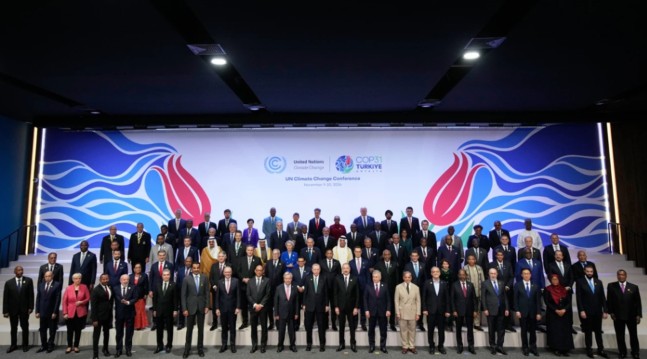
COP31 Latest News
- With just one day left in the two-week COP31 climate conference in Antalya, Türkiye, the latest draft of the cover text (dated November 19, 2026) dropped all references to fossil fuel phase-out and net-zero dates, triggering anger among negotiators.
- This marks a stark regression from the conference’s opening draft and echoes a similar failure at last year’s Brazil summit, where over 80 countries had pushed unsuccessfully for the issue’s inclusion.
What Changed in the Draft?
- The first draft had called for “accelerated action to phase out fossil fuels” and an “immediate transition away from fossil fuels in energy systems.”
- Later, the revised draft removed every single mention of fossil fuels — not just these two phrases.
- Experts called it a glaring regression, stating: “You cannot solve a fossil fuel crisis by pretending we don’t need to phase out fossil fuels.”
- The cover text itself is a broad political framing document for the summit’s outcome, finalised last and requiring consensus of all Parties.
- The revised cover decision shrank from 144 paragraphs (November 16) to 80 paragraphs (November 19), indicating significant paring down of contested provisions.


Why Fossil Fuels Remain the Core Sticking Point
- Burning fossil fuels (coal, oil, gas) accounts for nearly three-quarters of global greenhouse gas emissions, yet they still meet over 80% of global energy needs.
- For almost three decades, climate negotiations avoided using the term “fossil fuels” entirely in COP decisions.
- It was only at COP28 in Dubai (2023) that “fossil fuels” was mentioned for the first time in a main agreement.
- Divergent Interests
- European Union has led calls for a fossil fuel phase-out roadmap.
- Major oil-producing economies oppose such mechanisms, given dependence on fossil fuel revenues.
- Major consumers like India and China are also not enthusiastic, reflecting their energy security concerns.
- At least 8 European countries have announced their own national roadmaps for transitioning away from fossil fuels, independent of the COP process.
The 1.5°C Target: A More “Realistic” Tone
- Two scientific reports earlier in 2026 concluded that the window to keep warming within 1.5°C (Paris Agreement target) is no longer firmly open — a rise to 1.7-1.8°C now appears inevitable.
- This time, the first draft had called to return to 1.5°C “as early as possible” and proposed a ‘work programme’ to study pathways back to 1.5°C after overshoot.
- Later, the draft softened this significantly — it merely “resolves to continue pursuing efforts” toward 1.5°C and to limit the duration/magnitude of overshoot; the proposed ‘work programme’ was dropped entirely.
What Survived in the Draft
- A target to raise electricity’s share in global final energy consumption to 35% by 2035 (up from 23% currently) — a proposal championed by host nation Türkiye, now elevated from a voluntary pledge to a negotiated decision.
- Scaling up carbon capture utilisation technologies.
- Making early warning systems universal by 2027.
- A broad (non-specific) commitment to triple adaptation finance.
- India’s perspective
- India’s electricity use rose 13% in 2025 due to the Hormuz crisis alone.
- While 35% electrification by 2035 is ambitious, India’s growing renewable energy mix should bring it to 32-34% by then.
What Was Dropped — A Blow to Developing Nations
- A firm $120 billion annual adaptation-finance target, which developing countries sought as a “legally binding financial obligation” on developed nations, was eliminated.
- The proposal to phase out unilateral trade measures like the EU’s Carbon Border Adjustment Mechanism (CBAM) by 2027 — a major developing-country concern — was also removed.
- Analysts criticised rich nations, particularly EU countries, for resisting the $120 billion commitment: “Some countries seem willing to push negotiations toward failure.”
The Bigger Picture
- The removal of both the fossil fuel phase-out demand (developing/climate-vulnerable nations’ key ask) and the firm adaptation finance target (developed nations’ key resistance point) suggests the most ambitious demands of both blocs have been diluted — a classic COP compromise-through-dilution pattern.
- Climate conferences rarely end on schedule; despite an official November 20 end date, negotiations often overshoot into the weekend.
Conclusion
- COP31’s watered-down draft reveals the persistent fault lines in global climate diplomacy — between fossil-fuel producers and climate-vulnerable nations, and between developed countries’ reluctance on finance and developing nations’ demand for accountability.
- With the 1.5°C target now effectively unreachable and key commitments diluted, the summit risks reinforcing scepticism about whether COP negotiations can still deliver meaningful, equitable climate action.

 Last updated on Nov, 2026
→ UPSC Interview 2026 is scheduled from 7 December 2026 to 12 February 2027.
→ UPSC Interview Guidance Programme (IGP) 2026 by Vajiram & Ravi helps aspirants prepare confidently for the UPSC Personality Test.
→ UPSC DAF 2026 application form is available from 11 to 25 November 2026, till 6:00 PM.
→ UPSC 2027 Notification will be released on 13 January 2027 at upsconline.nic.in.
→ Download PIB PRiSM Monthly Magazine 2026 here.
→ Check UPSC Monthly Current Affairs Magazine The Recitals here.
→ Check out the latest UPSC Syllabus here.
→ UPSC Calendar 2027 has been released.
→ Enroll in Vajiram & Ravi’s UPSC Mains Test Series 2027 for structured answer writing practice, expert evaluation, and exam-oriented feedback.
→ Join Vajiram & Ravi’s UPSC Mentorship Program 2027 for personalized guidance, strategy planning, and one-to-one support from experienced mentors.
→ Go through the UPSC Mains Previous Year Papers to enhance your preparation.
→ UPSC has released UPSC Toppers List 2025 with the Civil Services final result on its official website.
→ Also check Best UPSC Coaching in India
COP31 FAQs
Q1. Why was the COP31 fossil fuel phase-out proposal removed from the draft? +
Q2. What did the initial COP31 draft propose regarding fossil fuels? +
Q3. Why is the COP31 fossil fuel phase-out issue controversial? +
Q4. What climate commitments survived in the revised COP31 draft? +
Q5. How does the COP31 fossil fuel phase-out debate affect developing countries? +
Tags: COP31 mains articles upsc current affairs upsc mains current affairs