Araneus nox

Araneus nox

Araneus nox Latest News

Recently, a survey by researchers in Idukki Wildlife sanctuary reported the first record of spider species Araneus nox in India.

About Araneus nox

  • It is an orb-weaving spider species belonging to the Araneidae family.
  • It is also known as the Leathery Garden Orb-weaver.
  • It was first documented in 1877 by French arachnologist Eugène Simon from Basilan in the Philippines.
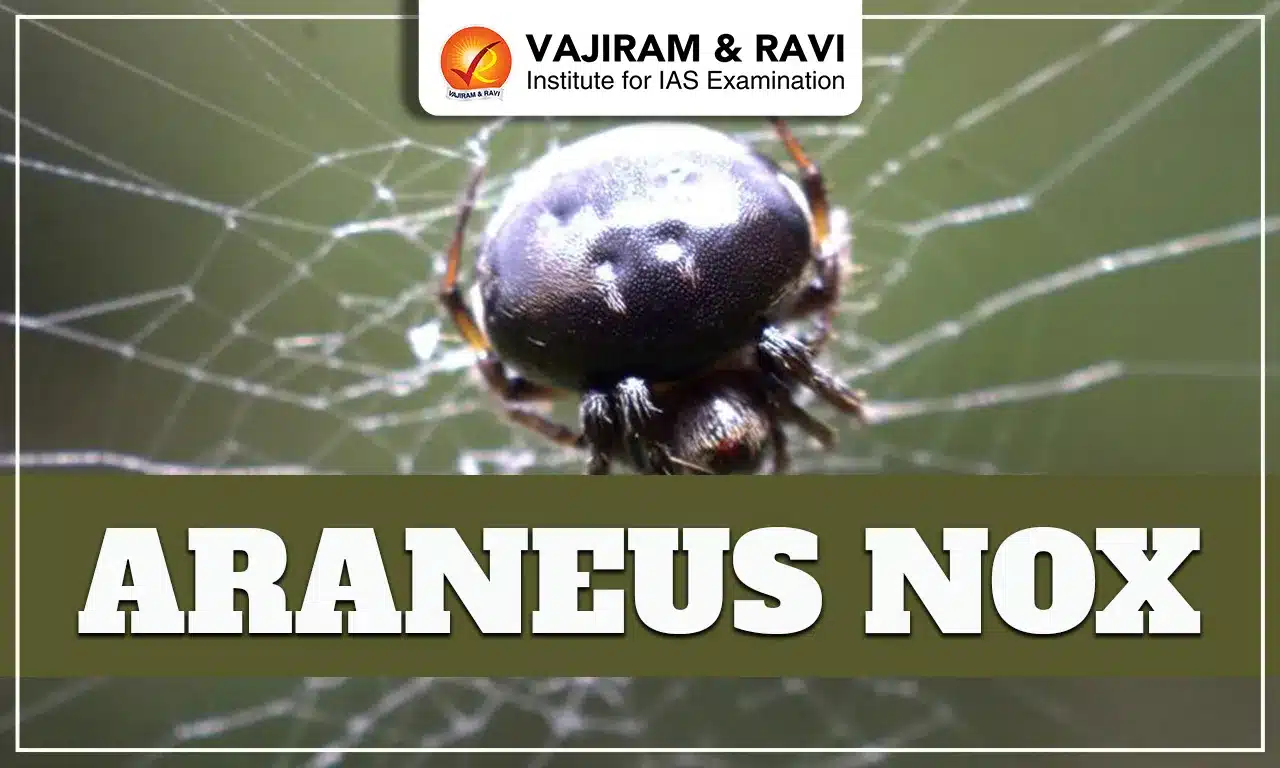
  • It is known for spinning near-perfect, vertically oriented circular webs on vegetation and tree branches. 
  • Habitat: It is mainly found in gardens, forests, and backyards
  • Distribution: Southeast Asia including Cambodia, Laos, Myanmar, Thailand, and Vietnam and also in Philippines, Malaysia, Indonesia, Myanmar.
  • Appearance: Its coloration can vary from light brown to jet black, sometimes featuring clusters of light brown setae on the abdomen's sides.
  • It is a small and medium-sized orb-weaver with a distinctively textured, leathery abdomen.

What are orb-weaving spiders?

  • They are of the family Araneidae (Argiopidae or Epeiridae) of the order Araneida, a large and widely distributed group noted for their orb-shaped webs
  • The orb spiders are a large group of spiders that weave round, more or less symmetrical webs suspended in open-air spaces.

Source: TH

Araneus nox FAQs

Q1: In which Wildlife Sanctuary Araneus nox spider discovered recently?

Ans: Idukki Wildlife Sanctuary

Q2: In which state Idukki Wildlife Sanctuary is located?

Ans: Kerala
Kharasrota River

Kharasrota River

Kharasrota River Latest News

A 59-year-old woman, Soudamini Mahala, was recently killed by a saltwater crocodile in the Kharasrota River.

About Kharasrota River

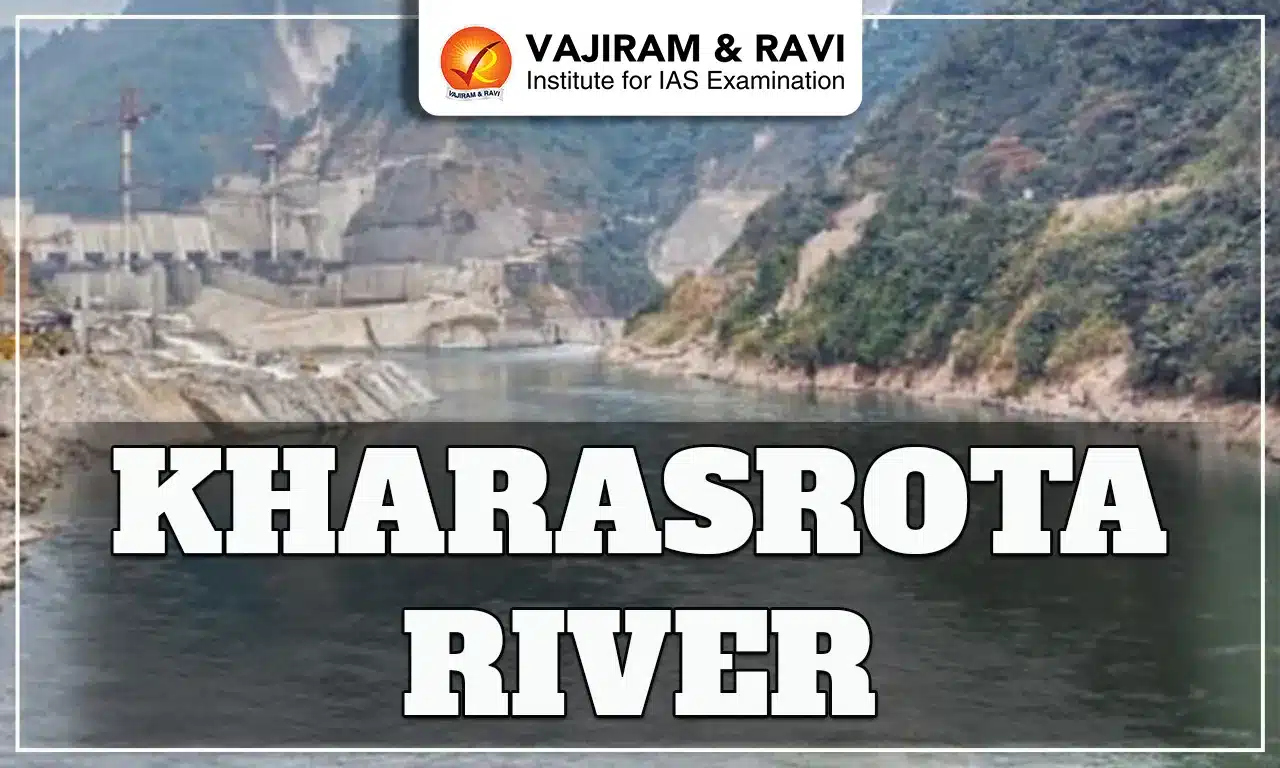
  • It is a river in Odisha.
  • It is a tributary of the Brahmani River, one of the major east-flowing rivers in Odisha.
  • Course
    • It originates from the Eastern Ghats in the Keonjhar district.
    • The river flows through Jajpur and Kendrapara districts before joining the Brahmani River near the Dhamra estuary, close to the Bay of Bengal.
    • The river passes through the Bhitarkanika region, an ecologically sensitive mangrove area.
  • Significance:
    • It is a lifeline for irrigation and drinking water in parts of the Jajpur and Kendrapara districts.
    • The Mega Drinking Water Project in Kendrapara has been a topic of local protest due to concerns about reduced water availability for agriculture.

Source: TOI

Kharasrota River FAQs

Q1: The Kharasrota River is located in which Indian state?

Ans: Odisha

Q2: The Kharasrota River is a tributary of which major river?

Ans: Brahmani River

Q3: The Kharasrota River originates from which mountain range?

Ans: It originates from the Eastern Ghats in the Keonjhar district.

Southern Right Whale

Southern Right Whale

Southern Right Whale Latest News

Southern right whales are producing fewer calves, signaling environmental disruption due to climate change.

About Southern Right Whale

  • The southern right whale is one of four species, or types, of right whales. 
  • Like all whales, right whales are mammals that live in the ocean but breathe air at the surface. 
  • It is said that right whales got their name from whalers who considered them the “right” whales to hunt, because they were easy to kill and had body parts that were valuable. 
  • Scientific Name: Eubalaena australis.

Southern Right Whale Distribution

  • They are found in the oceans of the Southern Hemisphere. 
  • They usually live in sheltered bays, but in summer they can be found in the cold water around Antarctica. 
  • Southern right whales visit the South African coast from May to November each year.

Southern Right Whale Features

  • They are mostly dark gray or black. 
  • They can be up to 60 feet (18 meters) long, and they weigh about 60 tons. 
  • The head is very large. It is about one-quarter of the length of the animal. 
  • The head has distinctive white calluses, which are home to colonies of parasites
  • They have large amounts of fat called blubber that protects them from cold temperatures.

Southern Right Whale Conservation Status

It is classified as 'Least Concern' under the IUCN Red List.

Source: DTE

Southern Right Whale FAQs

Q1: What is the scientific name of the Southern Right Whale?

Ans: Eubalaena australis

Q2: The Southern Right Whale is found mainly in which part of the world?

Ans: Southern Hemisphere oceans

Q3: What is the IUCN Red List status of the Southern Right Whale?

Ans: Least Concern

Diethylene Glycol (DEG)

Diethylene Glycol

Diethylene Glycol Latest News

At least 14 children in India's Madhya Pradesh died after consuming Coldrif syrup, found to contain a toxic contaminant, diethylene glycol (DEG).

About Diethylene Glycol

  • Diethylene glycol (also known as 2,2-oxydiethanol and diglycol) is a clear, colourless, odourless liquid with the formula C4H10O3.
  • It is soluble both in water and in many organic compounds and has hygroscopic properties which makes it a useful industrial chemical.
  • It is primarily used in industrial applications such as antifreeze, brake fluids, and solvents. 
  • It is not intended for human consumption. 
  • When ingested, DEG is metabolised in the body into toxic compounds that can cause severe kidney damage, leading to acute kidney injury, anuria (inability to urinate), and death. 
  • Symptoms of poisoning can include nausea, vomiting, abdominal pain, and lethargy, often progressing rapidly to renal failure.

Source: TOI

Diethylene Glycol FAQs

Q1: What is Diethylene Glycol (DEG)?

Ans: Diethylene glycol (also known as 2,2-oxydiethanol and diglycol) is a clear, colourless, odourless liquid with the formula C4H10O3.

Q2: Diethylene Glycol (DEG) is primarily used in which industry?

Ans: It is primarily used in industrial applications such as antifreeze, brake fluids, and solvents.

Q3: What happens when Diethylene Glycol (DEG) is ingested by humans?

Ans: It is metabolised into toxic compounds that cause severe kidney damage.

SPARK–4.0 Initiative

SPARK–4.0 Initiative

SPARK–4.0 Initiative Latest News

Recently, the Central Council for Research in Ayurvedic Sciences (CCRAS), Ministry of Ayush, has announced SPARK–4.0 initiative.

About SPARK–4.0 Initiative

  • Studentship Program for Ayurveda Research Ken (SPARK) 4.0 is the flagship initiative of the Central Council for Research in Ayurvedic Sciences.
  • This initiative aims to ignite scientific curiosity and research aptitude among undergraduate Ayurveda students across India.

Features of SPARK–4.0 Initiative

  • Under this program, 300 Bachelor of Ayurvedic Medicine and Surgery (BAMS) students from colleges recognized by the National Commission for Indian System of Medicine (NCISM) will receive a studentship of ₹50,000 (₹25,000 per month for two months).
  • SPARK enables undergraduates to undertake short-term, independent research projects guided by faculty mentors.
  • It offers hands-on exposure to research methodology, experimental design, and data analysis — helping participants gain foundational experience in scientific investigation at an early academic stage.
  • Institutions are encouraged to support selected students by providing research facilities and academic guidance during the two-month project period.
  • Each selected scholar will also receive a certificate upon successful completion and approval of their final research report.
  • Significance:  It will strengthen India’s research capacity in traditional medicine and to integrate innovation with heritage.

Source: PIB

SPARK–4.0 Initiative FAQs

Q1: What is the objective of the SPARK-4.0 Initiative?

Ans: To integrate traditional medicine into mainstream healthcare

Q2: Who launched the SPARK-4.0 Initiative?

Ans: Central Council for Research in Ayurvedic Sciences (CCRAS).

Tele-MANAS

Tele-MANAS

Tele MANAS Latest News

Recently, on the occasion of the World Mental Health Day 2025, Union Minister of Health and Family Welfare launched several new initiatives for the National Tele Mental Health Programme (Tele MANAS).

About Tele MANAS

  • Tele Mental Health Assistance and Networking Across States (Tele MANAS) offers a wide range of mental health services.
  • It was started by the Ministry of Health and Family Welfare in 2022.
  • Aim: To provide universal access to equitable, affordable, and quality mental health care through a 24x7 tele-mental health service, forming a key digital component of the National Mental Health Programme (NMHP).
  • This service is available across all Indian States and Union Territories, with assured linkages to ensure seamless care.
  • The service is structured in a two-tier system to optimize care delivery and enhance support.
    • Tier 1 comprises state Tele MANAS cells staffed with trained counsellors and mental health specialists. These professionals provide immediate support through: Tele-Counseling and Tele-Consultation.
    • Tier 2 comprises specialists from District Mental Health Programme (DMHP) facilities and medical colleges, offering additional resources for physical consultations and audiovisual consultations via e-Sanjeevani.
  • Tele MANAS launched its mobile app and video consultation services to enhance access to mental health support.
    • This app serves as a comprehensive platform offering mental health resources, including self-care tips, stress management strategies, and tools to recognize early distress signals.
    • It is enhanced with Multi-lingual user interface, Chatbot feature (Asmi), Accessibility, Emergency Module. 
    • It will now be available in 10 regional languages, in addition to the English and Hindi languages.
    • These languages include Assamese, Bengali, Gujarati, Kannada, Malayalam, Marathi, Tamil, Telugu, Odia, Punjabi.

Source:  PIB

Tele MANAS FAQs

Q1: When was Tele-MANAS launched?

Ans: October 2022

Q2: What does Tele-MANAS stand for?

Ans: Tele Mental Health Assistance and Networking Across States.

Q3: What is the objective of Tele-MANAS?

Ans: To provide free tele-mental health services across the country.

Enquire Now