Past Risk and Return Verification Agency (PaRRVA)

Past Risk and Return Verification Agency (PaRRVA)

Past Risk and Return Verification Agency (PaRRVA) Latest News

Recently, the Securities and Exchange Board of India (SEBI) has operationalised the Past Risk and Return Verification Agency (PaRRVA).

About Past Risk and Return Verification Agency (PaRRVA)

  • It is a regulatory initiative designed to bring transparency and standardization to performance claims made by financial intermediaries.
  • It has been operationalised by the Securities and Exchange Board of India (SEBI)
  • Designated Entities: CARE Ratings Limited has been granted recognition as the PaRRVA and the National Stock Exchange of India Limited (NSE) will function as the PaRRVA Data Centre (PDC).
  • The following entities can Use PaRRVA
    • Investment Advisers (IA)
    • Research Analysts (RA)
    • Trading Members (TM)
    • Investors seeking verified performance data
  • Features
    • It will enable regulated entities such as investment advisers, research analysts, and algorithmic trading service providers to showcase their verified performance.
    • It will enable investors to access reliable and standardised data for informed decision-making.
    • Additionally, regulated entities will be permitted to use PaRRVA-verified performance in their advertisements, in line with SEBI’s regulatory provisions.
    • It ensures that all risk-return metrics presented to investors are independently verified and compliant with SEBI guidelines.

Source: News on Air

Past Risk and Return Verification Agency (PaRRVA) FAQs

Q1: PaRRVA was proposed by which regulator?

Ans: SEBI

Q2: What does PaRRVA stand for?

Ans: Past Risk and Return Verification Agency
Peacock Tarantula

Peacock Tarantula

Peacock Tarantula Latest News

A scientific survey to assess the Peacock Tarantula has begun at Nagarjunasagar Srisailam Tiger Reserve in Andhra Pradesh.

About Peacock Tarantula

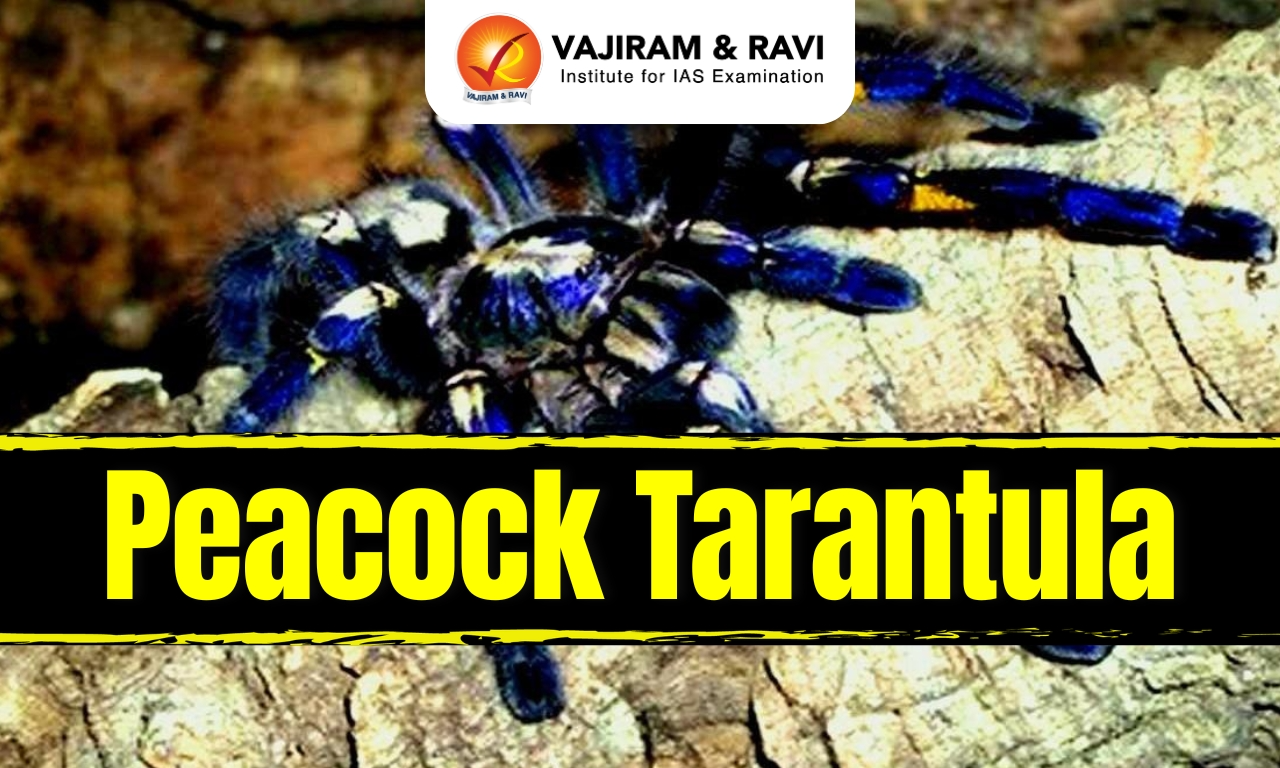
  • It is one of the rarest and most visually striking spiders in the world, famous for its metallic blue coloration.
  • It is also known as the Gooty Sapphire Ornamental Tarantula, named after the region where it was first discovered.
  • Appearance
    • The spider has a distinctive bright blue body with yellow and white markings, forming geometric patterns on its legs and abdomen.
    • It can grow up to 6–8 inches in leg span, making it a large and impressive spider.
  • Habitat: In its natural habitat, it is an arboreal species, meaning it lives on trees, occupying tree holes, bark crevices, and elevated surfaces.
  • Distribution: It is endemic to India, primarily found in parts of Andhra Pradesh.

Characteristics of Peacock Tarantula

  • It is a nocturnal hunter, remaining hidden during the day and becoming active at night.
  • It is an active predator that does not rely on webs but instead uses speed and venom to capture prey such as insects and small animals.
  • It is known for being fast and agile, it can move quickly and climb vertical surfaces with ease.
  • Females have a long lifespan (up to 15 years), while males have a shorter life cycle.
  • During reproduction, females lay egg sacs containing around 50–150 eggs, which they guard until hatching.
  • Conservation Status: IUCN: Critically Endangered
  • Threats: The main threats it faces come from habitat loss due to logging, firewood collection, and forest degradation.
  • Ecological Role: It plays an important ecological role by controlling insect populations and supporting biodiversity.

Source: TH

Peacock Tarantula FAQs

Q1: What is the IUCN Red List status of Peacock Tarantula?

Ans: Critically Endangered

Q2: Peacock Tarantula is endemic to which state in India?

Ans: Andhra Pradesh

International Labour Day 2026

International Labour Day 2026

International Labour Day Latest News

Every year, International Labour Day, also known as May Day, is celebrated on May 1 across the world.

About International Labour Day (ILD)

  • International Labour Day, also known as May Day, is observed annually on May 1 to honor the dedication and contributions of workers across the globe.
  • It is a memorial to the labor movement’s struggles and victories.
  • History:
    • The origins of ILD trace back to the late 19th century when 400,000 workers across the USA organised a peaceful strike in Chicago on 1st May 1886. 
    • They were protesting to demand an eight-hour workday. 
    • Unfortunately, the strike turned violent, and several unarmed workers were killed by the police.  
    • It came to be known as the Haymarket Affair and was a turning point in the struggle for workers' rights.
    • This turning point stimulated trade unions and socialist federations across Europe to declare May 1 an international day of workers’ solidarity, formally approved in 1889 at the Paris meeting of the Second International.
  • While International Labour Day commemorates events in the United States, both the US and Canada observe Labour Day on the first Monday of September, not May 1.
  • Over 80 countries, including India, Cuba, and China, mark ILD.
  • In India, the first Labour Day celebration was held in Chennai (then Madras) in 1923 by the Labour Kisan Party of Hindustan.
    • Malayapuram Singaravelu Chettiar, the leader, raised the red flag for the first time in India and demanded that the government declare May 1 a national holiday to recognise workers' rights. 
  • The day usually involves parades, union gatherings, and celebrations that emphasize employee rights.
  • May Day 2026 Theme: This year, the International Labour Organisation (ILO) selected the theme for May Day 2026 as: “Ensuring a Healthy Psychosocial Working Environment."

Source: NDTV

International Labour Day FAQs

Q1: When is International Labour Day celebrated every year

Ans: It is celebrated annually on May 1.

Q2: What historical event led to the origin of International Labour Day?

Ans: The Haymarket Affair in Chicago in 1886 led to its origin.

Q3: When was Labour Day first celebrated in India?

Ans: In India, the first Labour Day celebration was held in Chennai (then Madras) in 1923 by the Labour Kisan Party of Hindustan.

Q4: What is the theme of International Labour Day 2026?

Ans: The theme is “Ensuring a Healthy Psychosocial Working Environment.”

Kotgarh Wildlife Sanctuary

Kotgarh Wildlife Sanctuary

Kotgarh Wildlife Sanctuary Latest News

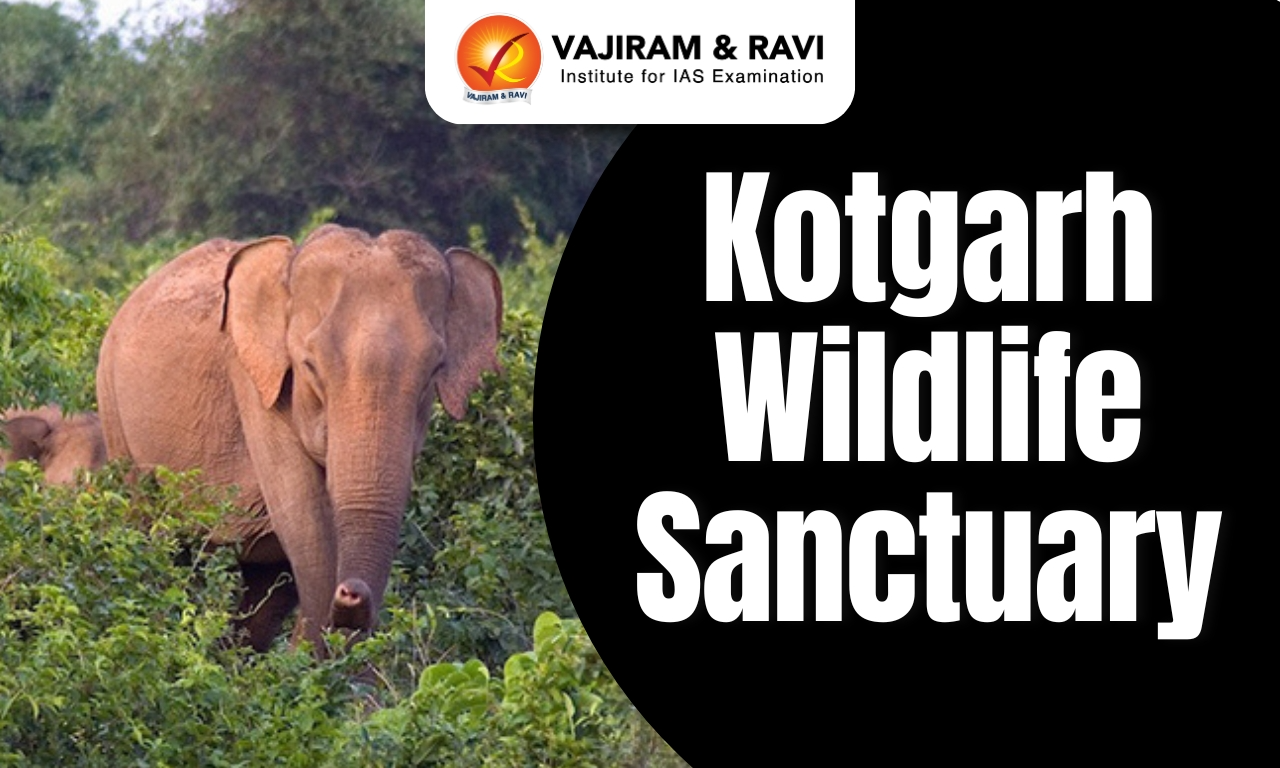
Forest officials recently arrested four suspected poachers from the Baliguda forest division of the Kotgarh wildlife sanctuary in Kandhamal.

About Kotgarh Wildlife Sanctuary

  • It is located in the Kandhamal district of Odisha.
  • It’s classified as a moist deciduous forest in the Eastern Highlands. 
  • Spanning an area of 399.5 sq.km., the sanctuary is surrounded by lush hills and dense forests.
  • The sanctuary is home to 52 tribal settlements, including Kutia Kondh and Desia Kondh.  
  • Vegetation: The sanctuary’s principal vegetation is dense, damp deciduous forests with meadows. 
  • Flora:
    • Sal, Piasal, Sisoo, Kendu, Gamhar, Asan, Kusum, Harida, Bahada, Amala, Mango, Tamarind, Mahua, Jackfruit, Randhan, Kangada, Jamun, Salapo, Bheru, Arjun, Char, Dhaura, and Kochila are among the prevalent flora. 
    • Many rare and endangered medicinal plants exist, including Abutilon Indicum, Cissus quadrangularis, Crateva Magna, Cycas sphaerica, etc.
  • Fauna
    • Tigers, elephants, Gaur, Sambar deer, Spotted deer, Peafowl, Red jungle fowl, Blackbuck, Leopard, Sloth bear, Chital, and various bird and reptile species, including rare species like Forsten's cat snake (Boiga forsteni), can all be found in this sanctuary.  
    • The sanctuary’s major attraction is the Chousingha, or four-horned antelope.

Source: TOI

Kotgarh Wildlife Sanctuary FAQs

Q1: Where is Kotgarh Wildlife Sanctuary located?

Ans: It is located in the Kandhamal district of Odisha.

Q2: What type of forest characterizes Kotgarh Wildlife Sanctuary?

Ans: It is classified as a moist deciduous forest in the Eastern Highlands.

Q3: Which tribal communities inhabit Kotgarh Wildlife Sanctuary?

Ans: It is home to tribes such as the Kutia Kondh and Desia Kondh.

Ru-Soam Bridges

Ru-Soam Bridges

Ru-Soam Bridges Latest News

UNESCO has partnered with the Sikkim government to document the indigenous engineering known as Ru-Soam.

About Ru-Soam Bridges

  • It is a cane bridge built by the Lepcha community in Sikkim, especially in the Khangchendzonga Biosphere Reserve.
  • In the Lepcha language, ‘Ru’ means cane or rattan, while ‘Soam’ refers to a bridge.
  • Materials Used: It is crafted from locally available materials such as bamboo, cane, and wood.
  • Structural Features
    • It consists of two parallel canes called soamgyang. The soamgyang are tied to trees on the two ends, ensuring that the bridge remains suspended.
    • A ru-soam contains swinging cane loops called ahool.
    • Bamboos, or soamgur, are used to make the deck of the bridge.
    • The bridges can be 100 metres long, and two or three people can cross them at a time
  • This engineering practice reflects a sophisticated understanding of ecological balance and structural resilience.
  • The Ru-Soam cane bridges are not relics of the past; they are living expressions of engineering ingenuity.

Source: NIE

Ru-Soam Bridges FAQs

Q1: What are Ru-Soam bridges?

Ans: Traditional cane bridges built by Lepcha community in Sikkim

Q2: Ru-Soam bridges are made of which materials?

Ans: Bamboo, cane, and wood

National Company Law Tribunal

National Company Law Tribunal

National Company Law Tribunal Latest News

Recently, the Supreme Court has taken suo motu cognisance of delays by National Company Law Tribunal (NCLT) benches in approving resolution plans under the Insolvency and Bankruptcy Code (IBC).

About National Company Law Tribunal

  • It is a quasi-judicial authority incorporated for dealing with corporate disputes that are of civil nature arising under the Companies Act,2013.
  • It was constituted on 1 June 2016 under the Companies Act, 2013.
    • It was established based on the recommendation of the Balakrishna Eradi committee on law relating to the insolvency and the winding up of companies.
  • Composition: It shall consist of a President and such number of Judicial and Technical Members as may be required.
  • Appeal: Decisions of the tribunal may be appealed to the National Company Law Appellate Tribunal, the decisions of which may further be appealed to the Supreme Court of India on a point of law.

Powers of National Company Law Tribunal

  • It is guided by the principles of natural justice, subject to the other provisions of this Act and of any rules that are made by the Central Government.
  • It can enforce any order that it gives in the same manner as a court would enforce it.
  • It has the power to scrutinize its own orders.
  • It has the power to regulate their own procedure.
  • It is the adjudicating authority for the insolvency resolution process of companies and limited liability partnerships under the Insolvency and Bankruptcy Code, 2016.

Source: NIE

National Company Law Tribunal FAQs

Q1: Which Ministry exercises administrative control over NCLT?

Ans: Ministry of Corporate Affairs

Q2: Under which Act was NCLT established?

Ans: Companies Act, 2013

Sacred Groves

Sacred Grove

Sacred Groves Latest News

The Kerala State Biodiversity Board (KSBB) recently initiated a pilot restoration programme for sacred groves in collaboration with the local Biodiversity Management Committees.

About Sacred Groves

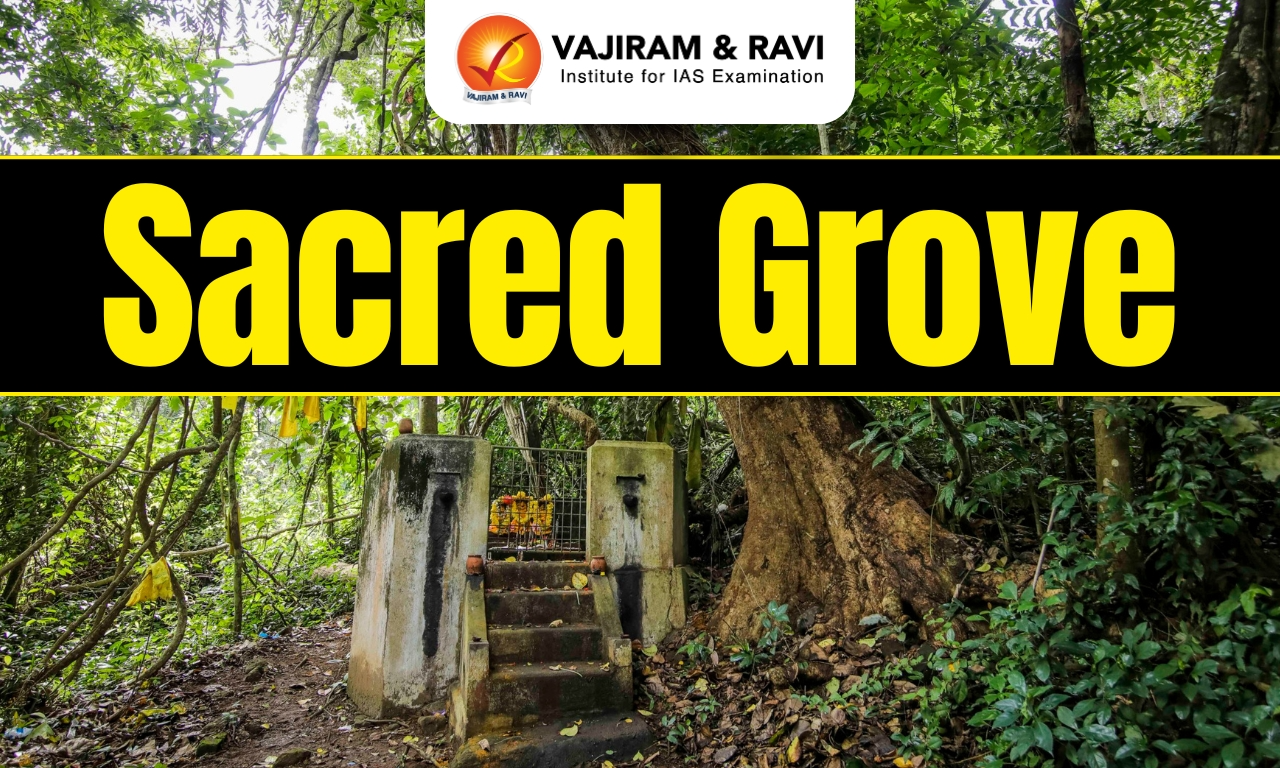
  • A sacred grove comprises patches of natural vegetation – from a few trees to several acres – that are dedicated to local deities or tree spirits. 
  • These spaces are protected by local communities because of their religious beliefs and traditional rituals that run through several generations. 
  • These are some of the most valuable, primitive practices of nature conservation. 
  • They act as repositories of biodiversity, sheltering rare plant and animal species.
  • Hunting and deforestation are usually prohibited, while sustainable activities such as honey collection or gathering deadwood are permitted.
  • The total number of sacred groves in India is more than 1,00,000. These groves are found all over the country with local names and associated deities. 
  • They are particularly found in regions like:
    • The Western Ghats
    • The Himalayas
    • The northeastern hill tracts
    • Central India
  • Regional Names for Sacred Groves:
    • Dev Van in Himachal Pradesh
    • Bugyal or Dev Van in Uttarakhand
    • Than and Madaico in Assam
    • Matagudi, Devgudi, or Sarana in Chhattisgarh
    • Jaherthan or Sarana in Jharkhand
    • Devarakadu in Karnataka
    • Kavu or Sarpa Kavu in Kerala
    • Kovilkaadu in Tamil Nadu
    • Devrai or Devgudi in Maharashtra
    • Law Kyntang or Asong Khosi in Meghalaya
    • Orans in Rajasthan.
    • Jahera or Thakuramma in Odisha

Source: TH

Sacred Groves FAQs

Q1: What is a sacred grove?

Ans: A sacred grove is a patch of natural vegetation dedicated to local deities or tree spirits.

Q2: Why are sacred groves protected by local communities?

Ans: They are protected due to religious beliefs and traditional rituals.

Q3: What is the ecological importance of sacred groves?

Ans: They act as repositories of biodiversity and shelter rare plant and animal species.

Q4: Where are sacred groves commonly found in India?

Ans: They are found across India, especially in the Western Ghats, Himalayas, northeastern hill tracts, and Central India.

Canine Distemper

Canine Distemper

Canine Distemper Latest News

A tigress and her four cubs died in Kanha Tiger Reserve recently, prompting concerns over a Canine Distemper Virus outbreak.

About Canine Distemper

  • It is a contagious and serious disease caused by the canine distemper virus (CDV).
  • The virus attacks the respiratory, gastrointestinal, and nervous systems of dogs and has a very high mortality rate.
  • All dogs are at risk of canine distemper. Those at particular risk include puppies younger than four months and dogs that have not been vaccinated against CDV.
  • CDV is a worldwide multi-host pathogen and is increasingly found in wildlife species, including carnivores, large felids, marine mammals, and non-human primates. 

Canine Distemper Transmission

  • It is spread through direct contact or airborne exposure.
  • The virus does not last long in the environment and can be destroyed by most disinfectants. 
  • However, the distemper-infected dogs can shed the virus for up to several months.
  • Once a dog is infected, the virus quickly spreads throughout the entire body and significantly weakens the immune system, leaving them susceptible to secondary infections.

Canine Distemper Symptoms

  • Symptoms of distemper vary a great deal, depending which organs are affected, symptoms are usually:
    • cough
    • fever
    • inappetence
    • lethargy
    • runny eyes and nose
    • diarrhoea.
  • This can then progress to more severe symptoms, including:
    • thickened nose and foot pads
    • tremors
    • paralysis
    • seizures.

Canine Distemper Treatment

  • There is no cure, and no antiviral drugs have been approved to combat the infection. 
  • The best way to prevent canine distemper is through vaccination.

Source: TH

Canine Distemper FAQs

Q1: What is Canine Distemper?

Ans: Canine distemper is a contagious and serious disease caused by the canine distemper virus (CDV).

Q2: Which systems are affected by the canine distemper virus?

Ans: It affects the respiratory, gastrointestinal, and nervous systems.

Q3: Is canine distemper limited only to dogs?

Ans: No, it is a multi-host pathogen affecting wildlife species including carnivores, large felids, marine mammals, and non-human primates.

Q4: How is canine distemper transmitted?

Ans: It spreads through direct contact or airborne exposure.

Q5: Is there a cure for canine distemper?

Ans: No, there is no cure.

Easter Island

Easter Island

Easter Island Latest News

A groundbreaking study suggests that the ancient Rongorongo script of Easter Island could be independently developed and predates the arrival of Europeans on the island.

About Easter Island

  • It is a Chilean dependency in the eastern Pacific Ocean.
  • It is the easternmost outpost of the Polynesian island world.
  • Named Rapa Nui by its earliest residents, it is one of the most isolated inhabited islands in the world. 
  • It was discovered by Europeans on Easter Sunday (1722) by Dutch explorer Jacob Roggeveen. Hence the name “Easter Island”.
  • In between Roggeveen’s arrival and its annexation to Chile, the Rapanui population declined drastically due to their enslavement on the South American mainland by the Peruvians and from the smallpox and tuberculosis epidemics on the island.  
  • Covering a total area of 163.6 sq.km, it is situated about 3,540 km to the west of Chile and about 1,900 km to the east of Pitcairn Island.
  • It is a small, triangular-shaped volcanic island.
  • It faces a tropical rainforest climate.
  • The island comprises three extinct volcanoes, namely Terevaka, Poike, and Rano Kau.  
  • The island has no permanent rivers but contains three crater lakes, namely Rano Aroi, Rano Raraku, and Rano Kau. 
  • It is known for its iconic Moai statues, carved by the indigenous Rapa Nui people.
  • UNESCO named Easter Island a World Heritage Site on March 22, 1996, and major parts of the island have been protected under the Rapa Nui National Park.

What are Moai Statues?

  • Rapa Nui is famous for its large statues called moai.
  • They are shaped like large human heads and erected on stone pedestals.
  • They are famous for their carved heads and “Pukao,” a hat-like covering made from a soft red stone.
  • Some moai stand 40 feet tall and weigh 75 tonnes.
  • They were carved in volcanic stone at quarries and then moved to their current locations across the island.
  • Scholars believe the Rapa Nui people built the moai between the 13th and the 16th centuries and represented their revered ancestors.
  • Over 900 moai have been found on the island to date.

What is Rongorongo?

  • Rongorongo is a writing system that comprises carved symbols, known as glyphs, on wooden tablets and artefacts discovered in Easter Island.
  • Rongorongo differs from other scripts in that it has not yet been deciphered. 
  • Rongorongo was noted for the first time in 1864 when it was observed by Europeans.
  • Rongorongo looks very different from the European writing systems. This has led some experts to believe it may have developed locally by the inhabitants.

Source: TOI

Easter Island FAQs

Q1: What is Easter Island?

Ans: It is a Chilean dependency located in the eastern Pacific Ocean.

Q2: What is the local name of Easter Island?

Ans: It is called Rapa Nui.

Q3: Who discovered Easter Island for Europe and when?

Ans: It was discovered in 1722 by Jacob Roggeveen on Easter Sunday.

Q4: What are Moai statues?

Ans: They are large stone statues shaped like human heads, created by the Rapa Nui people.

Q5: What is Rongorongo?

Ans: Rongorongo is a system of carved symbols found on wooden tablets in Easter Island.

Italy

Key Facts about Italy

Italy Latest News

Recently, India and Italy unveiled a bilateral military cooperation plan 2026-27 outlining the military engagements between the armed forces of both the countries.

About Italy

  • Location: It is located in South-central Europe on the Apennine Peninsula.
  • Bordering Countries: It shares its border with Switzerland and Austria in the north, Slovenia in the northeast and France in the northwest.  
    • Vatican City and San Marino are the two enclaved sovereign states within Italy.
  • Maritime boundaries: It is bordered by the Adriatic Sea in the east, the Sea of Sicily in the south, the Ionian Sea in the southeast, the Ligurian Sea, and the Tyrrhenian Sea in the southwest.
  • Capital City: Rome

Geographical Features of Italy

  • Terrain: It is mostly rugged and mountainous and has some plains, coastal lowlands.
  • Major Rivers: Po (It is Italy’s longest river) and Adige
  • Highest Point: Mont Blanc 
  • Volcano: Italy is volcanic in origin, and a few of its many volcanoes are active, including Sicily’s Mt. Etna, Stromboli in the Aeolian Islands.
  • Natural Resources: Coal, antimony, mercury, zinc, potash, barite, asbestos, pumice, fluorspar, feldspar, pyrite (sulfur), natural gas and crude oil reserves.

Source: DH

Italy FAQs

Q1: What is the capital of Italy?

Ans: Rome

Q2: Which mountain range runs through Italy?

Ans: Apennines

Enquire Now