Exercise Pitch Black

Exercise Pitch Black

Exercise Pitch Black Latest News

The Indian Air Force (IAF) recently said its contingent at the multi-nation exercise ‘Pitch Black’ in Australia had “accomplished the mission” and “mastered” the skies, while several partnerships were “strengthened”.

About Exercise Pitch Black 

  • It is a biennial and multinational exercise hosted by the Royal Australian Air Force (RAAF).
  • It is the RAAF’s flagship international flying exercise. 
  • The name ‘Pitch Black’ was derived from the emphasis on nighttime flying over large unpopulated areas.
  • 2026 Edition:
    • It was based out of RAAF Bases Darwin and Tindal in the Northern Territory, as well as RAAF Base Amberley in Queensland. 
    • It featured a massive assembly of global air forces, providing an unparalleled platform for interoperability. 19 nations, including India, with 100+ aircraft and 4,400+ personnel are participating in the exercise. 
    • The exercise focused on highly complex aerial manoeuvres, including offensive counter-air operations, air defence tracking, and tactical coordination between completely different styles of aircraft and communication systems.  
    • The IAF contingent consisted of 145 air warriors including the IAF Commandos team, Garuds, four Su-30 MKI, one C-130, and one C-17 for logistic support for induction and de-induction. 
    • For the IAF, training alongside advanced air assets from nations like the US, UK, Australia, France, and regional partners offers crucial exposure to contemporary air warfare tactics, electronic warfare defence, and modern network-centric operations. 
    • Previous participation of India: The IAF has previously participated in the 2018, 2022, and 2024 editions of this exercise.

News: TRIB

Exercise Pitch Black

Q1: What is Exercise Pitch Black?

Ans: It is a biennial multinational air exercise hosted by the Royal Australian Air Force (RAAF).

Q2: Where was Exercise Pitch Black 2026 based?

Ans: RAAF Bases Darwin and Tindal in the Northern Territory and RAAF Base Amberley in Queensland.

Q3: How many nations participated in Exercise Pitch Black 2026?

Ans: 19 nations, including India.

Mount Bromo

Mount Bromo

Mount Bromo Latest News

Indonesia recently deployed aircraft and hundreds of firefighters to control a major wildfire in Mount Bromo National Park.

About Mount Bromo

  • It is a small but active volcanic cinder cone located on the Indonesian island of Java.  
  • It is located in the center of the Sandsea Caldera, itself only a portion of the larger Tengger Caldera.
    • The Sandsea caldera formed around 8,000 years ago, in what must have been a massive eruption. 
    • Subsequent volcanic activity formed the cluster of cinder cones in the caldera’s center, including Bromo. 
  • The historical record indicates eruptions of Bromo every few years since 1804, and geologic evidence indicates eruptions at least several hundred years earlier. 
  • The most recent eruption occured in 2004 and tragically killed two tourists. 
  • There are 1,025 reported species of flora, of which 226 species are orchids and 260 are medicinal and ornamental plants. 

News: IT

Mount Bromo FAQs

Q1: Where is Mount Bromo located?

Ans: On the Indonesian island of Java.

Q2: In which caldera is Mount Bromo located?

Ans: The Sandsea Caldera.

Q3: Since which year have eruptions of Mount Bromo been historically recorded every few years?

Ans: Since 1804.

Qadr-F Missile

Qadr-F Missile

Qadr-F Missile Latest News

The Qadr-F Missile has reportedly been used in Iran’s conflicts with Israel, highlighting Tehran’s ability to deploy long-range ballistic missiles in live combat.

About Qadr-F Missile

  • It is a ballistic missile developed by Iran.
  • The missile was developed by the Islamic Republic of Iran under its national missile program based upon the Shahab-3 missile. 
  • Its existence was disclosed by the Iranian Armed Forces during a military parade in September 2007. 

Qadr-F Missile Features

  • It has an overall length of 17 meters, a weight between 15 and 17.5 tons.
  • It features a dual-stage propulsion system using both liquid and solid fuel and follows a ballistic flight path. 
  • It has a maximum range of 2,000-2,500 kilometers. 
  • It features a radar-evading warhead to allow it to penetrate areas protected by missile defenses.
  • It can carry a single blast fragmentation warhead or multiple reentry vehicles depending on the target profile. 

News: TOI

Qadr-F Missile FAQs

Q1: What is the Qadr-F missile?

Ans: It is a ballistic missile developed by Iran.

Q2: The Qadr-F missile is based upon which missile?

Ans: The Shahab-3 missile.

Q3: What is the maximum range of the Qadr-F missile?

Ans: Approximately 2,000–2,500 kilometres.

Sonai Rupai Wildlife Sanctuary

Sonai Rupai Wildlife Sanctuary

Sonai Rupai Wildlife Sanctuary Latest News

The Assam Finance Minister recently inaugurated the newly constructed Kalamati Wildlife Range Office at Sonai Rupai Wildlife Sanctuary in Sonitpur.

About Sonai Rupai Wildlife Sanctuary

  • It is a protected area located in the northwestern area of the Sonitpur district of Assam.
  • Spread over an area of 220 sq.km., the core area covers 175 sq.km., extending over the foothills of the Himalayan range.
  • Climate: The sanctuary experiences a subtropical type of climate with hot and humid summers, with heavy summer rains often causing floods and river overflows. 
  • The Burhidihing River traces its course through the sanctuary.
  • The Namchang River, flowing from the state of Arunachal Pradesh, enters this region and joins the Burhidihing River. 
  • Flora: It mostly comprises evergreen forest. However, grasslands are also common in this region.
  • Fauna:
    • The main attractions of the sanctuary are Elephant and Indian bison. 
    • The other animals found in the sanctuary are deer, one-horned rhinoceros, leopard, tiger and some rare species of cats.
    • Avifauna includes endangered species like White Winged Wood Duck. Other birds commonly found here are Woodpecker, Hill Myna, Indian Roller, Nightjar, Horned Owl, etc.

News: IT

Sonai Rupai Wildlife Sanctuary FAQs

Q1: Where is Sonai Rupai Wildlife Sanctuary located?

Ans: It is located in the northwestern part of Sonitpur district in Assam.

Q2: What type of climate does Sonai Rupai Wildlife Sanctuary experience?

Ans: A subtropical climate.

Q3: Which river flows through Sonai Rupai Wildlife Sanctuary?

Ans: The Burhidihing River.

Q4: From which state does the Namchang River flow into the sanctuary?

Ans: Arunachal Pradesh.

Palau

Palau

Palau Latest News

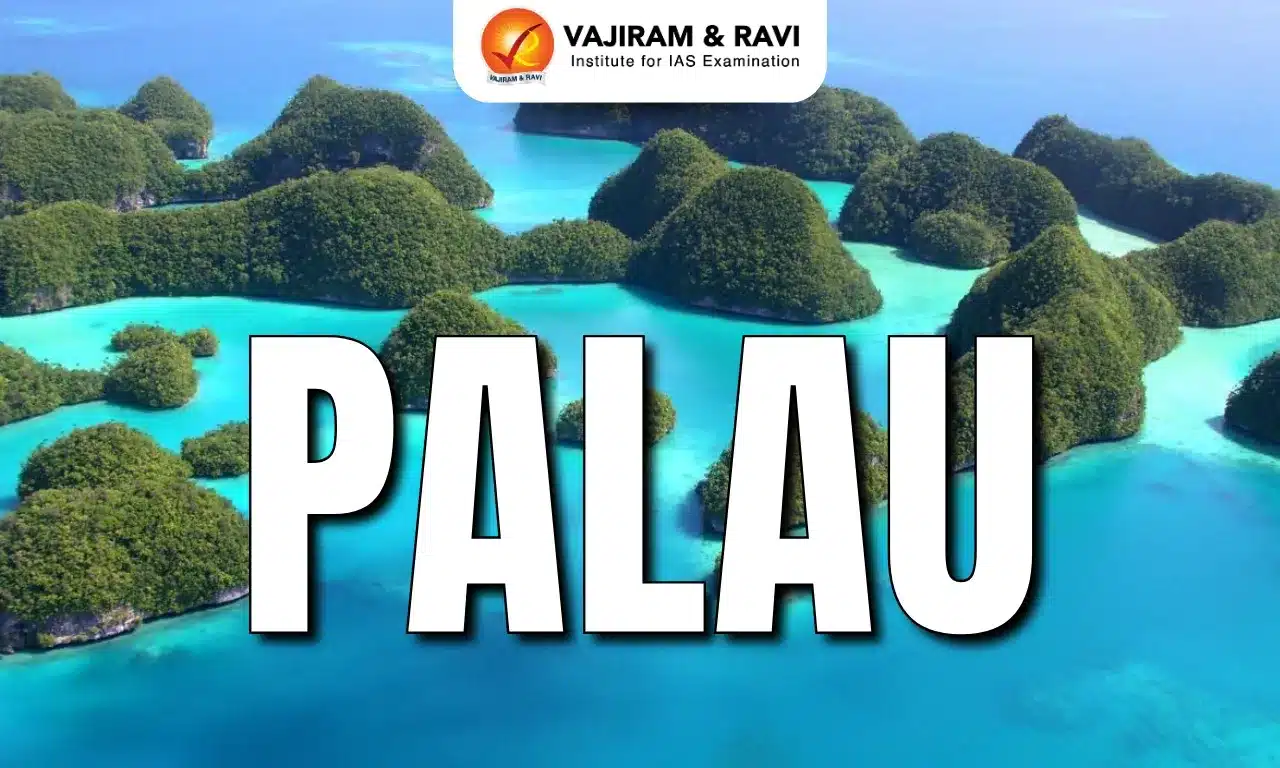
Seabirds have returned to Palau’s Ulong Island, helping nearby coral reefs recover just one year after invasive rats were removed.

About Palau

  • It is an island nation located in the western Pacific Ocean.
  • It consists of a tightly clustered archipelago of approximately 300 islands with a total land area of 458 sq.km.
  • It is geographically positioned in both the Northern and Eastern hemispheres of the Earth.
  • Palau shares maritime borders with the Federated States of Micronesia to the east, with Indonesia to the south, with the Philippines to the west, and with the international waters to the north.
  • A huge barrier reef system, continuous on the west and broken on the east, encircles most of the archipelago.  
  • Its major populated islands are Babeldaob, Koror, Malakal, Arakabesan, and Peleliu. 
  • Located on Babeldaob (the largest island of Palau) is Ngerulmud, the capital of Palau. It is the world’s least populous capital city. 
  • Koror is the largest and the most populous city of Palau. It acts as the main commercial center of Palau.
  • Languages: Palauan, English, plus Japanese, Sonsorolese, and Tobian.
  • Palau became independent in 1994, after being part of a United Nations trust territory administered by the US.
  • It relies on financial aid from the US, provided under a Compact of Free Association, which gives the US responsibility for Palau’s defence and the right to maintain military bases there.

News: TOI

Palau FAQs

Q1: Where is Palau located?

Ans: Palau is an island nation located in the western Pacific Ocean.

Q2: What major geographical feature encircles most of Palau’s archipelago?

Ans: A huge barrier reef system.

Q3: Which is the largest island of Palau?

Ans: Babeldaob

Q4: What is the capital of Palau?

Ans: Ngerulmud

Microbacterium pollutisoli

Microbacterium pollutisoli

Microbacterium pollutisoli Latest News

Recently, researchers have discovered a new species of bacteria thriving in the harsh, toxic soil of a banned pesticide dumpsite and named Microbacterium pollutisoli. 

About Microbacterium pollutisoli

  • It is a new species of bacteria discovered in toxic soil of a banned pesticide Hexachlorocyclohexane in Uttar Pradesh.
  • It is named by combining the Latin words pollutus, meaning "contaminated," and solum, meaning "soil." Together, the name literally translates to "the Microbacterium of polluted soil."
  • Characteristics
    • It forms shiny, yellow circular colonies and is shaped like a short rod.
    • It is capable of growing in temperatures ranging from 12°C to 46°C and surviving in highly alkaline conditions.
    • Its genome revealed biosynthetic gene clusters.
    • These are sets of instructions in their DNA that allow the bacteria to produce valuable compounds like carotenoids (natural pigments used in vitamins), ectoine (a substance that protects cells from stress), and beta-lactones (chemicals often studied for their ability to fight bacteria or even cancer cells.

Source: RM

Microbacterium pollutisoli FAQs

Q1: What is Microbacterium pollutisoli?

Ans: New bacterial species

Q2: Microbacterium pollutisoli was discovered by scientists from?

Ans: India

Centralised Public Grievance Redress and Monitoring System (CPGRAMS)

Centralised Public Grievance Redress and Monitoring System

Centralised Public Grievance Redress and Monitoring System (CPGRAMS) Latest News

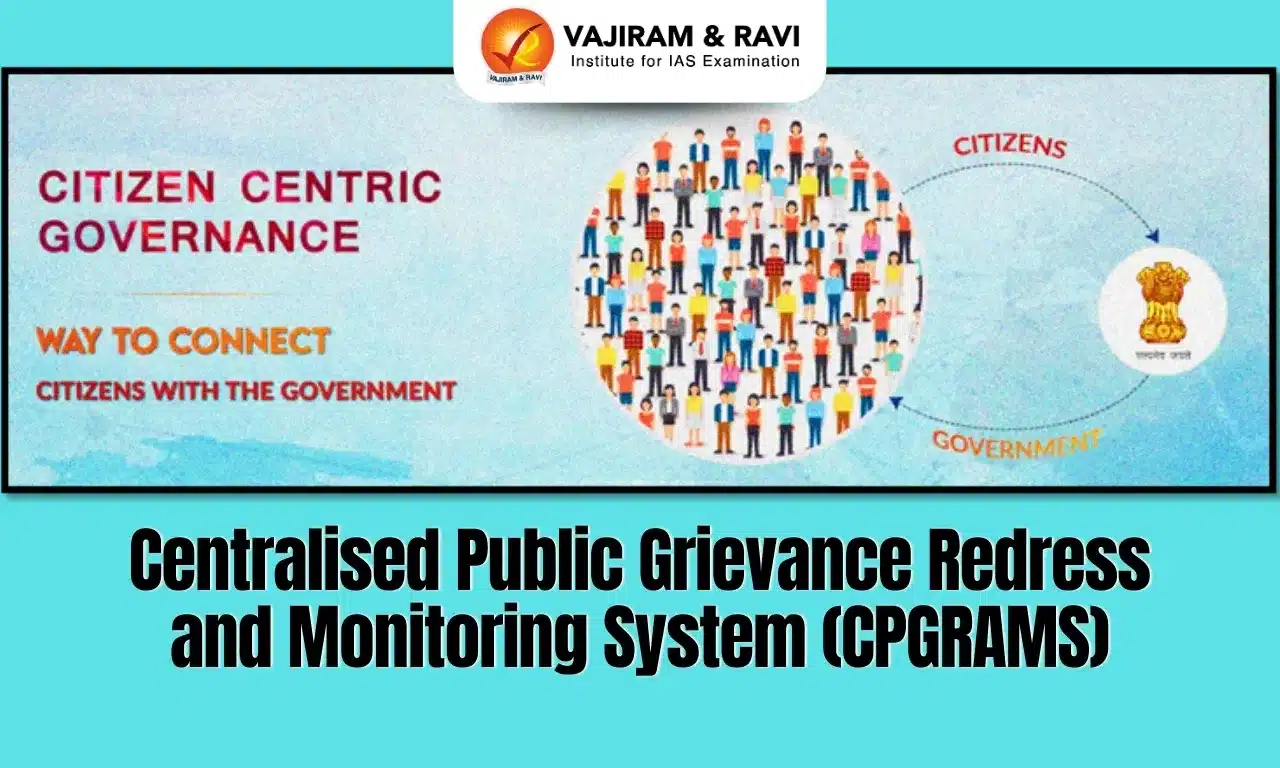
The Centralised Public Grievance Redress and Monitoring System (CPGRAM) over the last decade has emerged as one of the world's largest digital public grievance redressal platforms. 

About Centralised Public Grievance Redress and Monitoring System (CPGRAMS)

  • It is the Government’s flagship digital grievance redressal platform. 
  • It functions as a comprehensive digital ecosystem that combines technology, accountability, and citizen participation to ensure effective and accessible grievance redressal.
  • It was developed and monitored by the Department of Administrative Reforms and Public Grievances (DARPG), Ministry of Personnel, Public Grievances, and Pensions.

Features of CPGRAM System

  • It is available to citizens 24x7, CPGRAMS provides a single portal connected to all Central Ministries, Departments, State Governments, and Union Territories.
  • Language Inclusivity: To make grievance redressal more accessible, CPGRAMS supports submissions in 22 scheduled languages, in addition to English. 
  • One Nation–One Portal: Integration of State grievance portals and other Government platforms with CPGRAMS has created a unified and streamlined grievance redressal ecosystem across the country.
  • The status of the grievance filed in CPGRAMS can be tracked with the unique registration ID provided at the time of registration of the complainant.
  • Resolve within 21 Days:  The grievances received on the CPGRAMS shall be resolved promptly as soon as they are received but within a maximum period of 21 days.
  • Appealing Facility: CPGRAMS also provides an appeal facility to the citizens if they are not satisfied with the resolution by the Grievance Officer.
    • After closure of grievance, if the complainant is not satisfied with the resolution, he/she can provide feedback. 
    • If the rating is ‘Poor’ the option to file an appeal is enabled. 
    • The status of the appeal can also be tracked by the petitioner with the grievance registration number.

Source: PIB

Centralised Public Grievance Redress and Monitoring System (CPGRAMS) FAQs

Q1: Which ministry launched CPGRAMS?

Ans: Ministry of Personnel, Public Grievances & Pensions

Q2: Grievances can be lodged on CPGRAMS in how many languages?

Ans: 22 Scheduled Languages and english

Nyishi Tribe

Nyishi Tribe

Nyishi Tribe Latest News

Researchers named Begonia neelamorum after the Neelam clan of the Nyishi tribe, whose members helped them navigate rugged terrain and locate the plant during a difficult expedition.

About Nyishi Tribe

  • The Nyishi are the largest ethnic group in Arunachal Pradesh.
  • In Nishi, their traditional language, Nyi refers to “a man” and the word shi denotes “a being”, which combined together refers to a civilized human being. 
  • Geographical Distribution: They are concentrated in eight districts of Arunachal Pradesh, East Kameng, Pakke Kesang, Papum Pare, Lower Subansiri, Kamle, Kra Daadi, Kurung Kumey, and Upper Subansiri.
  • Occupation: The Nyishi support themselves with slash-and-burn agriculture and hunting and fishing. 
    • Along with agriculture and allied activities, the Nyishis are experts in handicrafts such as weaving, cane and bamboo works, pottery, blacksmith, wood carving, carpentry, etc.
  • Festivals: The Nyishi celebrates three major festivals, namely, Boori-Boot (February), Nyokum (February), and Longte (April).
  • Society
    • Polygymy is prevalent among the Nyishi.
    • They trace their descent patrilineally and are divided into several clans.
    • One striking feature of Nyishi society is that it is neither based on a caste system nor stratified into classes, except for a loose type of social distinction which is not determined by birth or occupation. 
    • Nyishis consider women the source of peace, progress and prosperity.

Source: TOI

Nyishi Tribe FAQs

Q1: Nyishi tribe is mainly found in which state?

Ans: Arunachal Pradesh

Q2: Boori Boot Yullo is celebrated in which month?

Ans: February

Roselle Crop

Roselle Crop

Roselle Crop Latest News

In Odisha’s Malkangiri district, the indigenous crop Roselle is helping tribal communities adapt to climate change. 

About Roselle Crop

  • Roselle's scientific name is Hibiscus sabdariffa belongs to the Malvaceae family.
  • It is locally known as Bhenda Dal and has long been cultivated by tribal communities in Odisha’s Malkangiri district.
  • It thrives on rainfed uplands with minimal inputs and can grow on marginal land with relatively little water.
  • It is being cultivated in warm countries particularly in the Philippines, Malaysia, Indonesia, India, Cuba, Central America, California, Florida, Egypt.
  • It is valued as both food and medicine.
  • Nutritional Value: The tender leaves are cooked as saag or combined with pulses and vegetables, lending a distinctive sour flavour to everyday meals.
  • Health Benefits: It contains vitamin C, anthocyanins, flavonoids, polyphenols, iron, calcium and dietary fibre. The deep red colour of the flower cups comes from anthocyanins, powerful antioxidants that help protect the body against oxidative stress.

Source: DTE

Roselle Crop FAQs

Q1: Roselle belongs to which plant family?

Ans: Malvaceae

Q2: What is the Botanical name of Roselle ?

Ans: Hibiscus sabdariffa

Yemen

Yemen

Yemen Latest News

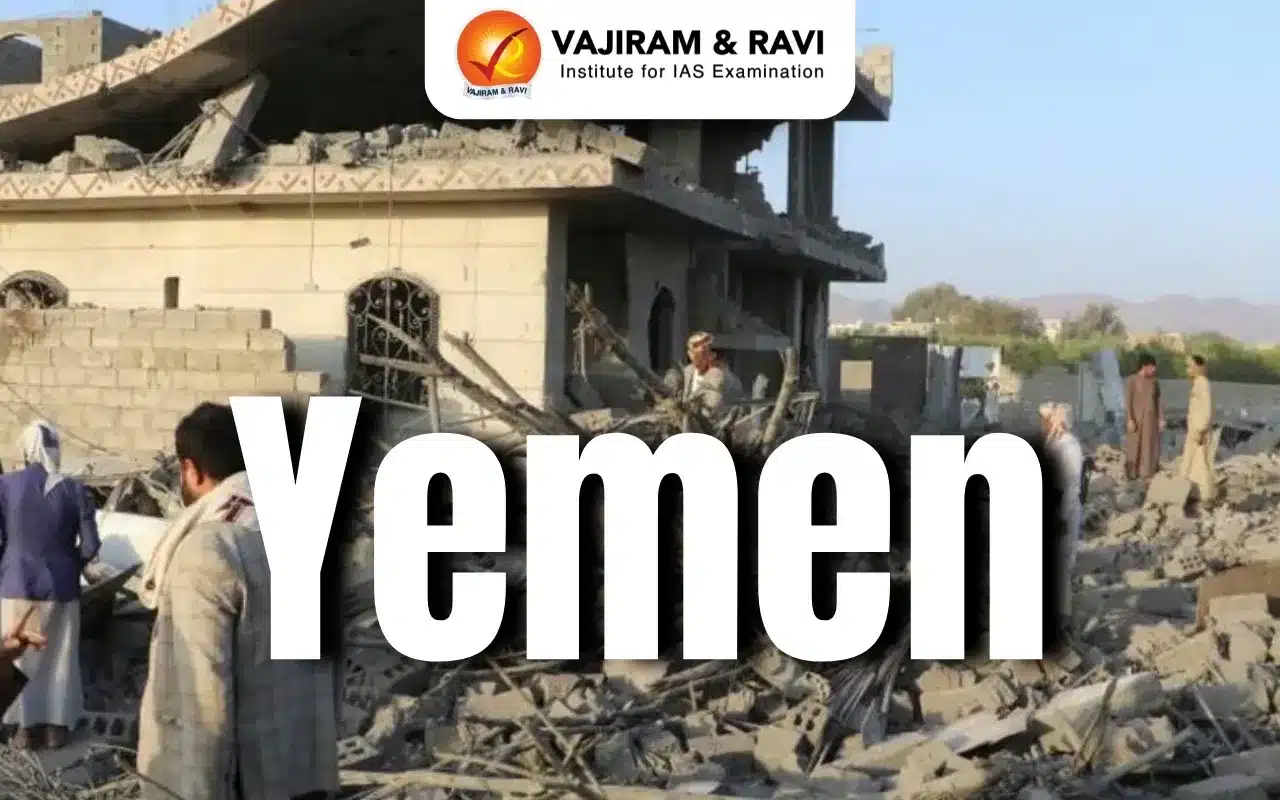
Recent Houthi rebels’ attacks on gov’t forces hint that a major battle in Yemen is brewing.

About Yemen

  • Location: It is situated at the south-western corner of the Arabian Peninsula in Western Asia. 
  • Borders: It shares its border with Saudi Arabia (North) and Oman (East).
  • Coastline & Strategic Importance
    • Red Sea (West), Gulf of Aden, Arabian Sea, and Guardafui Channel (South).
    • Yemen is strategically located at the entrance of the Bab-el-Mandeb Strait. The strait links the Indian Ocean to the Red Sea via the Gulf of Aden. 
  • Capital City: Sanaa

Geographical Features of Yemen

  • Climate: It lies in the border zone between two main weather patterns: the regular northerly winds (from the Mediterranean basin) and the southwest monsoon winds.
  • Highest Point: Yemen’s highest point is Jabal an Nabi Shu’ayb at 3,760 m. 
  • Desert: Rub’ Al Khali Desert.
  • There are no perennial lakes and rivers

Source: TH

Yemen FAQs

Q1: Yemen is bordered by which sea to the west?

Ans: Red Sea

Q2: Yemen shares land border with which countries?

Ans: Saudi Arabia and Oman

Enquire Now