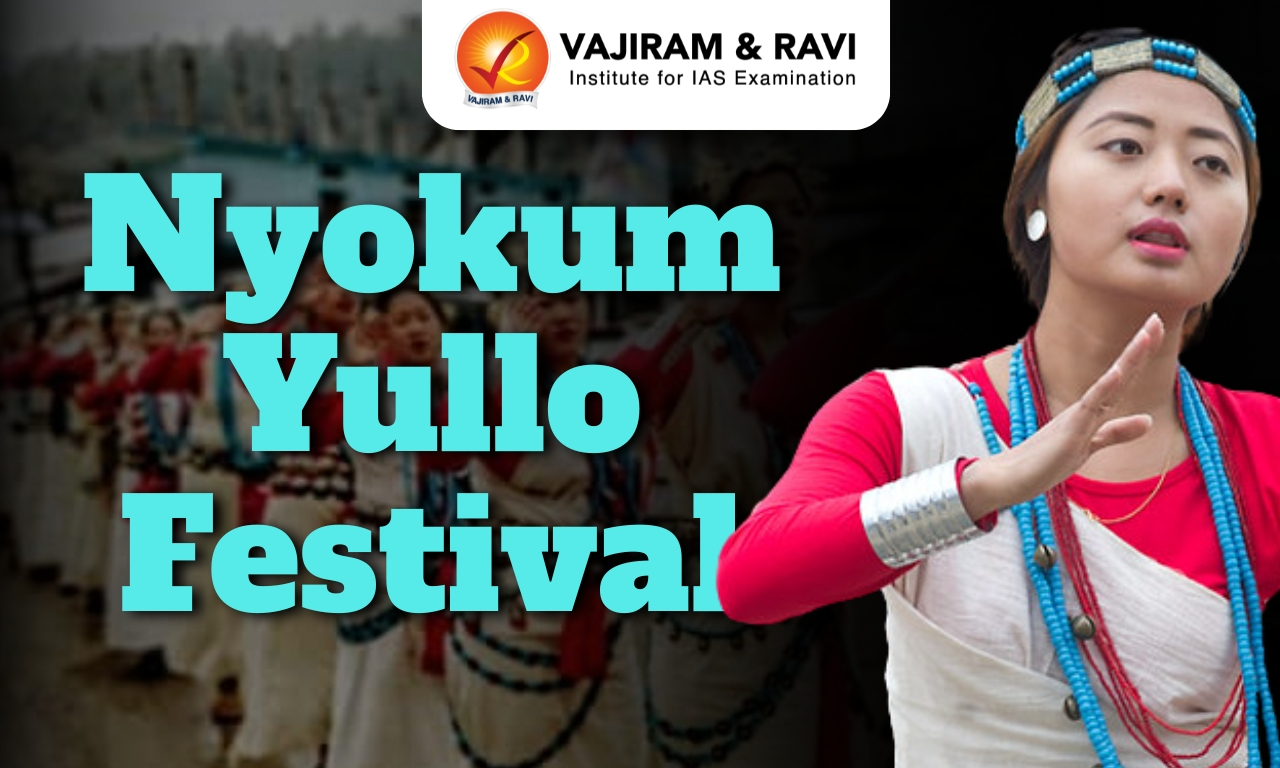
The Nyokum Yullo Festival is one of the most important agricultural and cultural festivals of the Nyishi Tribe in Arunachal Pradesh. Deeply rooted in nature worship and community bonding, the festival reflects the tribe’s belief in maintaining harmony between humans, deities, and the natural world.
About Nyokum Yullo Festival
- The word Nyokum comes from Nyok (earth/land) and Kum (togetherness), symbolizing harmony between humans and nature.
- It is celebrated to seek blessings for prosperity, good harvest, and community well-being.
- The festival involves nature worship, without the use of idols.
- A sacred bamboo structure called yugang is erected as the main ritual site.
- Nyokum goddess is worshipped for agricultural abundance and protection from natural calamities.
- Rituals are conducted by a priest known as nyubh, along with his assistants.
- Animal sacrifices are traditionally offered near the yugang as part of the rituals.
- Traditional songs and dances are performed before the main ceremony.
- People wear colorful traditional attire, including bamboo caps, bead necklaces, and handwoven garments.
- Guests are welcomed with rice paste powder and offered opo (millet beer) in dried gourd vessels.
- The festival reflects the Nyishi belief in maintaining balance between humans, nature, and divine forces.
Also Read: Fairs and Festivals of India
About Nyishi Tribe
- The Nyishi Tribe is the largest ethnic group in Arunachal Pradesh.
- They are mainly found in central Arunachal Pradesh and also inhabit parts of Assam, especially in Sonitpur and North Lakhimpur districts.
- The term Nyishi is derived from Nyi (man) and Shi (being), meaning a civilised human being.
- Their language belongs to the Sino-Tibetan family, though its exact origin is debated.
- Nyishi society is patrilineal, where lineage is traced through the male line.
- The tribe is divided into several clans, each having its own identity and customs.
- Polygyny (a man having more than one wife) has traditionally been practiced in the community.
- They traditionally depend on agriculture and forest resources for their livelihood.
- The Nyishi people have a strong belief in maintaining harmony between humans, nature, and divine forces.
- Festivals like Nyokum Yullo play an important role in preserving their culture and traditions.


 Last updated on Oct, 2026
→ UPSC 2027 Notification will be released on 13 January 2027 at upsconline.nic.in.
→ Check Nobel Prize 2026 Winners List here.
→ Download PIB PRiSM Monthly Magazine 2026 here.
→ Check UPSC Monthly Current Affairs Magazine The Recitals here.
→ Check out the latest UPSC Syllabus here.
→ Download UPSC Model Answers for Mains 2026
→ UPSC Mains Question Paper 2026 is out now for Essay & GS Paper 1, 2, 3 & 4.
→ UPSC Calendar 2027 has been released.
→ Enroll in Vajiram & Ravi’s UPSC Mains Test Series 2027 for structured answer writing practice, expert evaluation, and exam-oriented feedback.
→ Join Vajiram & Ravi’s UPSC Mentorship Program 2027 for personalized guidance, strategy planning, and one-to-one support from experienced mentors.
→ Go through the UPSC Mains Previous Year Papers to enhance your preparation.
→ UPSC has released UPSC Toppers List 2025 with the Civil Services final result on its official website.
→ Also check Best UPSC Coaching in India
Nyokum Yullo Festival FAQs
Q1. What is Nyokum Yullo Festival?+
Q2. Where is Nyokum Yullo celebrated?+
Q3. What does the term ‘Nyokum’ mean?+
Q4. Which deity is worshipped during Nyokum Yullo?+
Q5. What is the ‘yugang’ in the festival?+
Tags: festival nyokum yullo festival