Long Tailed Marmot

Long Tailed Marmot

Long Tailed Marmot Latest News

Recently, Shri Amarnath Ji Yatra brings thousands of pilgrims into a fragile Himalayan ecosystem where long‑tailed marmots live. 

About Long Tailed Marmot

  • It is a rodent of the high-altitude areas of the Kashmir Himalaya.
  • It is also known as the golden marmot and is a member of the Sciuridae family.
  • Appearance: It has vibrant golden fur and has a relatively long tail, robust body, and golden-brown coat that vary among subspecies.
  • Habitat:  It inhabits alpine meadows and rocky slopes, where its life is closely linked to the seasonal availability of vegetation.
  • Distribution: They are found in parts of Central Asia and South Asia, including Kyrgyzstan, Tajikistan, Kazakhstan, Afghanistan, Pakistan, China, and Northwestern India.
    • In India, they are found in Jammu and Kashmir and Ladakh. They occur between 3200 to 4850 m above sea level.
  • Diet: Herbivorous by nature, it feeds on vegetation in its alpine habitat.
  • It is a diurnal and social mammal that thrives in challenging alpine habitats.
  • It hibernates from September to April/May
  • Conservation Status: IUCN Red List: Least Concern

Source: DTE

Long Tailed Marmot FAQs

Q1: What is the Scientific name of Long-tailed Marmot?

Ans: Marmota caudata

Q2: What is the IUCN status of Long-tailed Marmot?

Ans: Least Concern

Squint Eye

Squint Eye

Squint Eye Latest News

A recent study estimated that horizontal strabismus affects 1.81% of the global population, or about 138.5 million people.  

About Squint Eye

  • It is medically known as strabismus.
  • It is a condition in which the two eyes do not align properly.
  • It can affect children and adults and, when it develops during childhood, can interfere with the normal development of vision.
  • In this condition one eye may turn inwards towards the nose (esotropia), outwards (exotropia), upwards or downwards, while the other eye remains focused on an object.
  • Causes of Squint Eye
    • Strabismus occurs when the systems that control eye movement and alignment do not work properly together. 
    • Genetic factors can play a role, and children with a family history of strabismus are at higher risk.
    • It is also more common in children with certain neurological or developmental conditions. Being born prematurely or with low birth weight are recognised risk factors.
    • In adults, strabismus can develop due to conditions such as diabetes, thyroid eye disease, stroke, neurological disorders or trauma.
  • Symptoms of Squint Eye
    • The most obvious sign is that the eyes appear to point in different directions.
    • Some children may close one eye in bright light, tilt or turn their head to see, or have difficulty judging distances.
    • Adults may experience double vision, blurred vision, eye strain, headaches or difficulty with depth perception. 
  • Treatment: Glasses are often the first treatment when a refractive error contributes to the misalignment. Surgery may be needed when glasses and other treatments do not adequately correct the misalignment. 

Source: TH

Squint Eye FAQs

Q1: What is the medical term for Squint Eye?

Ans: Strabismus

Q2: Which complication will occur in children if squint not treated early?

Ans: Amblyopia

Endoscopic Camera

What is an Endoscopic Camera

Endoscopic Camera Latest News

A Chhattisgarh professor and five students were recently arrested for allegedly leaking an entomology exam using an endoscopic camera.

About Endoscopic Camera

  • It is a device used to view, capture, and record videos in small, hard-to-reach places of the human body with limited to no visibility. 
  • It allows doctors to visualize the surgery or diagnostic procedure on a larger medical-grade screen, like a TV display, a computer monitor, or a stereoscopic viewing console.
  • Most modern endoscope camera modules utilize “chip-on-tip” technology, where the lens and imaging electronics are combined into a miniature package located at the end of the device. 
  • Endoscopic cameras illuminate the anatomical area through fiber optics or LEDs on the tip, and the image signal is transferred out from the camera on an electrical cable. 
  • The light source must provide sufficient brightness and illumination angle to ensure true-color properties and brilliant image presentation to aid medical professionals in their diagnoses and procedures.
  • There are many types of endoscopes used for diagnostic, preventative, and surgical applications:
    • Cystoscope: This is used to study the inside of the bladder, urethra, urinary tract, and prostate (in men) and is often inserted through the urethra.
    • Laryngoscope: This is an endoscope used to view the larynx or the voice box and is inserted through the mouth.
    • Otoscope: The otoscope is designed for visual examination of the eardrum and the passage of the outer ear.
    • Gastroscope: This is used to check the upper part of the digestive system, which includes the inside of your throat, food pipe (esophagus), and stomach.
    • Laparoscope: A laparoscope is inserted through the abdomen to study the stomach, liver, abdominal organs, and female reproductive organs such as the fallopian tubes, uterus, and ovaries.
    • Arthroscope: An arthroscope is an endoscope that’s inserted into the joint through a small incision near the site.
    • Duodenoscope: This is a long flexible endoscope inserted through the mouth to the top of the small intestine (duodenum).
  • It has revolutionized numerous fields due to its ability to inspect internal or hard-to-reach areas without requiring invasive procedures. 
  • Its use has expanded across various sectors such as industry, research, and even security.

News: TH

Endoscopic Camera FAQs

Q1: What is an endoscopic camera?

Ans: It is a device used to view, capture and record images or videos from small, hard-to-reach areas of the human body with limited or no visibility.

Q2: How does an endoscopic camera help doctors during medical procedures?

Ans: It allows doctors to visualize diagnostic procedures or surgery on a larger medical-grade screen.

Q3: What is “chip-on-tip” technology in an endoscopic camera?

Ans: It is a technology in which the lens and imaging electronics are combined into a miniature package at the tip of the endoscope.

Q4: How is the image signal transferred from an endoscopic camera?

Ans: The image signal is transferred through an electrical cable from the camera.

Terrier Cyber Quest 2026 (TCQ 3.0)

Terrier Cyber Quest 2026 (TCQ 3.0)

Terrier Cyber Quest 2026 Latest News

The Territorial Army, along with CyberPeace, recently launched the third edition of Terrier Cyber Quest 2026 (TCQ 3.0), a national-level hackathon focused on cybersecurity, defence and digital threats.

About Terrier Cyber Quest 2026

  • It is a national-level hackathon focused on cybersecurity, defence, and digital threats. 
  • It is being organised by the Territorial Army in collaboration with CyberPeace (an Indian non-partisan civil society organisation). 
  • The competition aims to bring together talent from educational institutions, industry, research organisations, government bodies, and the Armed Forces
  • Participants will work on technology-based solutions to address emerging cybersecurity and national security challenges. 
  • This year's competition will be held across three tracks.
    • Bug Hunting: Participants will identify security flaws in simulated critical infrastructure systems. The challenge will begin with an online Capture-the-Flag round, followed by a live final round.
    • AI Kavach: This track will focus on artificial intelligence and machine learning. Participants will develop solutions for detecting threats, identifying unusual activity, and improving cyber defence.
    • Creators Challenge: Content creators, communicators, and influencers can take part in this track. They will be asked to create digital campaigns on threats such as deepfakes, phishing, online scams, and misinformation. 
  • The hackathon gives students, technology enthusiasts, and other participants a chance to showcase their skills and work on real-world cybersecurity challenges linked to national security. 
  • Winners could further get a chance to visit defence establishments and contribute to future cybersecurity initiatives with the Territorial Army.

Key Facts about Territorial Army

  • It is a part of the Indian Army that consists of volunteers who undergo military training and serve when required. 
  • Unlike regular army officers, Territorial Army officers maintain their civilian jobs while dedicating a few weeks each year to military service. 
  • It’s a platform for motivated individuals to contribute to national defence without sacrificing their primary professions.
  • Often called the “Second Line of Defence,” the TA plays a crucial role in:
    • Relieving the regular army from static duties.
    • Assisting the civil administration in dealing with natural calamities and maintaining essential services.
    • Providing units for the regular Army as and when required.
  • Motto: Savdhani Va Shoorta (Vigilance and Valour)
  • Eligibility:
    • Nationality: Citizens of India. (Men & Women).
    • Age: 18 to 42 years
    • Educational Qualifications: Graduate from any recognized university
    • Physical Standards: A candidate must be physically and medically fit in all respects.
    • Employment: Gainfully Employed
    • Serving members of the Regular Army/Navy/Air Force/Police/GREF/Para Military and like forces are not eligible.

News: NDTV

Terrier Cyber Quest 2026 FAQs

Q1: What is Terrier Cyber Quest 2026?

Ans: It is a national-level hackathon focused on cybersecurity, defence and digital threats.

Q2: Who is organising Terrier Cyber Quest 2026?

Ans: The Territorial Army is organising it in collaboration with CyberPeace.

Q3: What is the main objective of Terrier Cyber Quest 2026?

Ans: Its objective is to develop technology-based solutions to address emerging cybersecurity and national security challenges.

Q4: Who can participate in Terrier Cyber Quest 2026?

Ans: Talent from educational institutions, industry, research organisations, government bodies and the Armed Forces can participate.

KN-30 Missile

What is the KN-30 Missile

KN-30 Missile Latest News

Russia recently received North Korea’s KN-30 ballistic missile for the first time, according to Ukraine’s defence intelligence directorate (HUR).

About KN-30 Missile

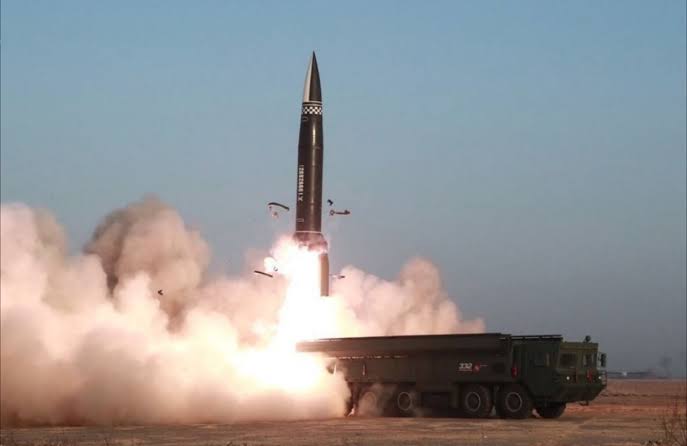
  • The KN-30 is the Western designation for the North Korean Hwasong-11C ballistic missile, also known as the Hwasong-11Da. 
  • It is an enlarged version of the Hwasong-11 family and belongs to the short-range ballistic missile class. 

KN-30 Missile Features

  • It is 10.1 to 10.2 m in length and 1.26 m in diameter. 
  • It is powered by a solid-fuel engine and launched from a mobile ground-based launcher. 
    • The use of solid-fuel engines offers distinct advantages in terms of faster response times, longer storage capacity, and reduced deployment complexity compared to traditional liquid-fuel missiles. 
  • Its estimated range reaches 600-900 km, and its claimed warhead mass reaches 2,500 kg.  
  • Maximum speed is approximately Mach 5-6.
  • The missile can fly in a low quasi-ballistic profile at nearly 50 km in altitude, which reduces the engagement window compared with a higher and more conventional ballistic trajectory.

News: TOI

KN-30 Missile FAQs

Q1: What is the KN-30 missile?

Ans: The KN-30 is the Western designation for the North Korean Hwasong-11C ballistic missile, also known as the Hwasong-11Da.

Q2: What type of missile is the KN-30?

Ans: It is a short-range ballistic missile (SRBM).

Q3: What type of engine powers the KN-30 missile?

Ans: A solid-fuel engine.

Q4: What is the estimated range of the KN-30 missile?

Ans: Approximately 600–900 km.

Chromium

What is Chromium?

Chromium Latest News

Decades of improper industrial waste management have contaminated groundwater with toxic hexavalent chromium across parts of three districts of Uttar Pradesh, exposing villagers to unsafe water and serious health risks. 

About Chromium

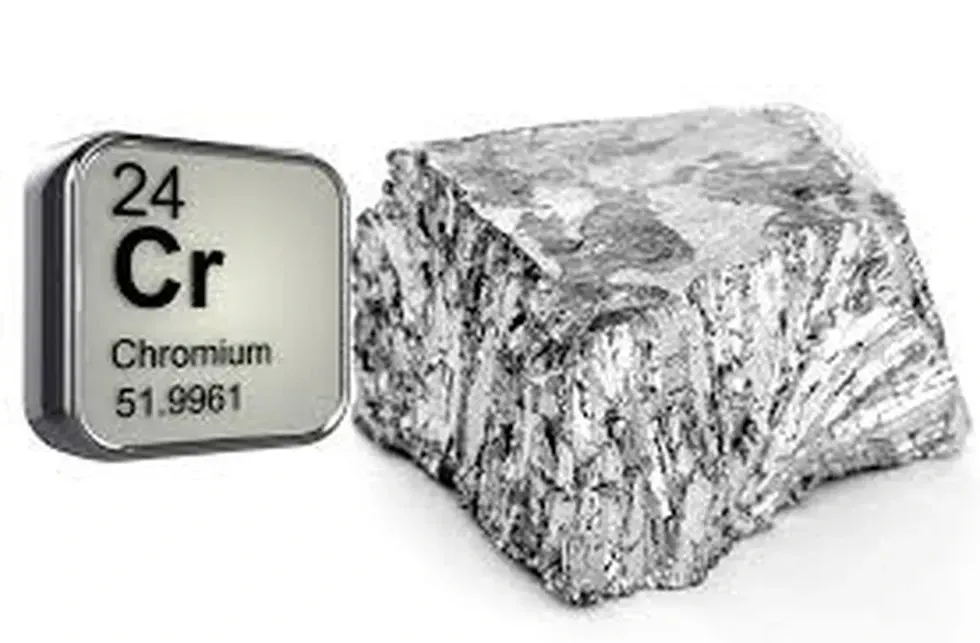
  • It is a naturally occurring element found in rocks, animals, plants, soil, and in volcanic dust and gases.
  • There are two forms: trivalent chromium, which is safe for humans, and hexavalent chromium, which is a toxin.
  • Properties
    • It is a very hard gray solid with a metallic luster.
    • It does not tarnish in air, when heated it borns and forms the green chromic oxide.
    • Chromium is unstable in oxygen, it immediately produces a thin oxide layer that is impermeable to oxygen and protects the metal below.

Applications of Chromium

  • It is used in iron, steel, and nonferrous alloys to enhance hardenability and resistance to corrosion and oxidation.
  • The use of chromium to produce stainless steel and nonferrous alloys are two of its more important applications.
  • Other applications are in alloy steel, plating of metals, pigments, leather processing, catalysts, surface treatments, and refractories.

Source: TH

Chromium FAQs

Q1: What is the main ore of Chromium?

Ans: Chromite

Q2: Which Indian state has the highest chromite reserves?

Ans: Odisha

Enquire Now