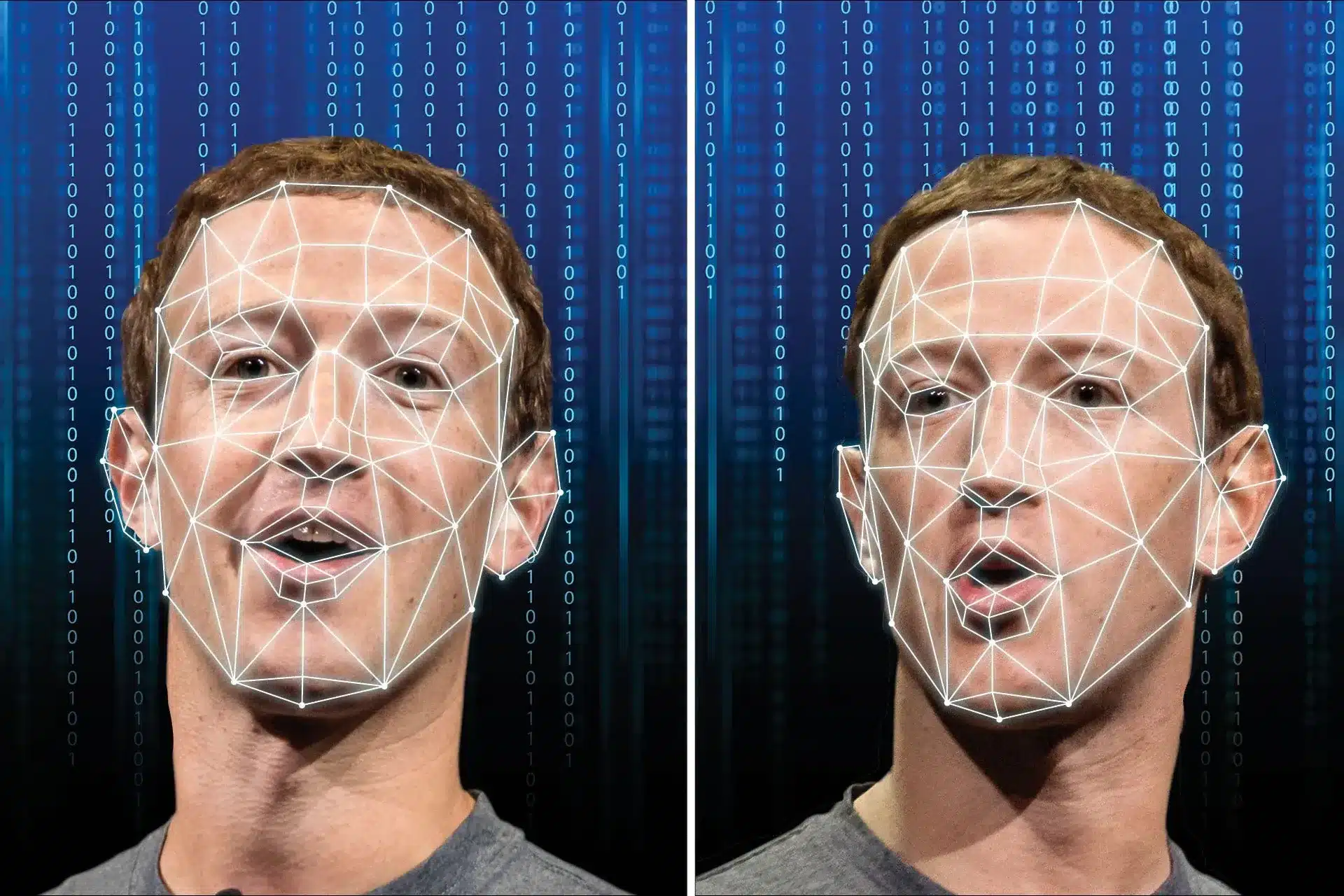
About Deepfakes:
- Deepfakes are synthetic media, including images, videos, and audio, generated by artificial intelligence (AI) technology that portray something that does not exist in reality or events that have never occurred.
- The term deepfake combines deep, taken from AI deep-learning technology (a type of machine learning that involves multiple levels of processing), and fake, addressing that the content is not real.
- It can create people who do not exist, and it can fake real people saying and doing things they did not say or do.
- Background: The origin of the word “deepfake” can be traced back to 2017, when a Reddit user with the username “deepfakes”, posted explicit videos of celebrities.
- Working:
- They are created by machine learning models, which use neural networks to manipulate images and videos.
- To make a deepfake video of someone, a creator would first train a neural network on many hours of real video footage of the person to give it a realistic “understanding” of what he or she looks like from many angles and under different lighting.
- Then they’d combine the trained network with computer-graphics techniques to superimpose a copy of the person onto a different actor.
- Deepfake technology is now being used for nefarious purposes like scams and hoaxes, celebrity pornography, election manipulation, social engineering, automated disinformation attacks, identity theft, and financial fraud.
Deep fakes differ from other forms of false information by being very difficult to identify as false.
Q1: What is machine learning?
Machine Learning, often abbreviated as ML, is a subset of artificial intelligence (AI) that focuses on the development of computer algorithms that improve automatically through experience and by the use of data. In simpler terms, machine learning enables computers to learn from data and make decisions or predictions without being explicitly programmed to do so.
Source: South Korea battles surge of deepfake pornography after thousands found to be spreading images


 Last updated on Oct, 2026
→ UPSC 2027 Notification will be released on 13 January 2027 at upsconline.nic.in.
→ Asian Games 2026 are being held in Aichi-Nagoya, Japan, from 19 September to 4 October.
→ Check Nobel Prize 2026 Winners List here.
→ Download PIB PRiSM Monthly Magazine 2026 here.
→ Check UPSC Monthly Current Affairs Magazine The Recitals here.
→ Check out the latest UPSC Syllabus here.
→ Download UPSC Model Answers for Mains 2026
→ UPSC Mains Question Paper 2026 is out now for Essay & GS Paper 1, 2, 3 & 4.
→ UPSC Calendar 2027 has been released.
→ Enroll in Vajiram & Ravi’s UPSC Mains Test Series 2027 for structured answer writing practice, expert evaluation, and exam-oriented feedback.
→ Join Vajiram & Ravi’s UPSC Mentorship Program 2027 for personalized guidance, strategy planning, and one-to-one support from experienced mentors.
→ Go through the UPSC Mains Previous Year Papers to enhance your preparation.
→ UPSC has released UPSC Toppers List 2025 with the Civil Services final result on its official website.
→ Also check Best UPSC Coaching in India