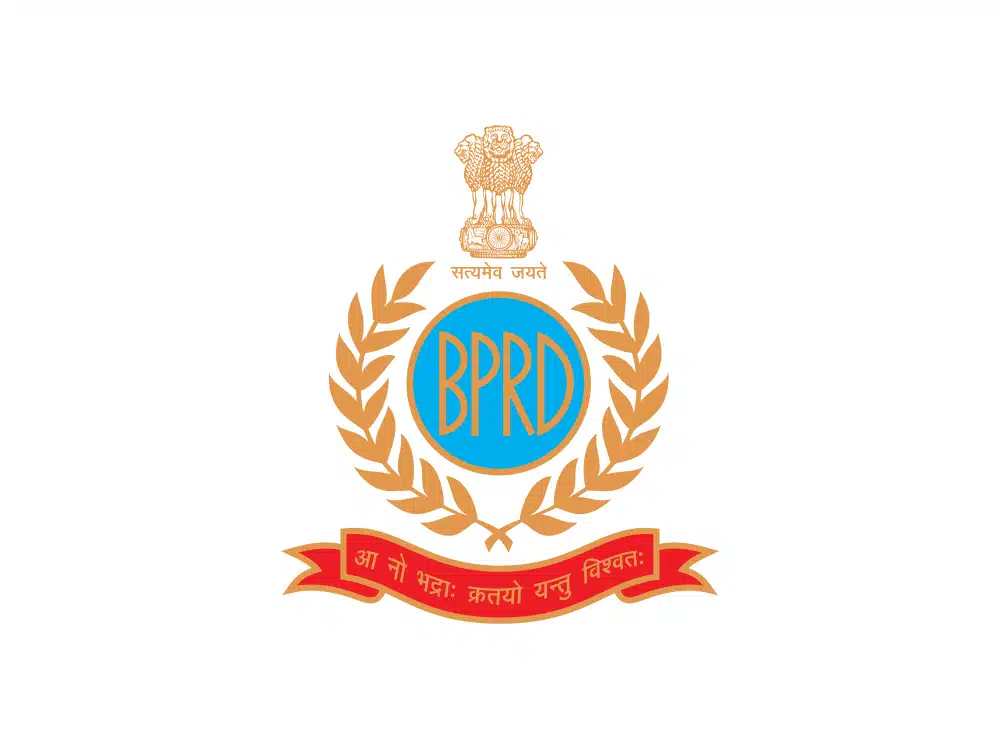
About Bureau of Police Research and Development (BPR&D):
- BPR&D was set up in 1970 under the Ministry of Home Affairs by replacing the Police Research and Advisory Council.
- Headquarters: New Delhi
- It was established with a mandate to:
- Identify the needs and problems of the police in the country.
- Undertake research projects and studies, and suggest modalities to overcome problems and challenges and meet the needs and requirements of the police.
- Keep abreast of the latest developments in the fields of science and technology, both in India and abroad, with a view to promoting the use of appropriate technology in police work.
- Over the years, the BPR&D has also been entrusted with the responsibility of monitoring the training needs and quality of training in the States and Central Police Organisations, and providing assistance for the same, as well as assisting the Statesin the modernization of the State Police Forces and Correctional Administration.
- BPR&D has also been tasked to assist the Ministry of Home Affairs and the CPFs, etc., in the development of Standards, Quality Requirements (QRs), etc., with respect to various types of equipment and items pertaining to infrastructure.
- More recently, the BPR&D has also been entrusted with the responsibility of anchoring and coordinating the work of the National Police Mission.
- The Bureau was initially establishedwith the following two divisions; Research, Statistics & Publication and Development.
- On the recommendations of the Gore-Committee, the bureau created a Training Division in 1973.
- The BPRD has five Central Detective Training Institutes at Kolkata, Hyderabad, Chandigarh, Ghaziabad, and Jaipur dedicated to the training of police officers and other stakeholders.
Q1: What is the Gore Committee ?
The Gore Committee on Police Training was appointed by the Indian Government in 1971 and has identified shortcomings and needs of the law enforcement training programs of State police forces.
Source: BPRD Celebrates 54th Foundation Day


 Last updated on Oct, 2026
→ UPSC 2027 Notification will be released on 13 January 2027 at upsconline.nic.in.
→ Asian Games 2026 are being held in Aichi-Nagoya, Japan, from 19 September to 4 October.
→ Check Nobel Prize 2026 Winners List here.
→ Download PIB PRiSM Monthly Magazine 2026 here.
→ Check UPSC Monthly Current Affairs Magazine The Recitals here.
→ Check out the latest UPSC Syllabus here.
→ Download UPSC Model Answers for Mains 2026
→ UPSC Mains Question Paper 2026 is out now for Essay & GS Paper 1, 2, 3 & 4.
→ UPSC Calendar 2027 has been released.
→ Enroll in Vajiram & Ravi’s UPSC Mains Test Series 2027 for structured answer writing practice, expert evaluation, and exam-oriented feedback.
→ Join Vajiram & Ravi’s UPSC Mentorship Program 2027 for personalized guidance, strategy planning, and one-to-one support from experienced mentors.
→ Go through the UPSC Mains Previous Year Papers to enhance your preparation.
→ UPSC has released UPSC Toppers List 2025 with the Civil Services final result on its official website.
→ Also check Best UPSC Coaching in India