Carbosulfan

Carbosulfan

Carbosulfan Latest News

Recently, the Central government has proposed a complete ban on Carbosulfan.

About Carbosulfan

  • It is an insecticide belonging to the carbamate group.
  • It has been used to control a range of insect pests affecting crops.
  • Its use has been reported across several agricultural sectors, particularly in paddy, cotton and horticultural production.
  • Properties 
    • It is a synthetic 1-benzofuran compound and carbamate acetylcholinesterase inhibitor. 
    • It is characterized as a toxic and nonpersistent orange-yellow or brown viscous liquid,
    • It has a low aqueous solubility, is not volatile and, based on its chemical properties, it would not normally be expected to leach to groundwater.
    • It would not normally persist in soil or water systems.
    • It can rapidly metabolize to carbofuran, a highly toxic metabolite responsible for severe cholinesterase inhibition and acute systemic toxicity.
  • Impact of Carbosulfan
    • Carbosulfan is minimally irritating to the eye, slightly irritating to the skin and is a dermal sensitizer.
    • It is extremely toxic to fish and its toxicity is mediated by the inhibition of acetylcholinesterase in the nervous system. 

Source: NIE

Carbosulfan FAQs

Q1: What is Carbosulfan?

Ans: It is an insecticide belonging to the carbamate group.

Q2: What is the main use of Carbosulfan?

Ans: It has been used to control a range of insect pests affecting crops.

Mission Samriddh Gaon

Mission Samriddh Gaon

Mission Samriddh Gaon Latest News

Recently, the Union Rural Development Minister launched the Mission Samriddh Gaon scheme. 

About Mission Samriddh Gaon

  • It is aimed at developing poverty-free, employment-rich villages equipped with assured basic amenities.
  • The pilot models will be developed in Budni block of Sehore district and Khategaon block of Dewas district.
  • Objective: To develop model villages where every family has an employment or livelihood opportunity, basic amenities are available and people do not have to migrate out of compulsion.
  • Nodal Ministry: Ministry of Rural Development

Features  of Mission Samriddh Gaon

  • Integrated Development Framework: Under this initiative an integrated development framework will be prepared at the family, gram panchayat and block levels in the selected areas.
  • Convergence of government schemes: Schemes related to agriculture and rural development, along with health, education, employment, livelihoods and other basic amenities, will be brought together under the mission.
  • Each family will be linked to various Central and state government schemes based on its needs and eligibility.
  • It will also focus on identifying women farmers, providing them with agricultural advice and necessary information, and connecting rural women with livelihood opportunities.

Source: DD News

Mission Samriddh Gaon FAQs

Q1: What is the aim of Mission Samriddh Gaon?

Ans: It is aimed at developing poverty-free, employment-rich villages equipped with assured basic amenities.

Q2: What are the pilot blocks under Mission Samriddh Gaon?

Ans: Budni Sehore and Khategaon Dewas in Madhya Pradesh

Ammannia telanganensis

Ammannia telanganensis

Ammannia telanganensis Latest News

Recently, a new plant has been discovered in Amrabad Tiger Reserve in Nagarkurnool district and named it as  Ammannia telanganensis.

About Ammannia telanganensis

  • It is a new freshwater flowering plant species discovered in Telangana.
  • The species belongs to the Lythraceae family.
  • The genus Ammannia comprises herbaceous plants associated with wet and aquatic habitats.
  • Characteristics: It has flower clusters borne on stalks, while its seeds have a distinctive cerebriform, or brain-like, surface pattern.
  • Habitat: The plant grows in wet sandy soils along seasonal streams and on the fringes of water bodies, alongside wetland plants such as Ammannia multiflora and species of Rotala.
  • It flowers and fruits between November and February.

Key Facts about Amrabad Tiger Reserve

  • Location: It is located in the Nallamala hills of the Eastern Ghats in the stat of Telangana
  • It was originally part of the larger Nagarjunasagar-Srisailam Tiger Reserve before the bifurcation of Andhra Pradesh and Telangana in 2014.
  • Rivers: The Krishna River and its perennial streams originating within the reserve contribute to the water supply of major reservoirs such as the Srishailam Dam and Nagarjunsagar Dam.
  • Tribal Community: The Chenchu tribe is one of the major tribal communities that live in the ATR.

Source: NIE

Ammannia telanganensis FAQs

Q1: Where was Ammannia telanganensis discovered?

Ans: Telangana

Q2: What is Ammannia telanganensis?

Ans: New species of flowering plant.

Small Industries Development Bank of India

Small Industries Development Bank of India

Small Industries Development Bank of India Latest News

The Small Industries Development Bank of India (SIDBI) organized a conclave of the Heads of Regional Rural Banks on expanding the SIDBI-RRB MSME Co-Lending arrangement in New Delhi. 

About Small Industries Development Bank of India

  • It was established on 2nd April, 1990 by the Government of India under an act of the Parliament, as a wholly owned subsidiary of IDBI Bank.
  • It was delinked from IDBI on March 27, 2000. 
  • Mandate: It is mandated to serve as the Principal Financial Institution for executing the triple agenda of promotion, financing and development of the MSME sector and coordination of the functions of the various Institutions engaged in similar activities.
  • Headquarters: Lucknow, Uttar Pradesh.

Functions of Small Industries Development Bank of India

  • It offers direct loans and refinancing to banks and NBFCs.
  • It promotes entrepreneurship and MSME growth.
  • Provides venture capital and technology support
  • Financial support to MSMEs is provided by way of
    • Indirect/refinance to banks/Financial Institutions for onward lending to MSMEs
    • Direct finance in niche areas like risk capital, sustainable finance, receivable financing, service sector financing, etc
  • SIDBI was made responsible for administering the Small Industries Development Fund and the National Equity Fund that were administered by IDBI before.

Source: PIB

Small Industries Development Bank of India FAQs

Q1: When was Small Industries Development Bank of India established?

Ans: It was established on 2nd April, 1990.

Q2: What is the SMILE scheme SIDBI?

Ans: It is a soft lending scheme for MSME.

Sathyamangalam Tiger Reserve

Sathyamangalam Tiger Reserve

Sathyamangalam Tiger Reserve Latest News

The forest department has resolved the drinking water crisis that had persisted for decades in a tribal hamlet within the Sathyamangalam Tiger Reserve (STR) in Erode district, under the 'Project Elephant' scheme.

About Sathyamangalam Tiger Reserve

  • Location: It is located in the state of Tamil Nadu.
  • It is nestled at the junction of the Eastern and the Western Ghats in the Nilgiri Biosphere Reserve
  • It is contiguous with the Mudumalai Tiger Reserve, Bandipur Tiger Reserve (Karnataka), and BR Tiger Reserve and Wildlife Sanctuary (Karnataka).
  • Terrain: The terrain is hilly and undulating with altitude ranging between 750 m and 1649 m.
  • Climate: It mainly has subtropical and dry.
  • Rivers: Some of the prominent rivers in the region include the Bhavani, Moyar, and Noyyal rivers.
  • Tribal Communities: It is home to several indigenous tribal communities, including the Irula and Kurumba tribes.
  • Vegetation: It consists of southern tropical dry thorn forests, mixed deciduous forests, semi-evergreen forests, and riparian forests.
  • Flora: It includes teak, sandalwood, bamboo, Terminalia, and Albizia, alongside medicinal plants and shrubs that support both wildlife and local communities.
  • Fauna: The major species are Elephant, Tiger, Panther, Sloth bear, Gaur, Black Buck, Spotted deer, Wild boar, Black napped hare, Common langur Nilgiri langur, Striped neck mongoose, and Bonnet macaque.

Source: NIE

Sathyamangalam Tiger Reserve FAQs

Q1: Where is Sathyamangalam Tiger Reserve?

Ans: Tamil Nadu

Q2: What type of vegetation is found in Sathyamangalam Tiger Reserve?

Ans: It consists of southern tropical dry thorn forests, mixed deciduous forests, semi-evergreen forests, and riparian forests.

Gut Microbiome

Gut Microbiome

Gut Microbiome Latest News

Scientists designed a study to understand how changing lifestyles influence the gut microbiome across different cultural, dietary, and ecological settings and to generate a comprehensive microbiome resource representing the diversity of South Asia. 

About Gut Microbiome

  • It is a community of microorganisms which includes bacteria, viruses, fungi and parasites residing in the gastrointestinal tract.
  • It plays a crucial role in digestion, nutrient absorption, and immunomodulation, while also maintaining a symbiotic relationship with the host.
  • Human acquire Gut microbiome through
    • Initially acquired during the infant stage during vaginal delivery or breastfeeding.
    • Later diet and other environmental exposures introduce new microbes to human’s biome.

Key Functions of Gut Microbiome

  • Digestion and Nutrient Extraction: The gut microbiota exists symbiotically within the human digestive system and helps support energy harvesting, digestion, and immune defense.
  • Gut Barrier: They help maintain your gut barrier, keeping the bacteria and bacterial toxins inside from escaping into your bloodstream.
  • They also have anti-inflammatory properties to gut.
  • Synthesis of Essential Vitamins: It can synthesise several vitamins that are crucial for human health.

Source: PIB

Gut Microbiome FAQs

Q1: What is Gut Microbiome?

Ans: It is a community of microorganisms which includes bacteria, viruses, fungi and parasites residing in the gastrointestinal tract.

Q2: What is the function of Gut Microbiome?

Ans: They help maintain your gut barrier, keeping the bacteria and bacterial toxins inside from escaping into your bloodstream.

Jojari River

Jojari River

Jojari River Latest News

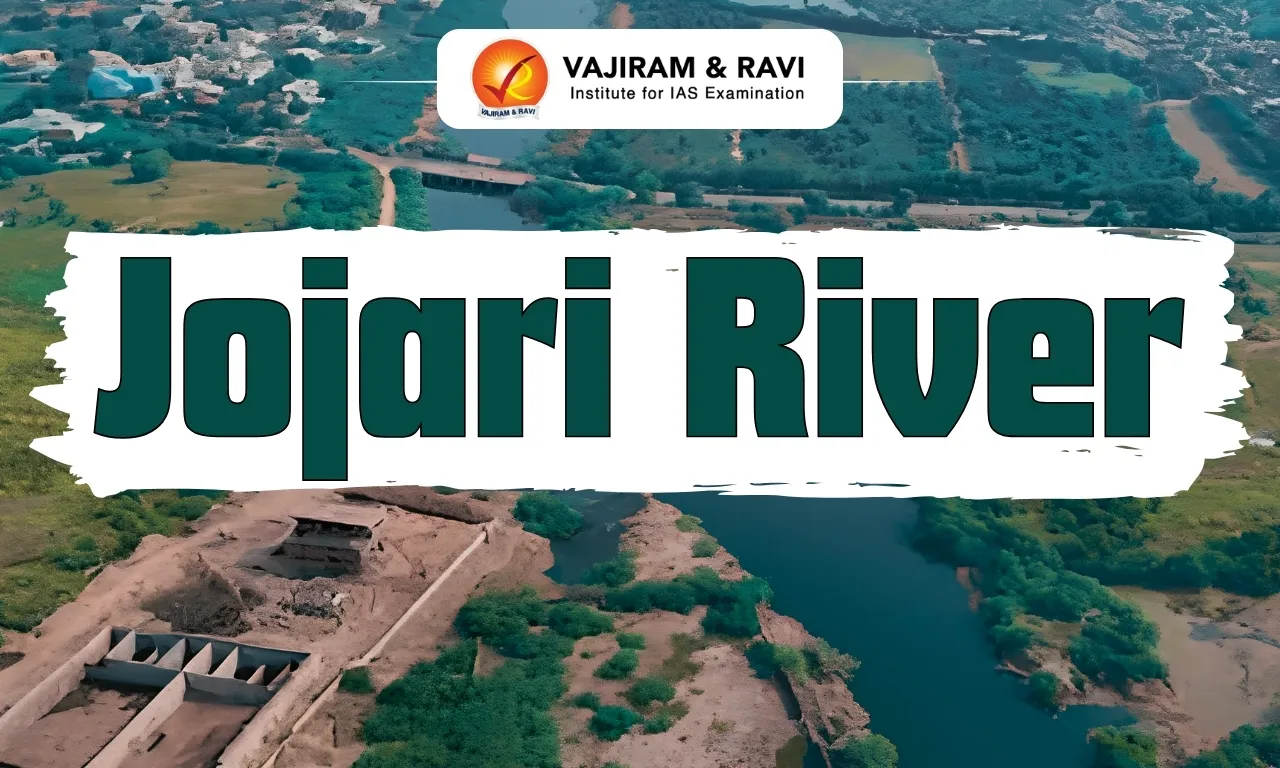
Recently, the Supreme Court banned any construction or development within 100 m of the Jojari River in Rajasthan.

About Jojari River

  • Origin: It is a seasonal river which originates in Pandalu village of Nagaur, Rajasthan. 
  • Course: It passes through Jodhpur and merges with the Luni River near Balotra city.
  • It is the only right-bank tributary of the Luni River.
  • It is the only branch of the Luni River which does not come from the Aravalli Mountains.
  • It is facing severe contamination problems from industrial waste and untreated sewage.
  • It is majorly impacted by the chemical-laden water from Jodhpur’s textile and steel industries flowing into the river.

Supreme Court Intervention

  • It took suo motu cognizance of a news documentary highlighting the grave environmental catastrophe in the Jojari River region.
  • The court prohibited hazardous industries within 500 m of either side of the existing flood line along the river’s flow path.

Source: TH

Jojari River FAQs

Q1: Where does the Jojari River originate?

Ans: The Jojari River originates from the hills near Poondloo village in the Nagaur district of Rajasthan.

Q2: How long is the Jojari River?

Ans: The Jojari River is approximately 83 kilometers (52 miles) long.

Military Combat Parachute System

Military Combat Parachute System

Military Combat Parachute System Latest News

Recently, the Defence Research and Development Organisation has successfully tested its Military Combat Parachute System (MCPS) at 22,000 feet in one of the world’s highest-altitude drop zones in Nyoma, Ladakh. 

About Military Combat Parachute System

  • It is indigenously developed by the Defence Research and Development Organisation (DRDO).
  • Organizations involved: It has been designed by DRDO’s Aerial Delivery Research and Development Establishment, Agra, and Defence Bioengineering and Electromedical Laboratory, Bengaluru.
  • Features of Military Combat Parachute System
    • It has successfully undergone a combat freefall jump from an altitude of 32,000 feet.
    • It is the only parachute system currently in operational use by the Indian Armed Forces capable of deployment above 25,000 feet.
    • It consists of several enhanced tactical features, including a lower rate of descent and superior steering capabilities.
    • The system has compatibility with Navigation with Indian Constellation (NavIC).
  • Significance
    • It enables paratroopers to safely exit aircraft, deploy parachutes at predetermined altitudes, navigate accurately, and land at designated zones.
    • It has opened doors for induction of Indigenous parachute systems.
    • This will also reduce dependency on other nations for its serviceability during times of conflict and war.

 Source: NIE

Military Combat Parachute System FAQs

Q1: Which organisation developed Military Combat Parachute System?

Ans: Defence Research and Development Organisation (DRDO).

Q2: What are the capability of Military Combat Parachute System?

Ans: It is the only parachute system currently in operational use by the Indian Armed Forces capable of deployment above 25,000 feet.

Vietnam

Vietnam

Vietnam Latest News

Recently, the 7th High-Level Meeting between the Indian Coast Guard (ICG) and Vietnam Coast Guard (VCG) was held in Chennai. 

About Vietnam

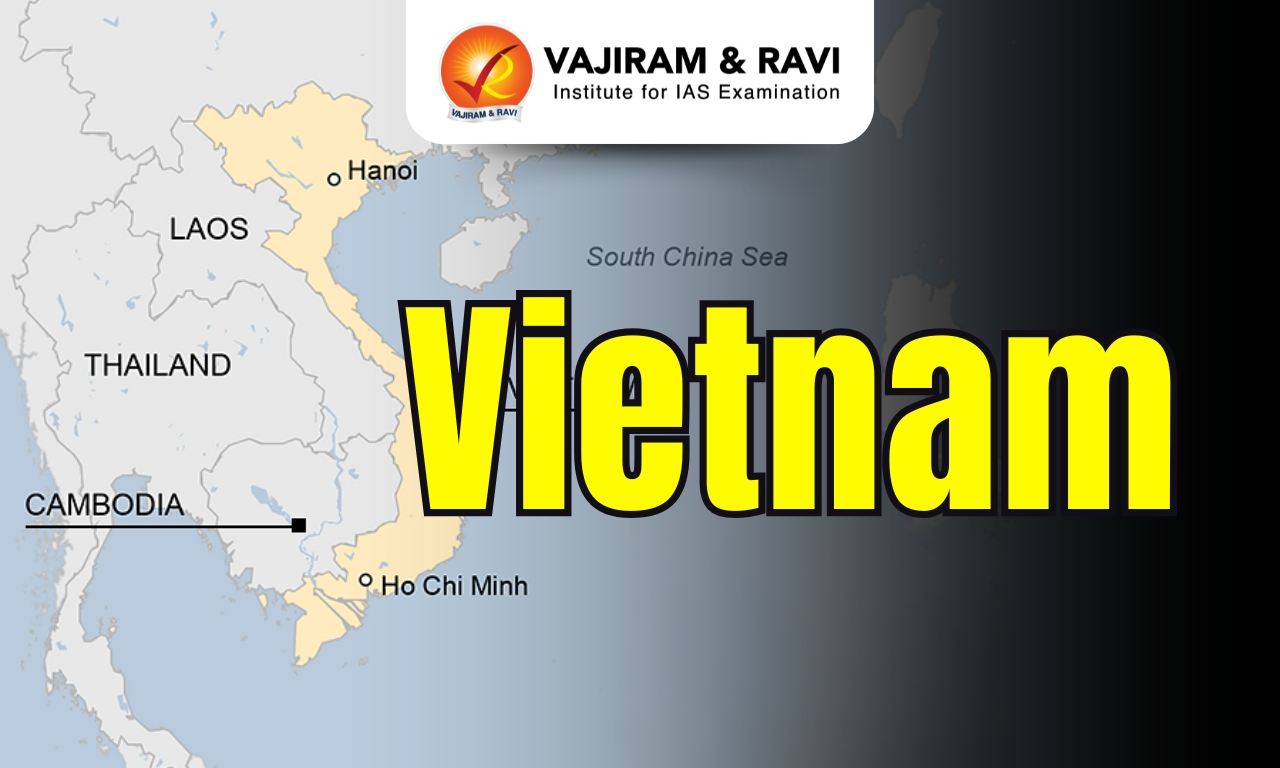
  • Location: It is located in the eastern portion of mainland Southeast Asia.
  • Bordering Countries: It is bordered by China (North), and Cambodia and Laos (West).
  • Maritime Boundaries: It shares a border with South China Sea (East and South), Gulf of Thailand (Southwest). 
  • It is roughly S-shaped, running for a distance of about 1,650 km in the north-to-south directions.
  • Capital City: Hanoi

Geographical Features of Vietnam

  • Terrain: It is a country of tropical lowlands, rolling green hills, and densely forested mountains. 
  • Climate: It is located in the tropical zone. Its climate is characterized by high temperature and humidity all year round.
  • Major Plateaus: Moc Chau Plateau, Bac Ha Plateau, Dong Van Stone Plateau.
  • Major Rivers: Red River and Mekong River both drain into the South China Sea.
  • Major Mountain: Vietnam’s principal physiographic features are the Annamese Cordillera which extends generally from northwest to southeast in central Vietnam.
  • Highest Point: Vietnam’s highest point is Phan Xi Pang whose summit reaches 3,144 m
  • Natural Resources: It is mainly abundant in antimony, phosphates, coal, manganese, rare earth elements, bauxite, chromate, offshore oil and gas deposits.

Source: PIB

Vietnam FAQs

Q1: What is the capital of Vietnam?

Ans: Hanoi

Q2: Which river is a major waterway in Vietnam?.

Ans: Mekong River

Neelakurinji

Neelakurinji

Neelakurinji Latest News

Recently, the Ministry of Environment, Forest and Climate Change (MoEFCC) has requested the National Green Tribunal to direct Keralam, Tamil Nadu, and Karnataka to submit an annual plan of operation incorporating a conservation action plan for  Neelakurinji (Strobilanthes kunthiana). 

About Neelakurinji

  • It is the purplish flowering shrub which blooms once in 12 years.
  • It belongs to the Acanthaceae family and was first scientifically described in the nineteenth century by Nees von Esenbeck.
  • It is semelparous with showy synchronous blooming and fruiting at every 12 years at the end of the life cycle, which has been reported since 1832.
  • Habitat: It is seen only in the high-altitude shola grassland ecosystems of five mountain landscapes of southwest India at an elevation of 1,340–2,600 m.
  • Distribution: Neelakurinji Flowers occur only in India, confined to five mountain landscapes of the Western and Eastern Ghats.
  • Population Distribution: Consists of 34 subpopulations across 14 ecoregions, with 33 in the Western Ghats and one in the Eastern Ghats.
  • Conservation Status: Listed as Vulnerable under IUCN Red List Criteria A2c due to approximately 40% habitat loss.
  • Cultural significance
    • Nilgiri Hills (Literally meaning the blue mountains), got their name from the blue flowers of Neelakurinji.
    • The Paliyan tribes (in Tamil Nadu) use it as a reference to calculate their age.
  • Threats: It is threatened mainly due to its fragile habitat in the montane high altitude grasslands that has been under pressure of conversion for tea and softwood plantations, and urbanization.

Neelakurinji FAQs

Q1: Why does neelakurinji bloom in 12 years?

Ans: Neelakurinji blooms every 12 years because it follows a monocarpic life cycle.

Q2: What is the biological name of Neelakurinji?

Ans: Strobilanthes kunthiana

Enquire Now